Quick Answer
Quick answer
Black DTF powder can be worth testing on risky dark polyester, camo, sublimated, or safety-color shirts, but this AMS shop test did not show it automatically beating regular white powder.
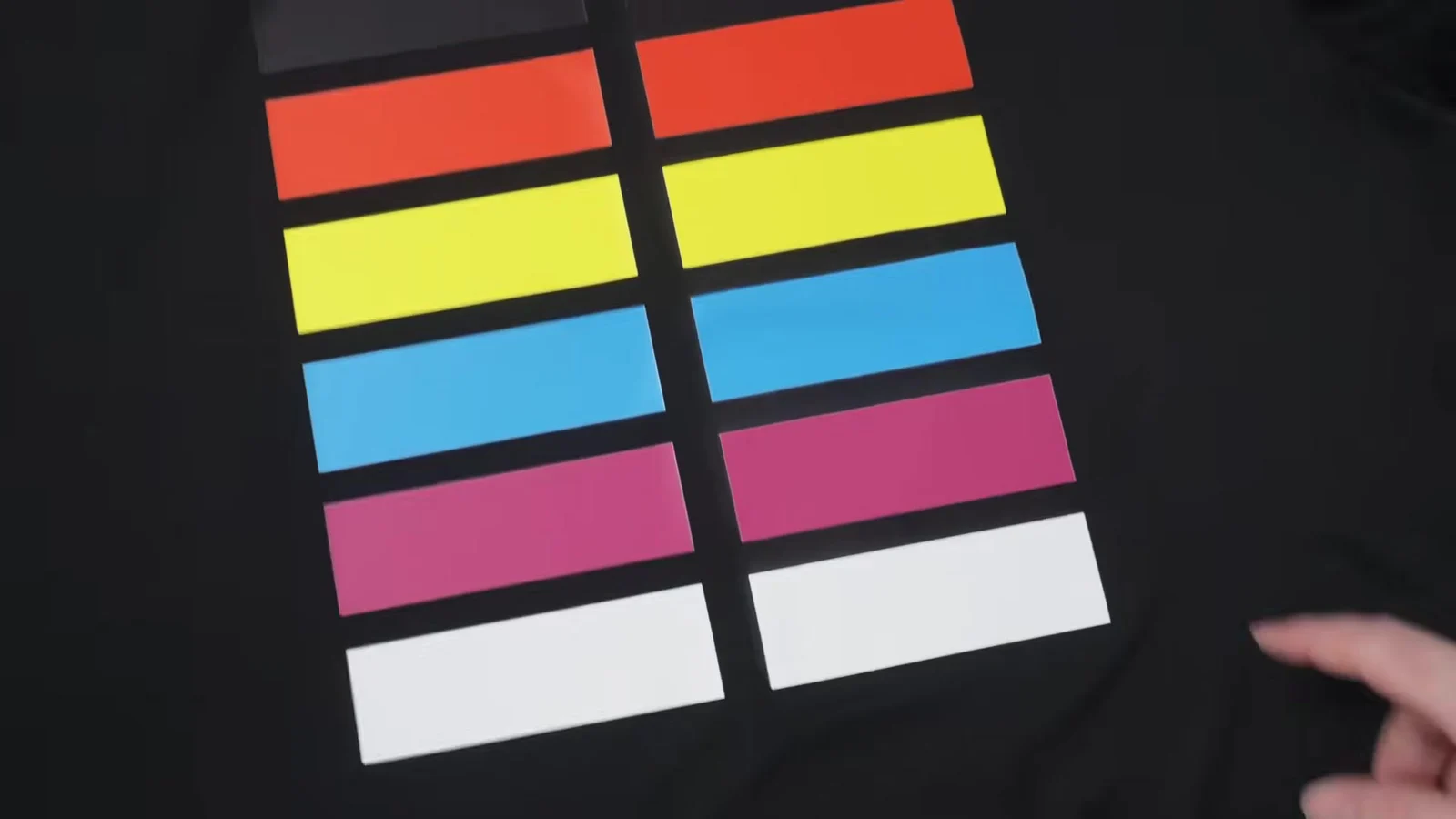
White powder looked brighter on some colors in the black polyester comparison, while black powder introduced more handling and residue concerns. That makes black powder a test variable, not a guaranteed upgrade.
Use the risk score first. If the blank is high-poly, camo, customer-supplied, deadline-sensitive, or uses large light artwork, test the actual garment before you promise production.
If the job has no extra blank, no test window, and a fixed Houston handout date, the safer move may be a different blank, AMS pressing/QC, finished apparel, or explicit risk acceptance.
Start with the result, not the powder claim
Black DTF powder may be worth testing on dark polyester, camo, sublimated, or safety-color shirts, but the AMS shop test did not show it automatically beating regular white powder.
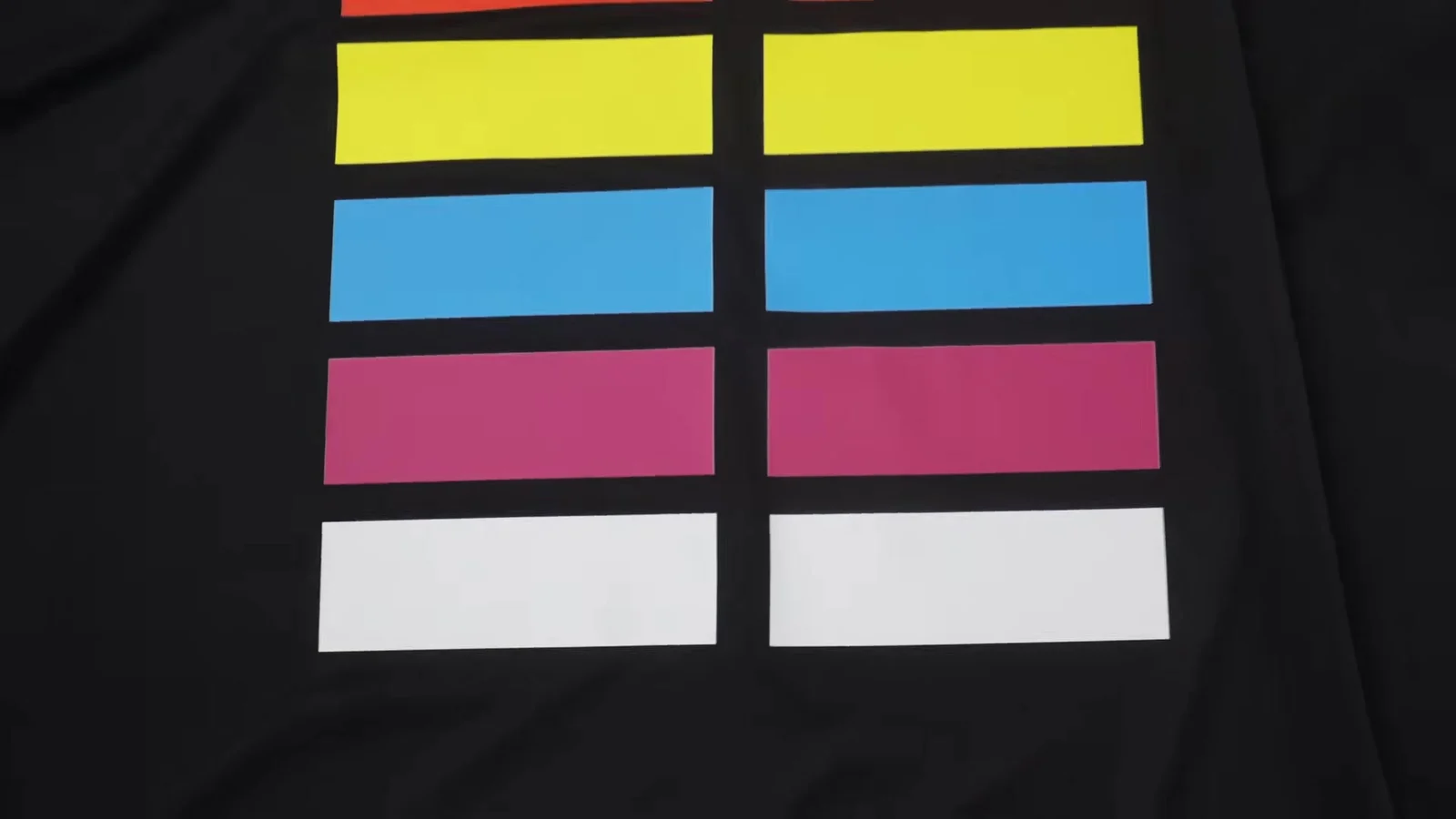
The strongest takeaway is practical: the actual pressed shirt decides the job. White powder looked brighter on some colors, black powder created more handling and residue concerns, and the test garments were not pre-confirmed as known-bad dye migrators.
Black powder is a test variable, not a production promise.
What AMS tested
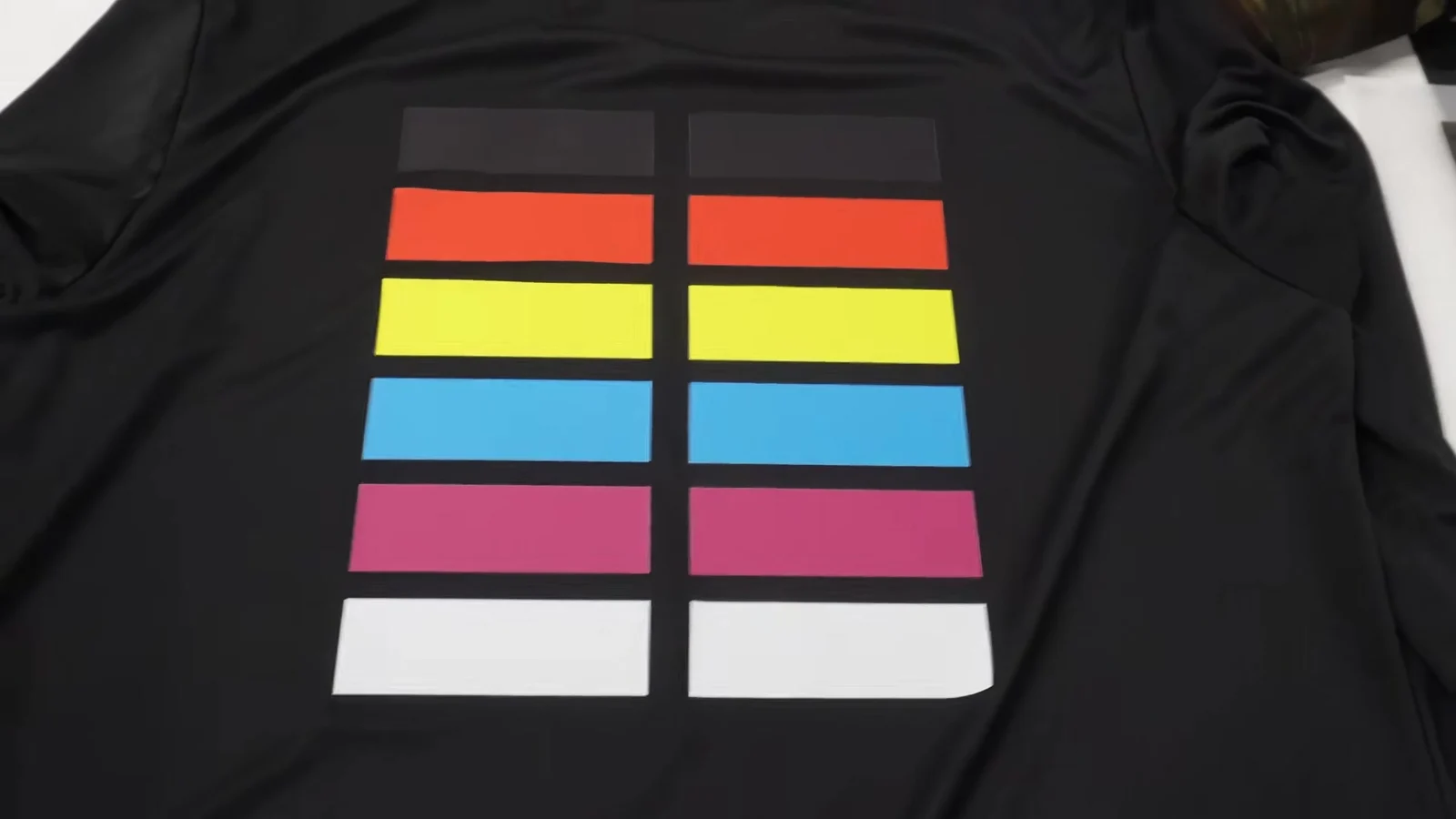
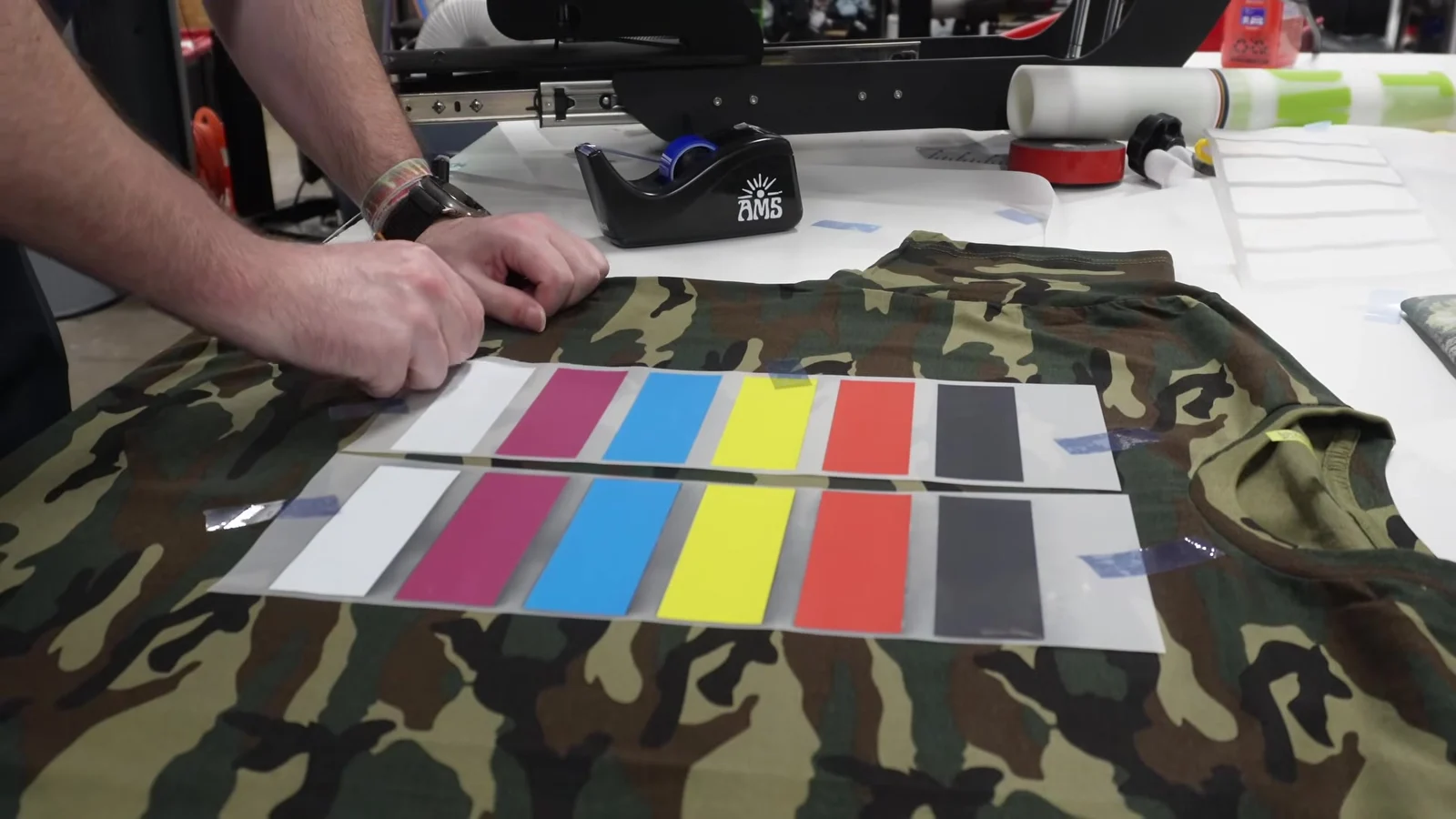
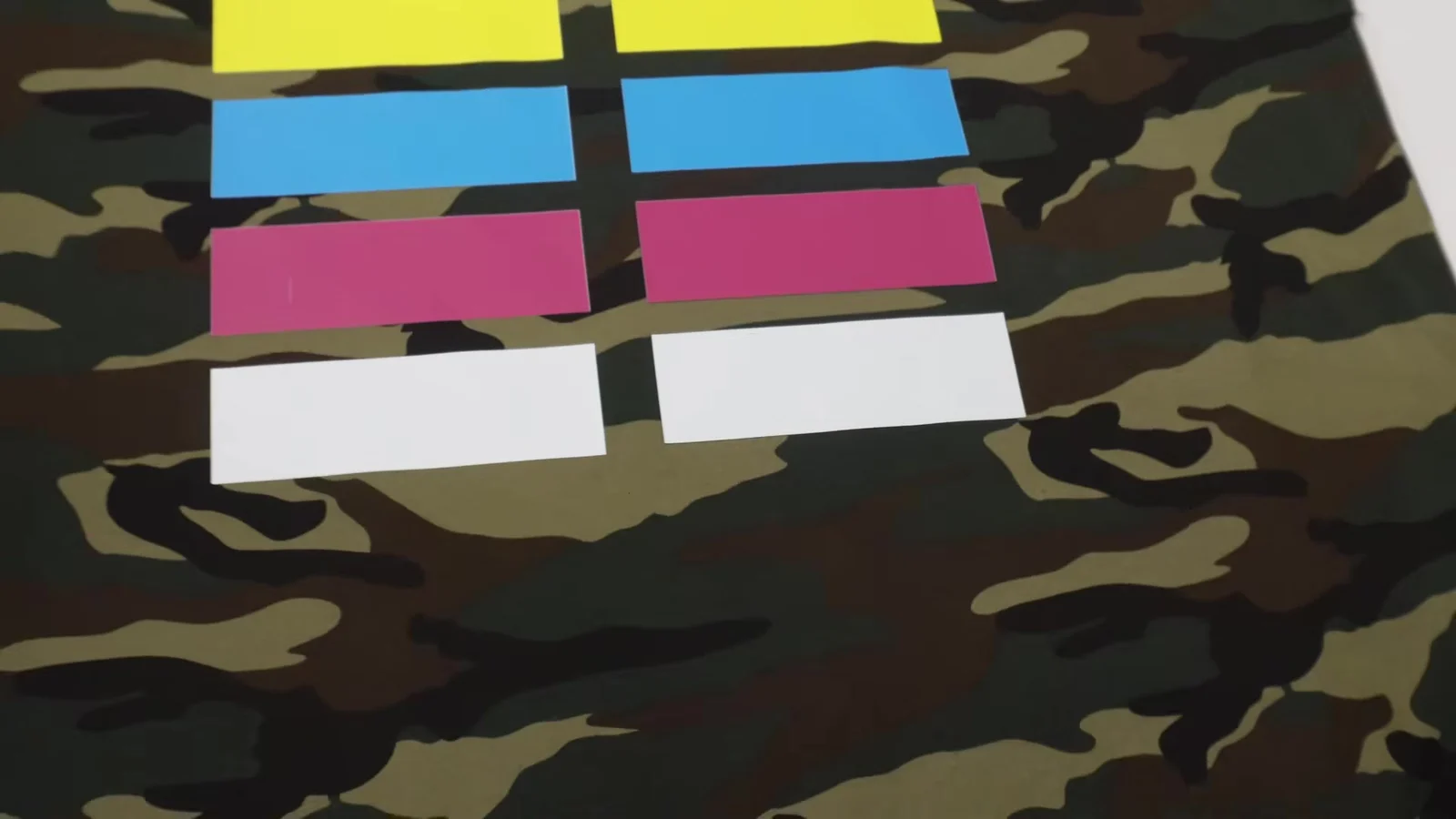
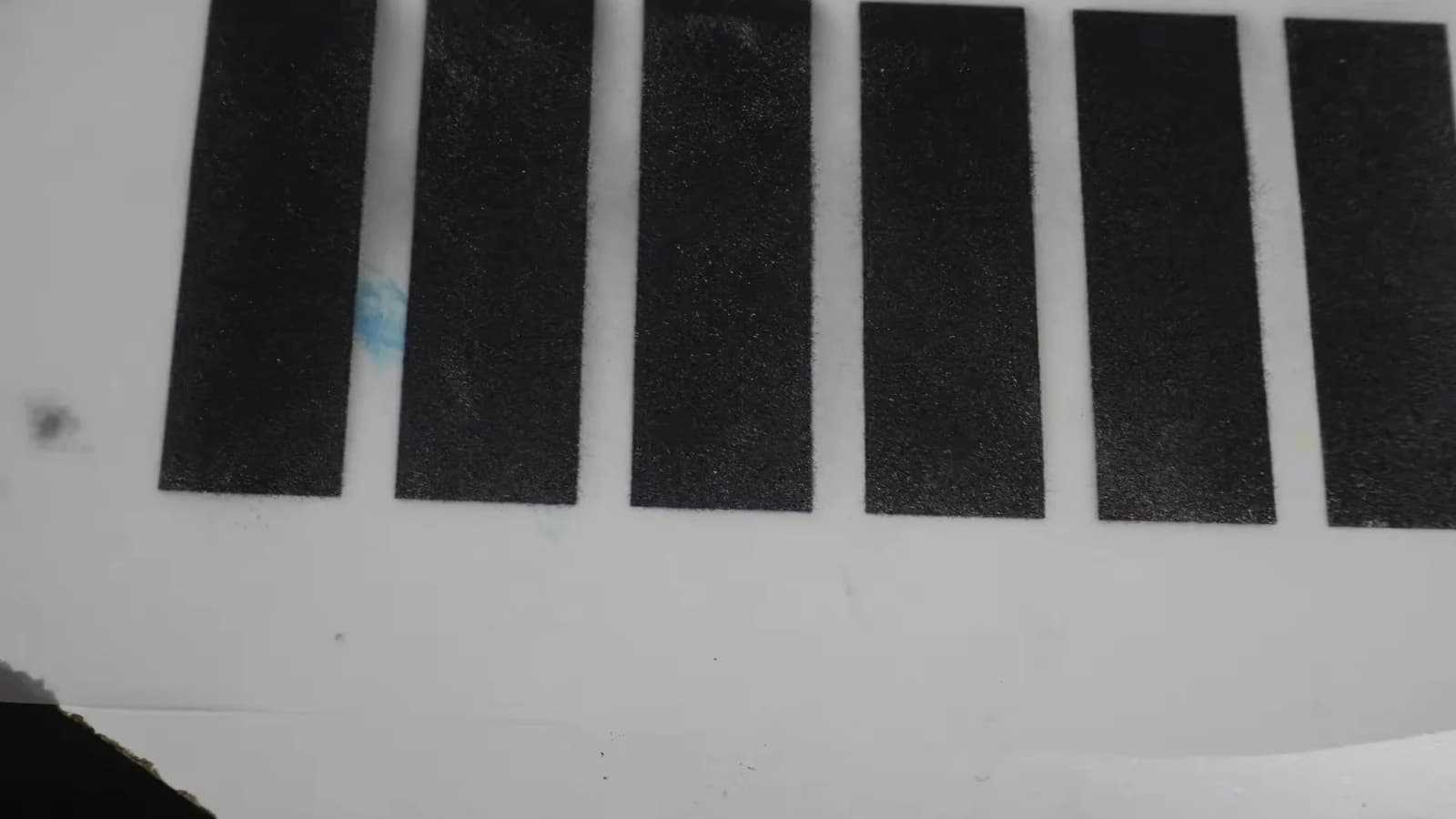
AMS compared black adhesive powder against regular white powder using the same color-bar style artwork. The garments were a black polyester long sleeve and a 65/35 cotton-poly camo shirt.
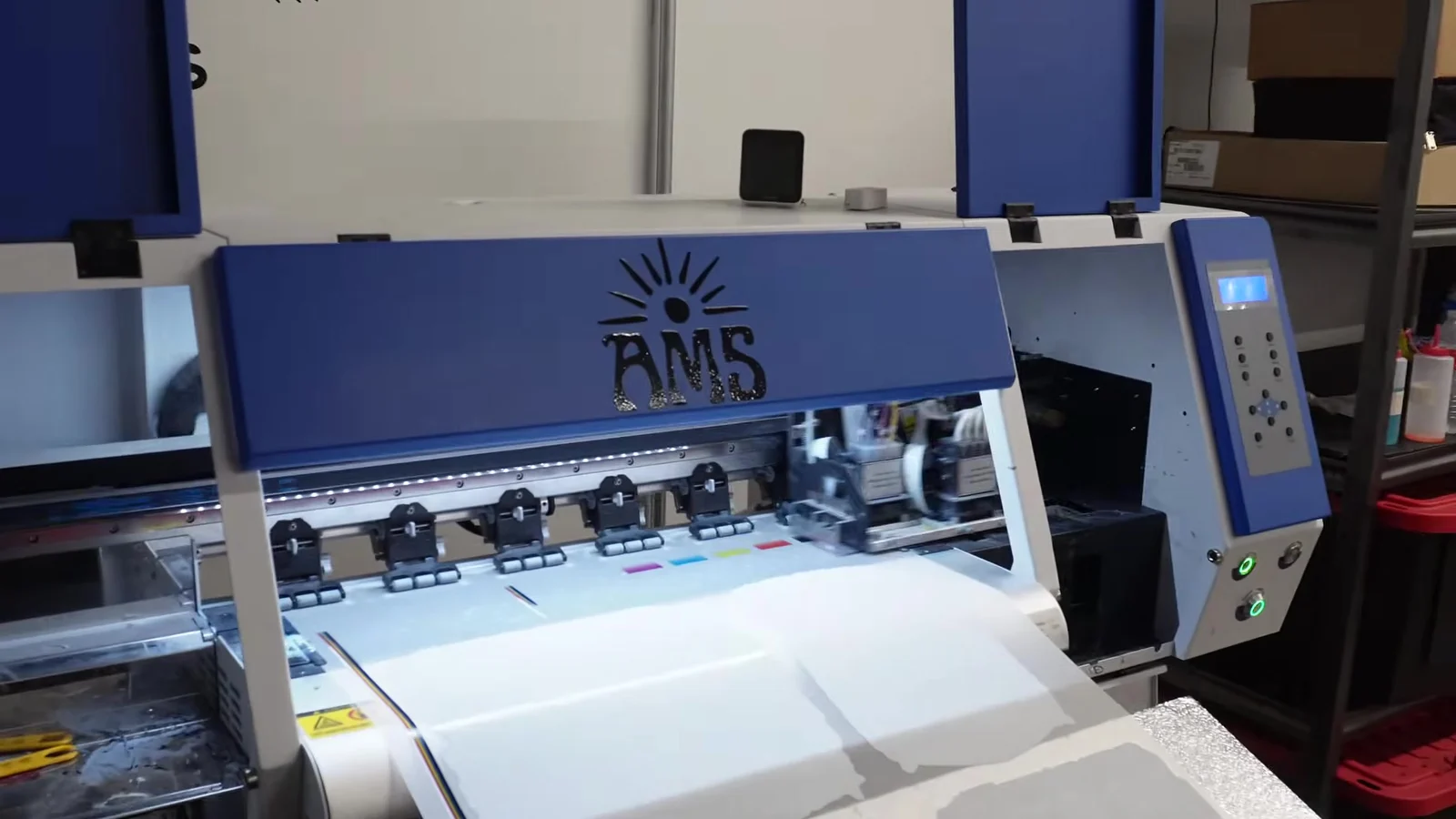
The test used 300 F, 10 seconds, medium-to-heavy pressure, and instant peel film. That gives the comparison real shop value, but it does not turn one test into a universal polyester rule.
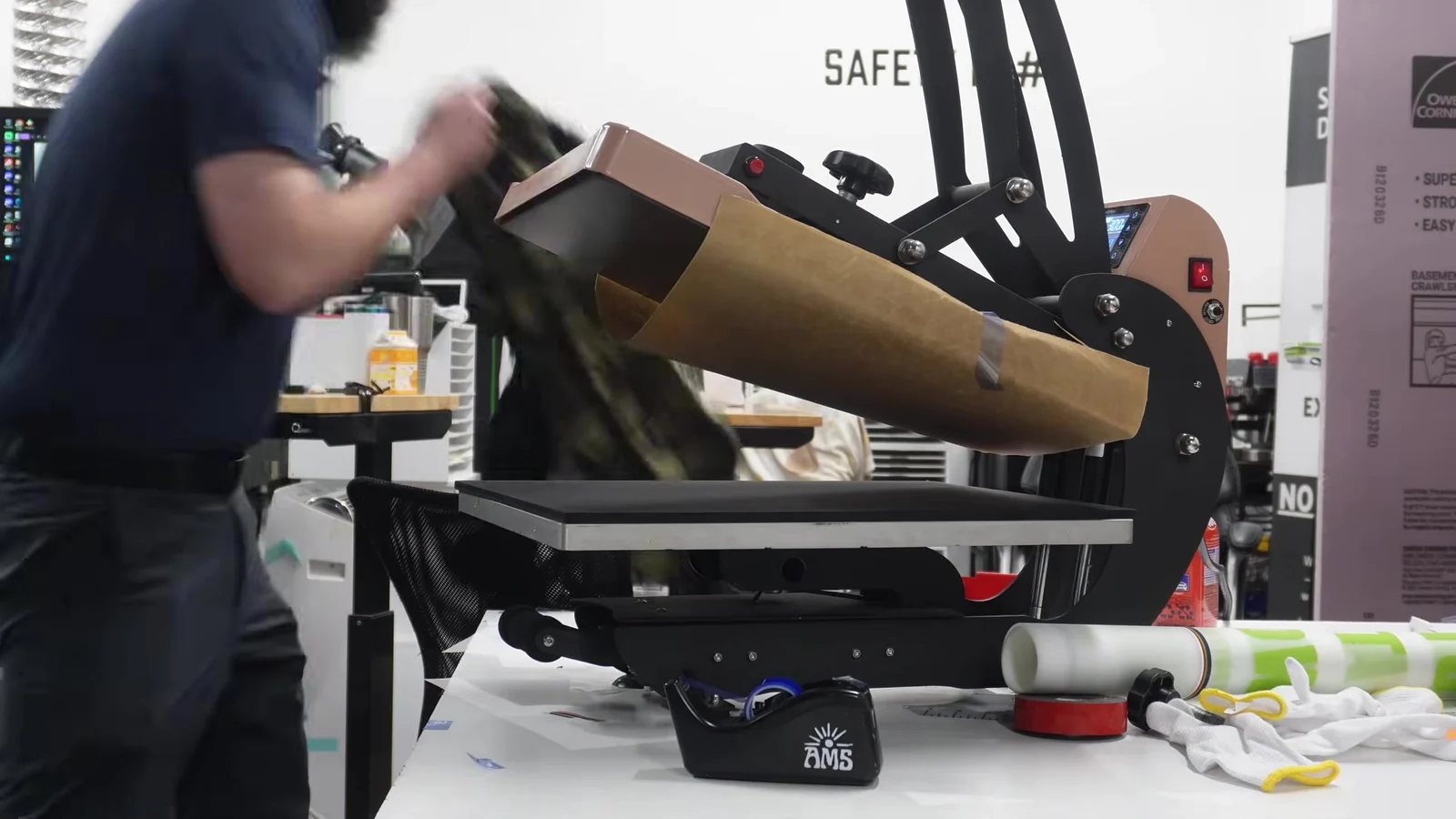
A useful test keeps the art and settings matched, then changes one variable.
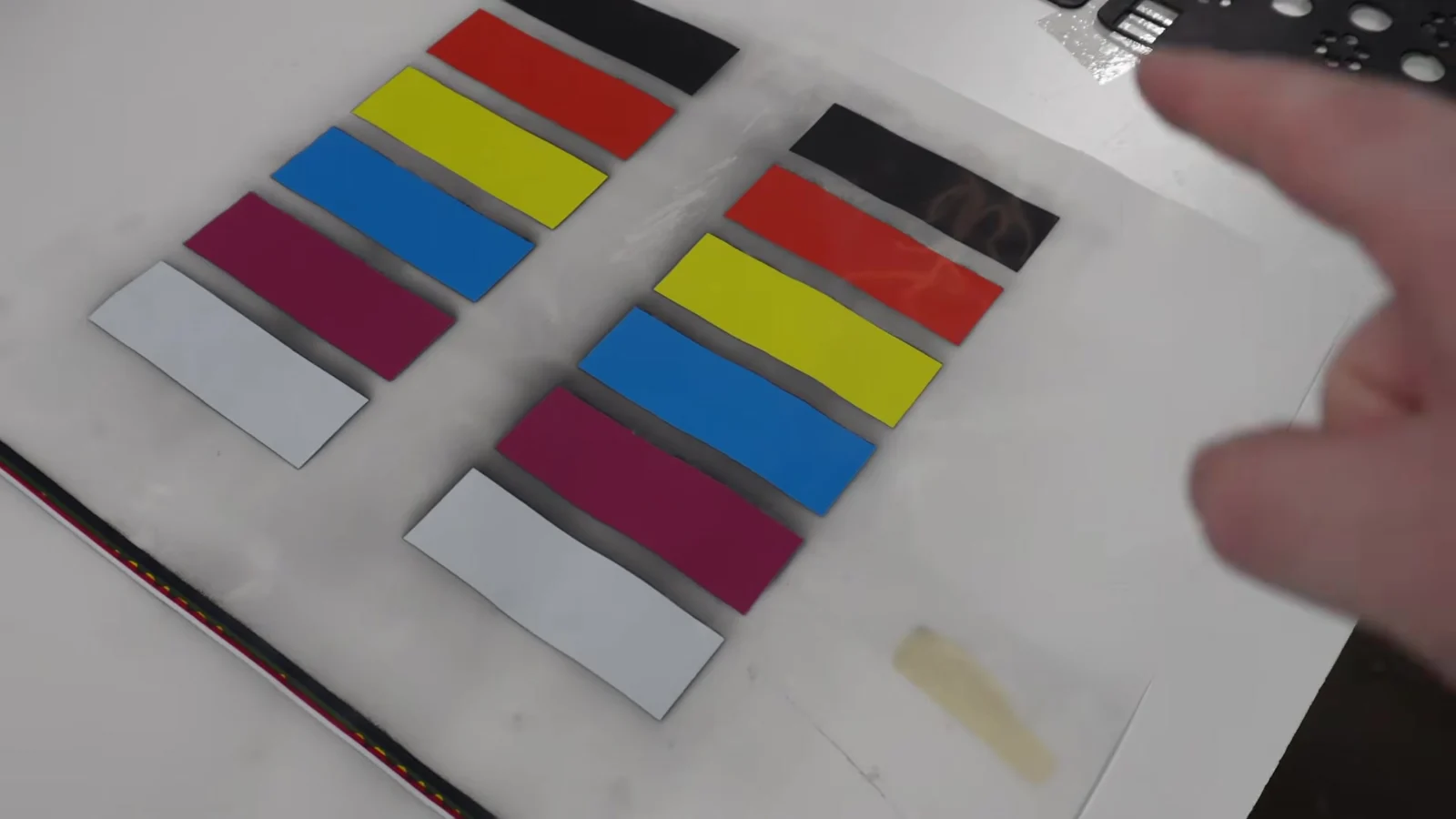
The main result: useful test, mixed outcome
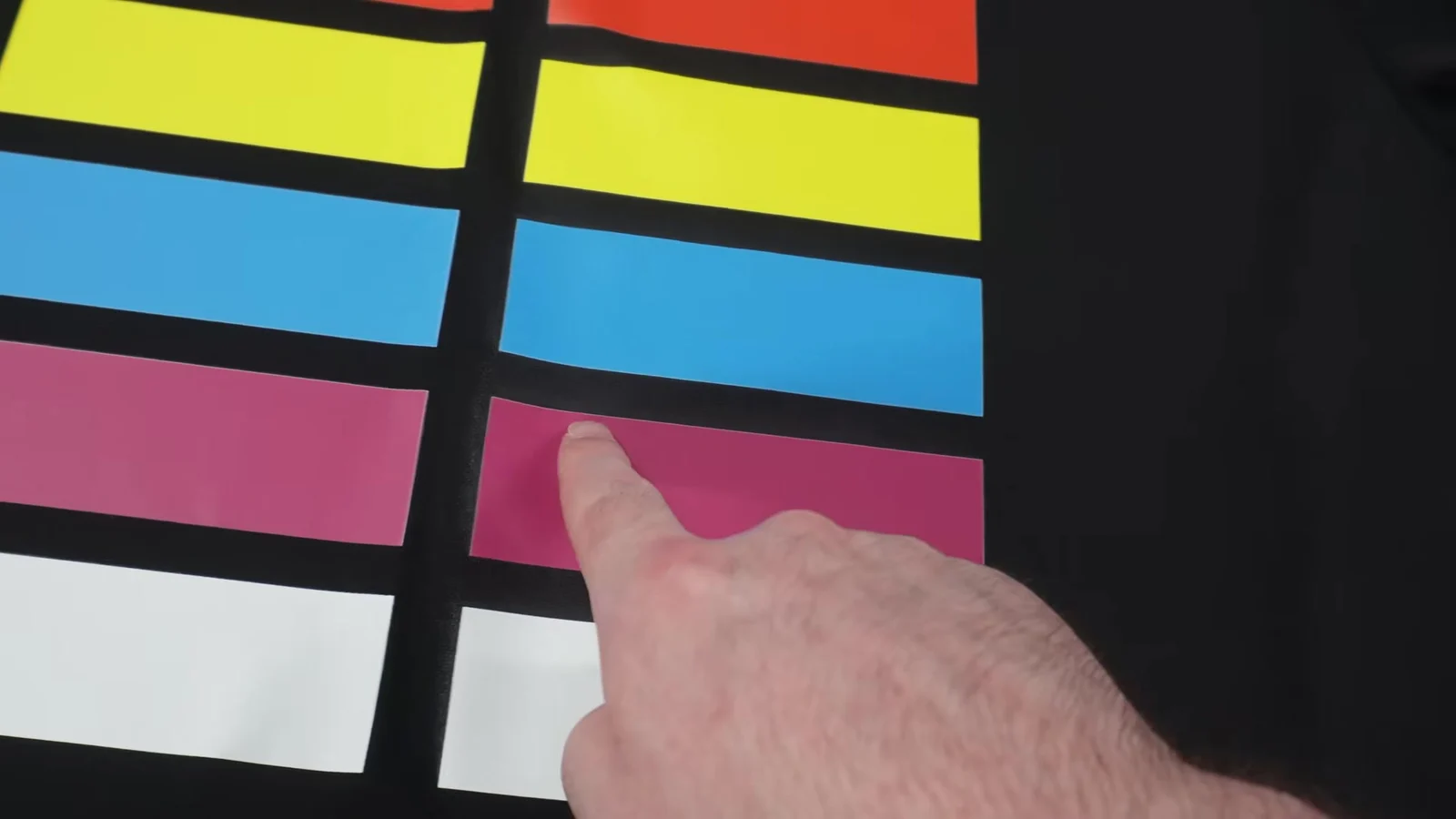
On the black polyester shirt, white powder looked brighter on some colors. Black powder had a reason to test on a dark garment, but it also made some colors look darker or more muted.
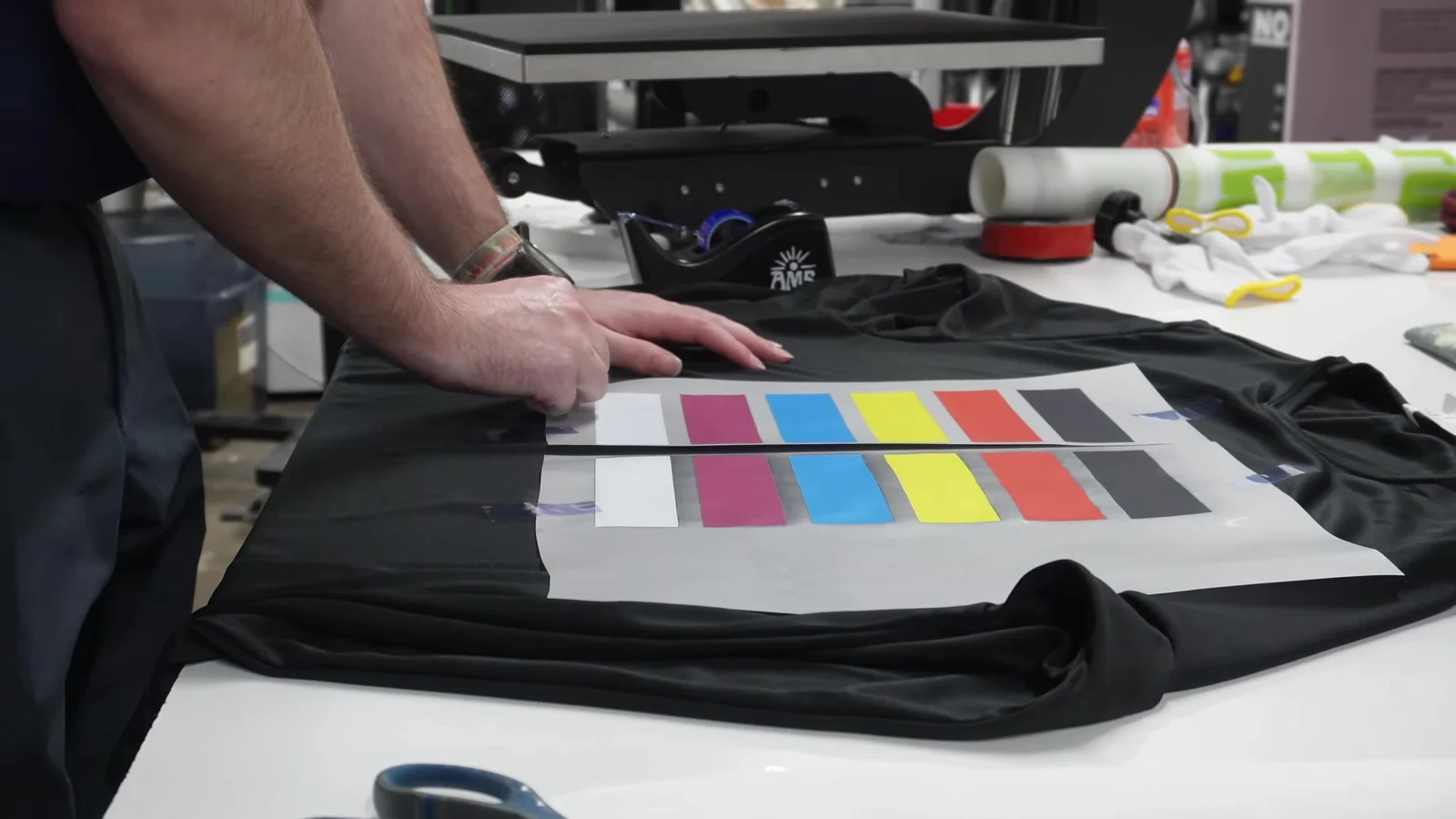
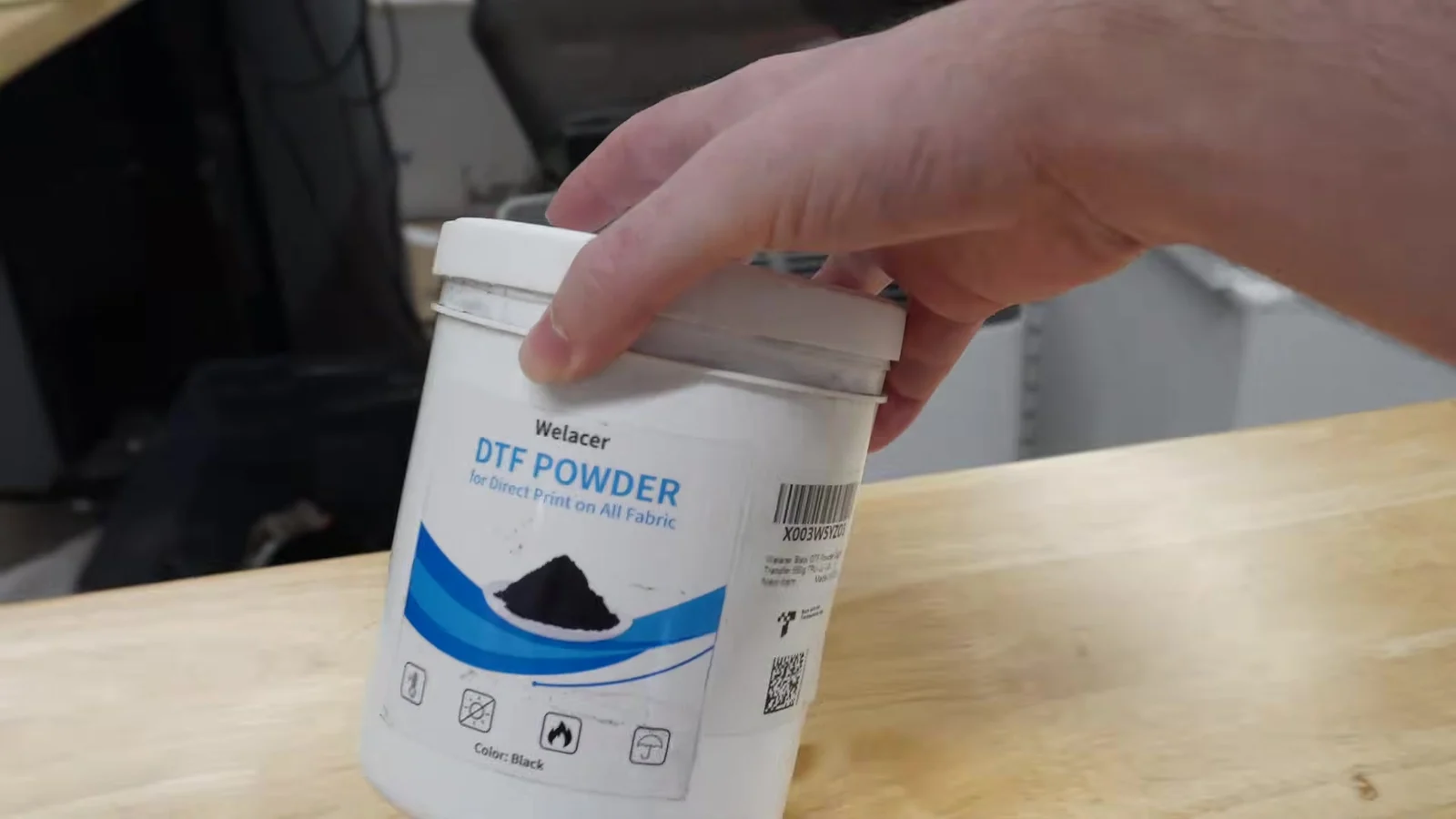
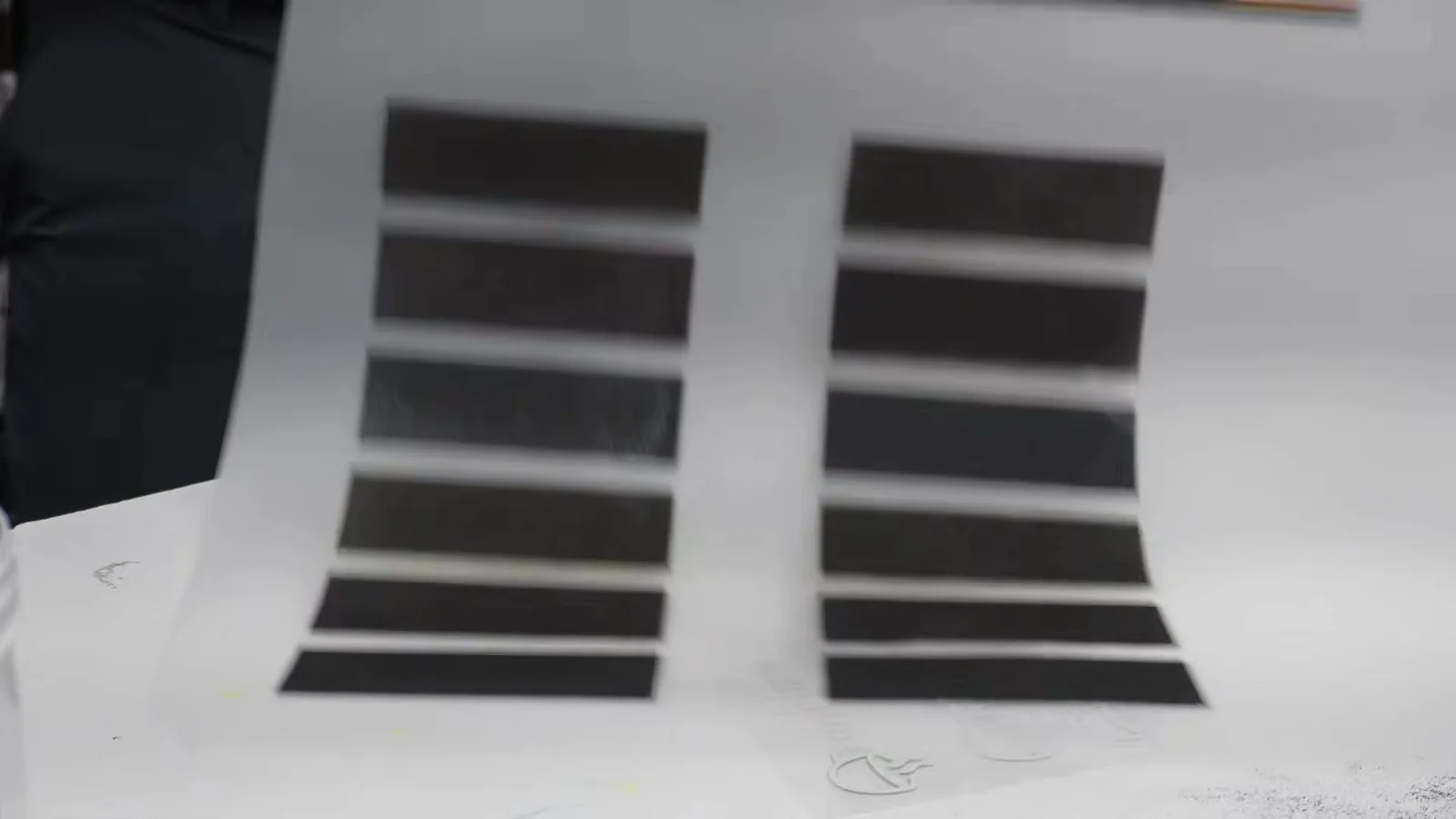
The black powder also changed the production feel. It appeared finer and messier, with visible dots or residue that needed inspection. A second press cleaned visible residue in this test, but that does not prove dye migration is solved.
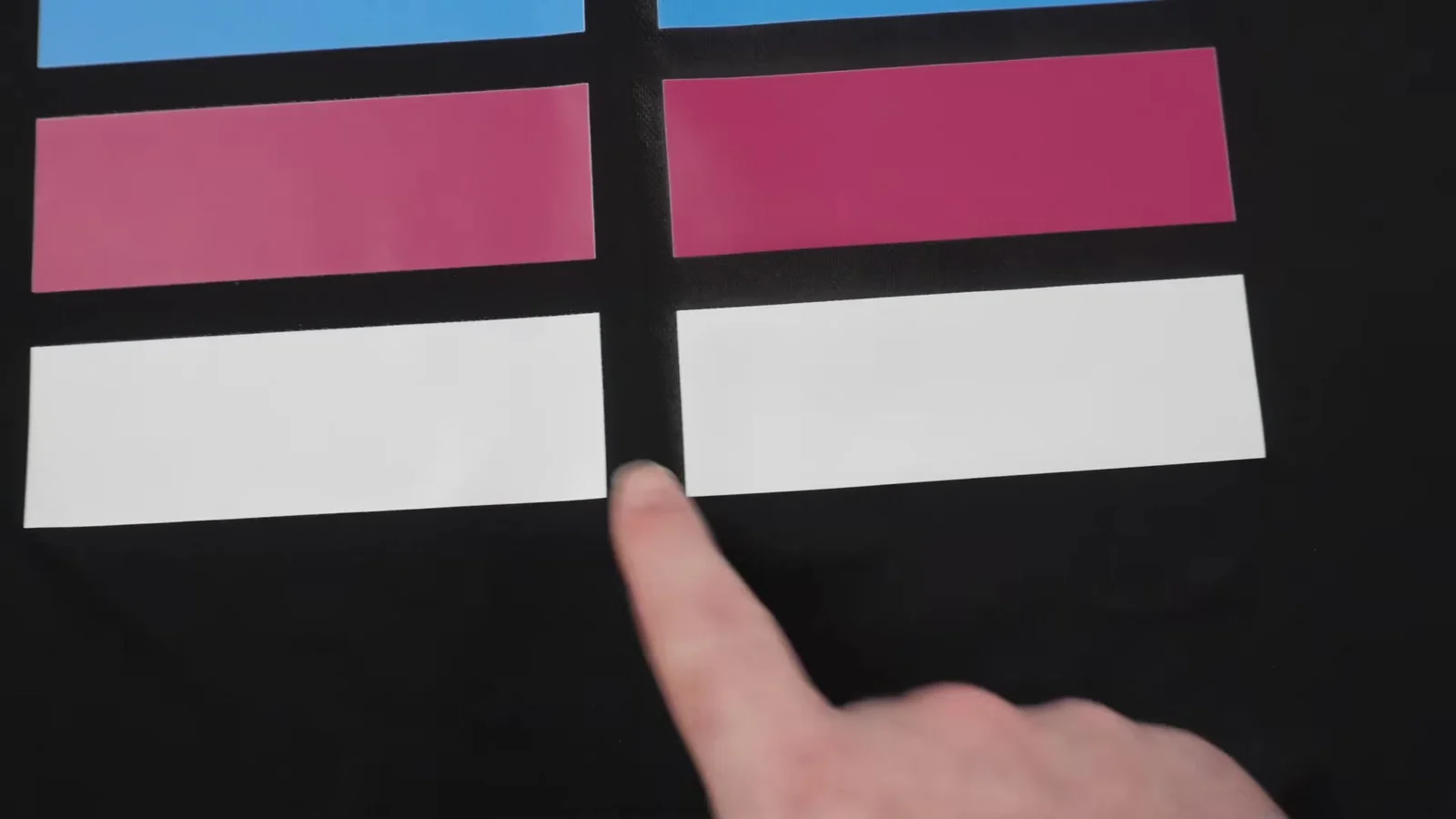
Judge more than migration. Compare brightness, residue, adhesion, and customer expectations before production.
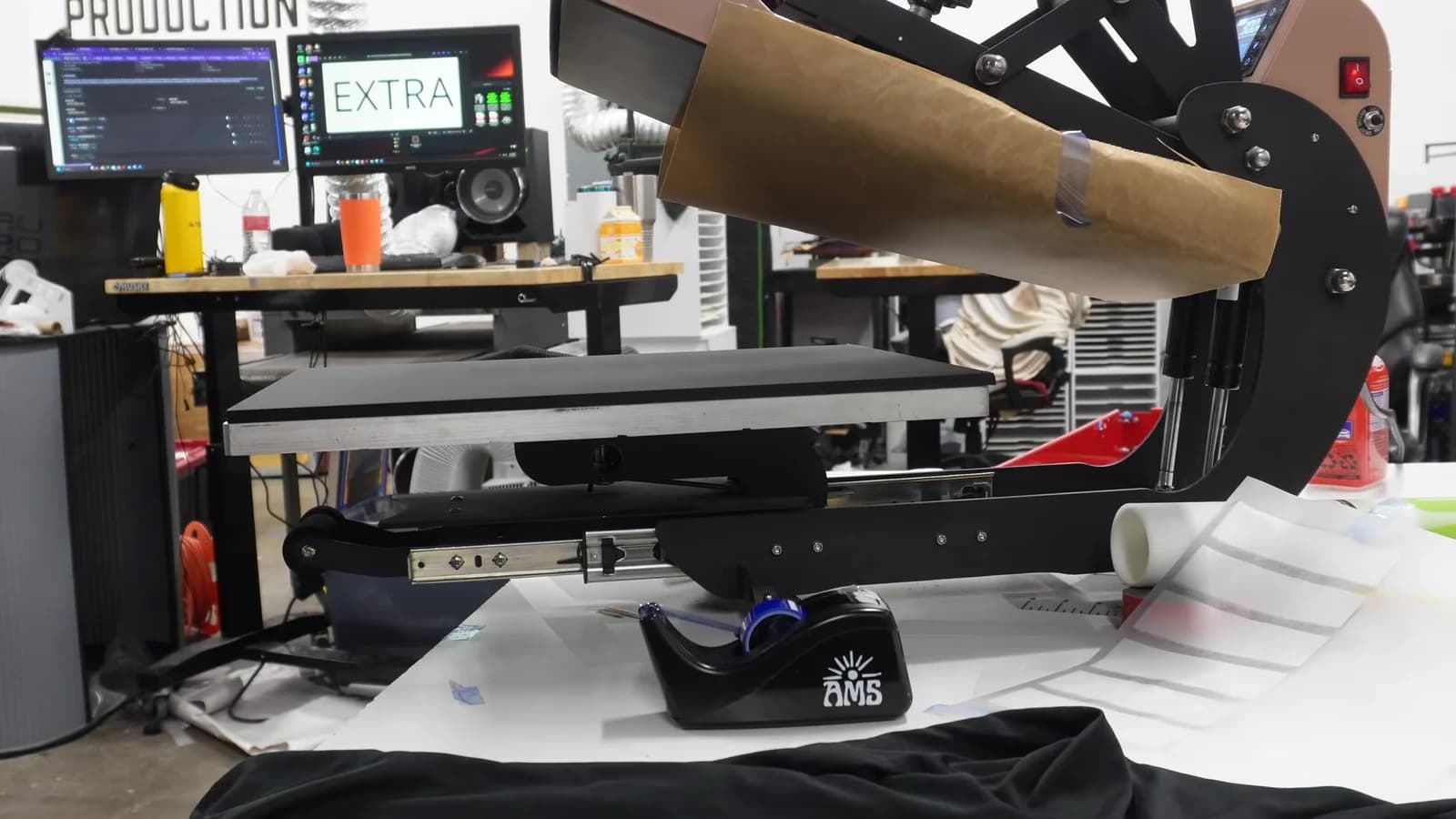
Dye migration is not just a powder question
Dye migration is the customer-facing problem where light ink can turn pink, gray, green, brown, dull, or dirty after heat exposes garment dye behavior. Powder may affect the result, but it is not the only variable.
The real stack includes fabric percentage, dye process, garment color, artwork color, heat, dwell time, pressure, peel, moisture, post-press, and whether the blank was actually tested before production.
A powder claim is not enough. The pressed, cooled garment has to prove the path.
When DTF transfers make sense on polyester shirts
DTF can work on polyester shirts, but polyester is not one category. A performance long sleeve, sublimated jersey, camo shirt, and lower-risk cotton-poly blend do not deserve the same promise.
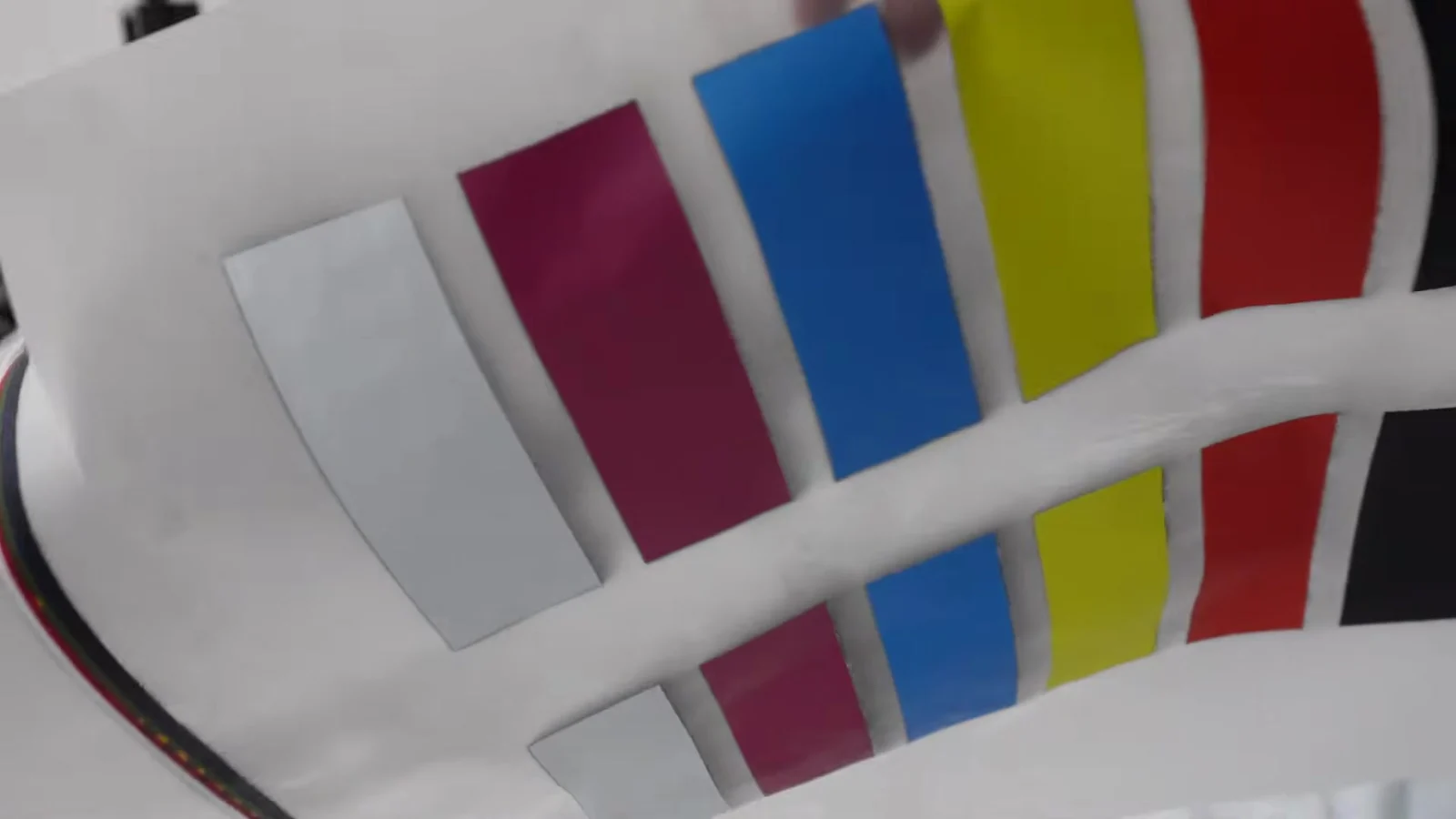
Transfers-only makes sense when your team can control the press and accepts the test result. If pressure, temperature, dwell, peel, or post-press is inconsistent, the failure can look like a powder issue when it is really an application issue.
DTF on polyester is possible, but the exact blank and press process decide the risk.
Camo and customer-supplied blanks need extra caution
Camo deserves caution because the word camo does not tell you how the pattern was made or how the dye will behave under heat. The AMS camo result was useful, but it was not a blanket approval for every camo shirt.
Customer-supplied blanks add another layer. AMS may not know storage, lot consistency, replacement availability, or whether the first failed press is a sample or the customer order.
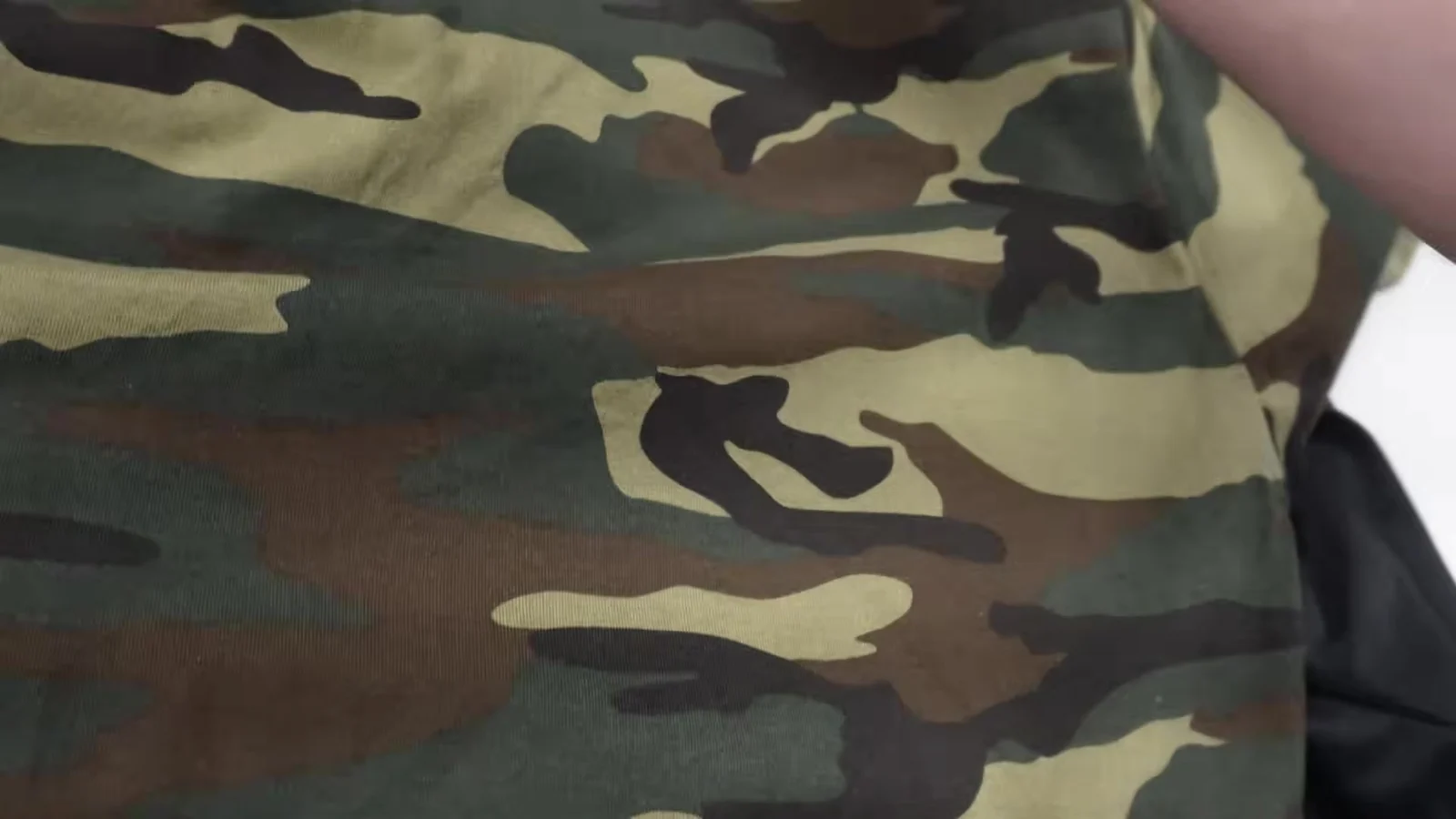
The exact blank matters more than the generic garment category.
Houston speed is real, but risk still counts
Houston same-day and next-day DTF work is valuable when the file is ready, the blank is low risk, and the production path is straightforward. High-risk polyester and camo are different.
If the job needs a test press, cooling check, alternate blank discussion, or risk acceptance, speed cannot replace proof. The customer may still have options, but the request needs the real deadline and test-permission details.
Do not let local pickup pressure override the test window on a risky garment.
What to send AMS before asking for a quote
Send the blank brand and style number, fabric percentage, color or pattern, product link, label photo, front/back photos, artwork file, print size, quantity, due date, and pickup or shipping preference.
Also say whether the blanks are already purchased, whether one extra blank can be tested, whether AMS or your team will press, and whether the order has already shown bleeding, dulling, residue, adhesion, or wash issues.
The cleaner the garment story, the safer the AMS recommendation.
What to Send AMS
DTF Polyester Job Check Before You Order
- Check transfer file requirements, then upload the actual artwork file and final print size.
- Send the blank brand, style number, fabric percentage, and product link if available.
- Send front, back, and label photos when the blank is customer-supplied.
- Flag polyester, camo, sublimated, safety color, red, heather, or unknown fabric before quote.
- Confirm whether one extra blank can be tested.
- Tell AMS who is pressing and whether the deadline is fixed.
Pressing Readiness Check
- Use matched settings when comparing powder variables.
- Record temperature, time, pressure, peel, and post-press.
- Press one test shirt before running the full stack.
- Let the result cool before judging brightness or color shift.
- Inspect residue, halo, edges, stretch, and wash risk before production.
- Stop if the result changes after a second press or mid-run check.
Choose the order path
Choose the AMS order path
Black DTF powder may help in some dark polyester tests, but the AMS side-by-side did not prove it beats white powder; test the actual blank before promising a customer job.
| Your situation | Best next step | Why | Watch out for |
|---|---|---|---|
| Dark polyester with light art and extra blank available | DTF Transfers | Run a matched black-vs-white powder test before the full DTF order. | Judge the pressed shirt after cooling, not just the transfer sheet. |
| Camo, sublimated, safety color, or unknown high-poly fabric | Ask Ams | The exact blank can change the result more than powder color. | Do not promise same-day certainty without garment details and test approval. |
| Customer already bought exact-count blanks with no extras | Ask Ams | The first failed press would damage the customer order, not a sample. | Ask for written risk acceptance, alternate blanks, or AMS review before production. |
| Buyer has not purchased blanks yet | Blanks Plus Transfers | A safer blank may be smarter than trying to fix a risky synthetic with powder. | Refresh current stock, colors, and specs before quoting. |
60-second order check
- Confirm fabric percentage and whether the blank is polyester, camo, sublimated, or safety color.
- Check whether the design uses white, pastel, neon, cream, or large light areas.
- Ask whether one extra blank can be used for testing before production.
- Record temperature, time, pressure, peel, and post-press decisions.
- Compare the pressed result after cooling before promising the full order.
- Send AMS the label photo, product link, artwork, quantity, deadline, and pickup plan.
AMS shortcut
AMS would score the garment risk first, test the actual blank when risk is moderate or high, and only then recommend transfers-only, AMS pressing, finished apparel, a safer blank, or risk acceptance.
Quick Math
Polyester Dye Migration Risk Score
Add the points that apply before you promise a dark polyester, camo, safety-color, or customer-supplied DTF job.
High-poly fabric
100% polyester, performance polyester, camo, sublimated, safety color, or unknown synthetic = +2 to +3
A camo polyester shirt with unknown dye behavior starts in the moderate or high-risk range before art is considered.
Artwork visibility
White, pastel, neon, cream, or large light solid areas = +2
A large white back print on dark polyester exposes dulling or dye migration faster than small dark art.
No test blank
No extra blank for testing = +3
If the customer brings exactly 48 shirts for a 48-shirt order, the first test failure damages the order.
Deadline pressure
Same-day, next-day, or event-critical Houston deadline = +2
A Friday handout with no extra blank may require alternate blank approval or written risk acceptance.
Use the score as an intake tool, not a guarantee. A high score means the order needs proof, a safer blank, AMS review, or risk acceptance before production is promised.
Houston order examples
Houston school team needs dark polyester shirts by Friday
A fixed handout date plus dark polyester and light art means the blank should be reviewed or tested before the job is promised.
Buyer: School or team buyer
Qty: 48 shirts
Deadline: Friday pickup
Path: Ask Ams
Outdoor group wants camo shirts with a white logo
Camo can be patterned or sublimated, so the actual blank should be tested before the full order or switched to a safer blank.
Buyer: Outdoor or fishing group
Qty: 36 shirts
Deadline: Event week
Path: Mixed
Print shop wants transfers only for a customer-supplied uniform
Transfers-only can work only if the shop controls the press process and accepts that the powder comparison does not guarantee the garment result.
Buyer: Print shop or reseller
Qty: 75 transfers
Deadline: Next-day ship
Path: DTF Transfers
Buyer has not bought blanks and wants the safest Houston path
When blanks are not purchased yet, AMS can help choose a lower-risk shirt before powder becomes the workaround.
Buyer: Local business buyer
Qty: 100 shirts
Deadline: Next week
Path: Blanks Plus Transfers
DTF Powder And Polyester Mistake Diagnosis
| Problem | Likely cause | Prevent it | When to ask AMS |
|---|---|---|---|
| Light ink turns pink, gray, green, brown, dull, or dirty. | Garment dye or sublimation color may be reacting under heat, especially on polyester, camo, safety color, or red garments. | Test the actual blank with the actual artwork before promising production, and document pressure, press time, and deadline risk. | Ask AMS when the blank is customer-supplied, high-poly, camo, or deadline-critical. |
| White powder looks brighter than black powder in the result. | The darker adhesive can change how light colors read, and black powder may not be solving the real issue. | Compare brightness, not only black-on-black appearance, and confirm the artwork is transparent, final-size, and not a blurry low-res file. | Ask AMS before using black powder on brightness-sensitive art. |
| Dots, halo, or residue show up around the design. | Powder handling, cure, static, excess adhesive, or cleanup may be creating its own appearance issue. | Inspect before and after pressing, then decide whether a second press, pressure adjustment, cleaner powder handling, or cutoff/deadline change is needed. | Ask AMS if residue appears on the test before running the whole order. |
| The first shirt looks fine but the run shifts later. | Heat, pressure, dwell, blank variation, moisture, or operator consistency changed during the run. | Record settings, test first, keep DPI and 1 pt detail limits in mind for artwork, and spot-check mid-run pieces. | Ask AMS when the job is large, customer-facing, or not repeatable. |
| Customer wants same-day certainty on camo or polyester. | The timeline leaves no room for proof, cooling, wash check, or alternate blank decisions. | Move fast on details, but do not let speed, pickup cutoff pressure, or a tight deadline replace risk review. | Ask AMS immediately with label photo, artwork, deadline, and extra-blank status. |
Interactive Tool
Check Your Polyester DTF Risk
Answer a few quick questions about the blank, artwork, deadline, and test window so AMS can recommend whether to test, switch blanks, order transfers, or have us press it. The builder turns your answers into a customer-facing request, an internal AMS production summary, and smart warnings before you send it.
Garment brand/style
A4 polyester long sleeve, Badger camo, Team 365 performance tee, or unknown
Fabric percentage
100% polyester, 65/35 cotton-poly, cotton/poly, unknown
Color or pattern
Black, camo, safety green, red, sublimated pattern, heather
Artwork colors
White/light areas, neon, pastel, full color, mostly dark
Final print size
Full front, left chest, back print, sleeve size
Quantity
Number of shirts or transfers
Deadline
Real handout date and pickup/shipping preference
Extra blank available
Yes, no, or not sure
Who is pressing
AMS, my team, not sure
Current concern
Dye migration, residue, brightness, adhesion, wash, deadline
Frequently Asked Questions
Is black DTF powder a guaranteed fix for polyester dye migration?
No. In this AMS shop test, black powder was useful to compare, but it did not create a universal answer. The actual blank, artwork, heat, pressure, peel, and inspection window still decide the job.
Is black DTF powder better than white powder for dark shirts?
Sometimes it may be worth testing, but better depends on the goal. In this test, white powder looked brighter on some colors, while black powder looked darker or more muted and created more residue concerns.
Can DTF transfers go on polyester shirts?
Yes, DTF can work on polyester shirts, but polyester is not one category. Performance shirts, sublimated jerseys, camo shirts, and unknown customer-supplied blanks can behave differently under heat.
Why do light DTF prints turn dull or dirty on polyester?
Light ink can show garment dye behavior after heat, especially on polyester, camo, sublimated, red, safety-color, or unknown synthetic blanks. It can also be confused with pressure, peel, residue, or adhesion issues.
Can you press DTF on camo shirts?
Sometimes, but camo needs extra caution. The exact blank matters. Treat sublimated or high-poly camo as risky until the actual shirt is tested.
Should I change powder, change blanks, or ask AMS to press?
If the blank can still change and risk is high, a safer blank may be the first move. If the blank is locked in, test it. If the job is urgent or customer-facing, ask AMS about pressing/QC or finished apparel.
What should I send AMS before asking about black powder?
Send the blank brand, style, fabric percentage, color, product link, label photo, artwork file, final print size, quantity, deadline, pickup preference, extra blank status, and who will press.
Sources
- AMS source video: black powder vs white powder - AMS Transfers
- How to apply DTF transfers - AMS Transfers
- Transfer file requirements - AMS Transfers
- Same-day DTF transfers Houston - AMS Transfers
- Press It For Me - AMS Transfers