An online merch store works when students and families, athletes and supporters, members, or employees need to order approved merchandise without you collecting sizes and payments by hand. You approve the products, artwork, and retail prices; each person orders for themselves.
Built for organizers who already have the people. If you are still looking for an audience to sell to, a store will not create one.
You choose and publishYour people order for themselvesAMS produces each paid order
Choose the audience that will recognize the merchandise—students and families, athletes and supporters, employees and crews, or a cause’s supporters. Your pick sets the planning questions and the preset your draft opens with.
No defined group yet? A Campaign Store will not create one—start where your people already are.
Find the right operating model
A store is useful when individual ordering is the problem.
If you already know every size and quantity, a bulk order may be cleaner. If supporters, families, or employees need to order for themselves, a campaign store removes the shared spreadsheet and separate-payment chase.
01
Individual shoppers need their own checkout
02
The organizer wants control over the approved assortment
03
Artwork and placements need one written source of truth
04
A draft-to-live workflow matters more than a giant catalog
One connected workflow
Upload → place → price → publishEach arrow is a decision you make. Nothing advances on its own.
Live AMS catalog
Start with products that have a reason to be there.
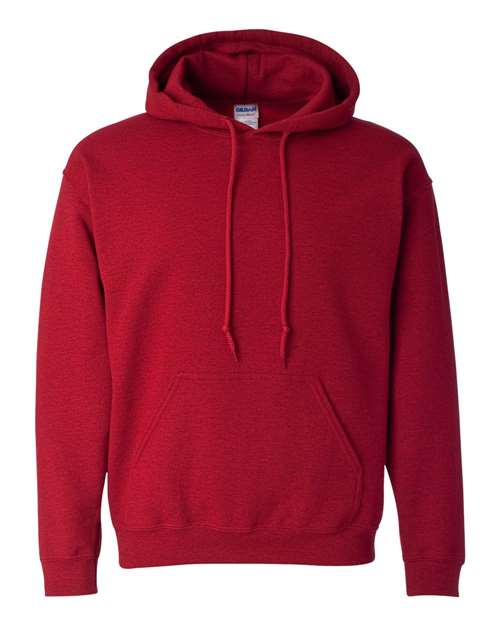
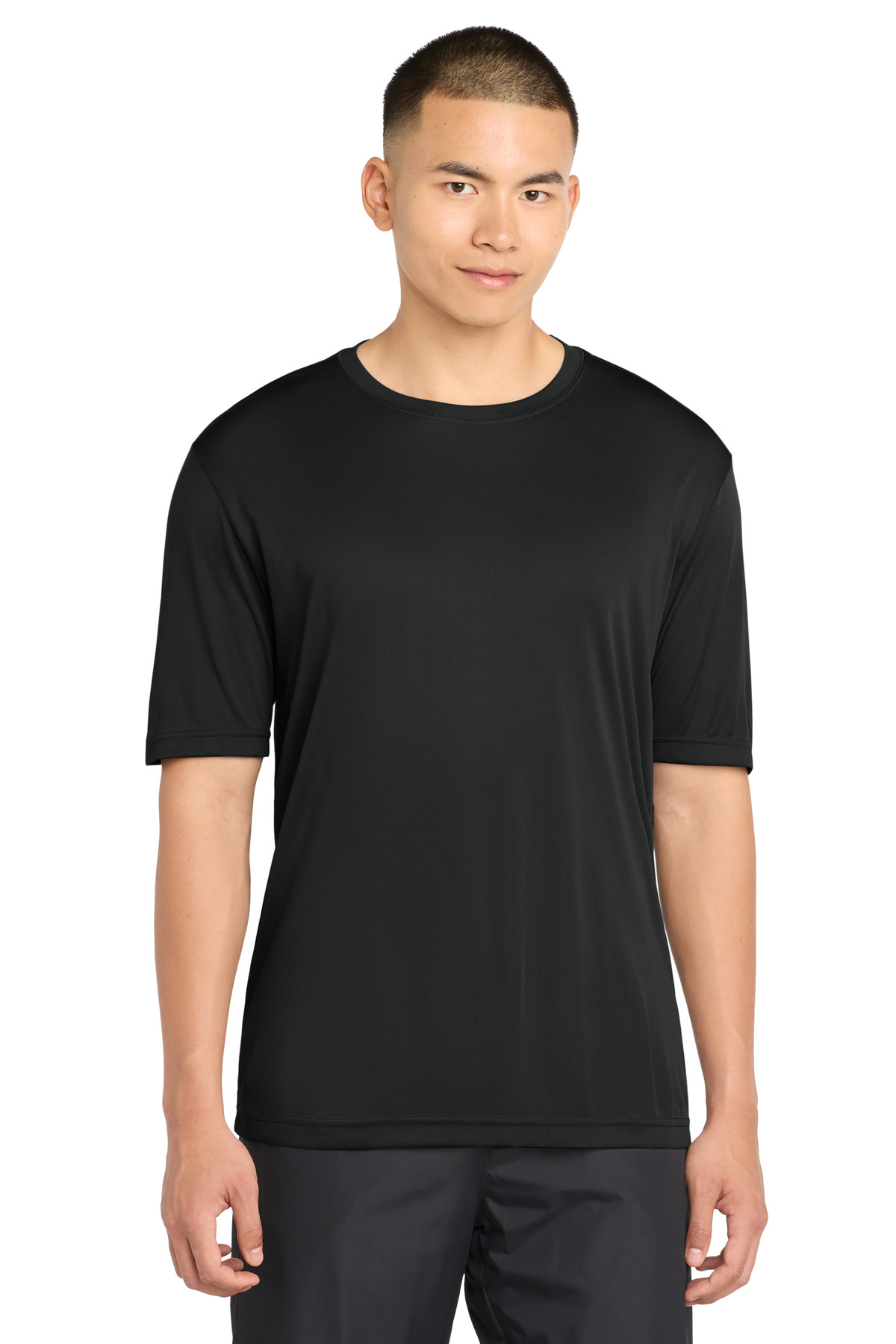
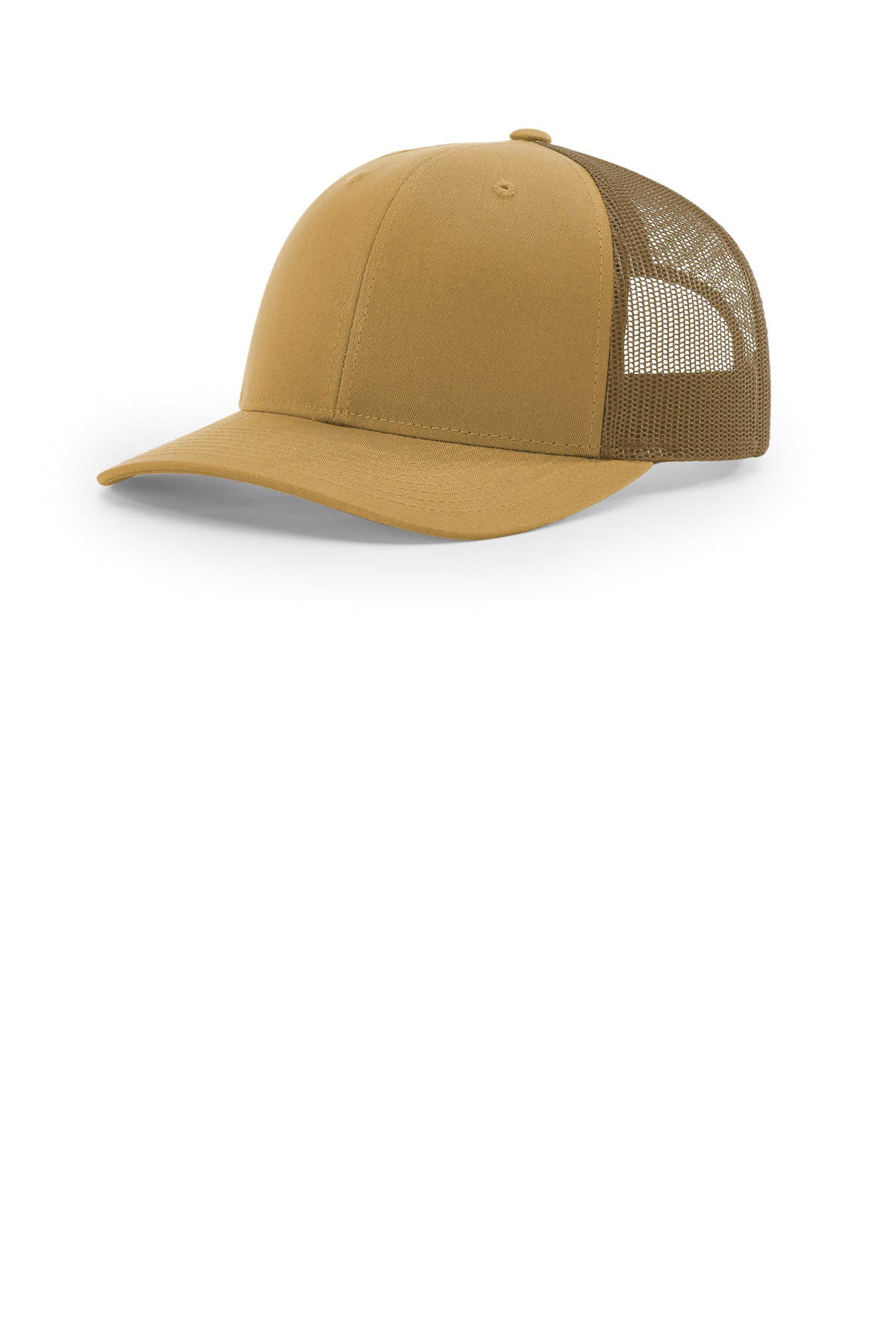
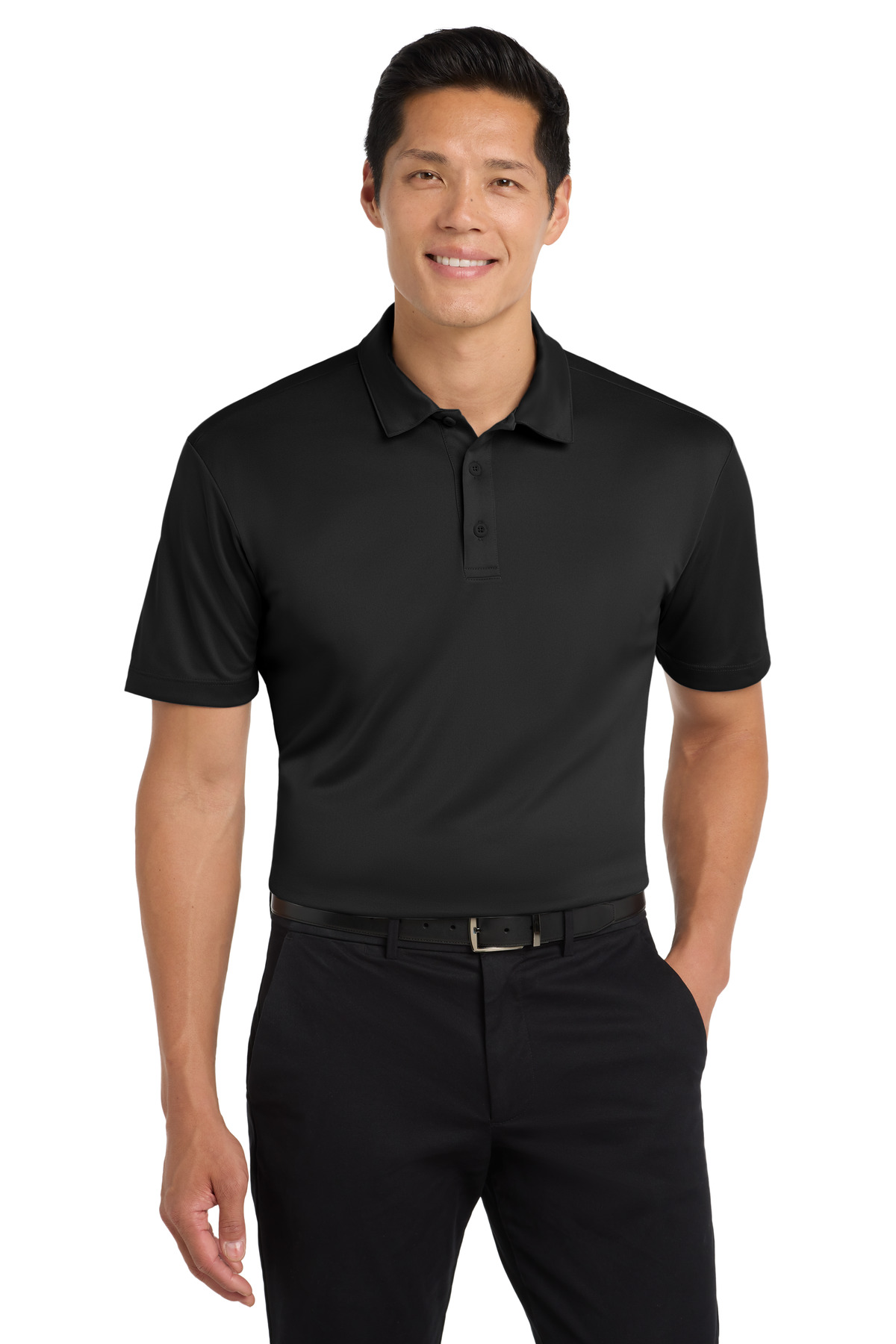
These cards come from the current AMS catalog rather than a pasted product list. Names, images, decorated-from starting prices, colors, and sourcing can change. A starting price is not your campaign price; you set retail in the editor.
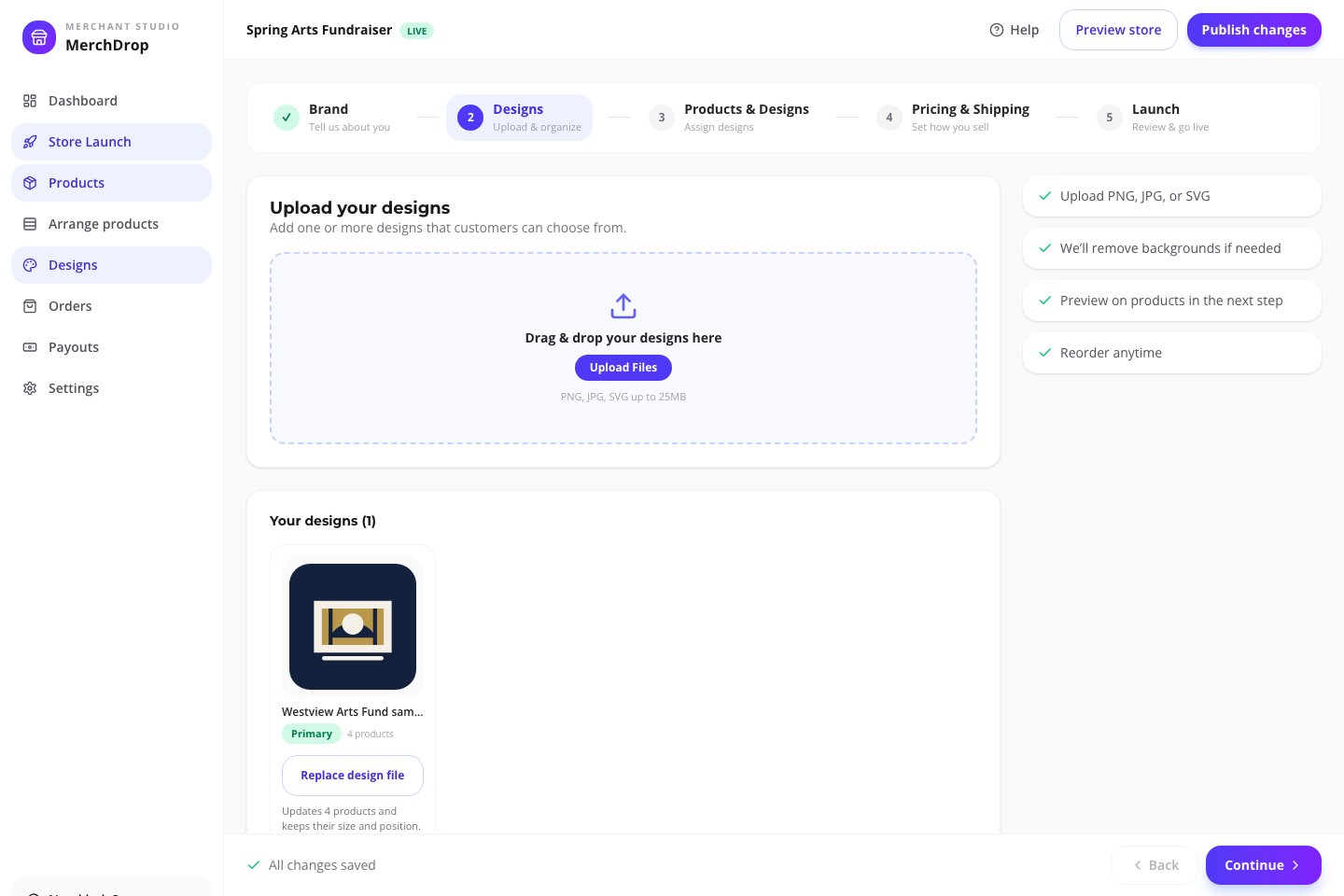
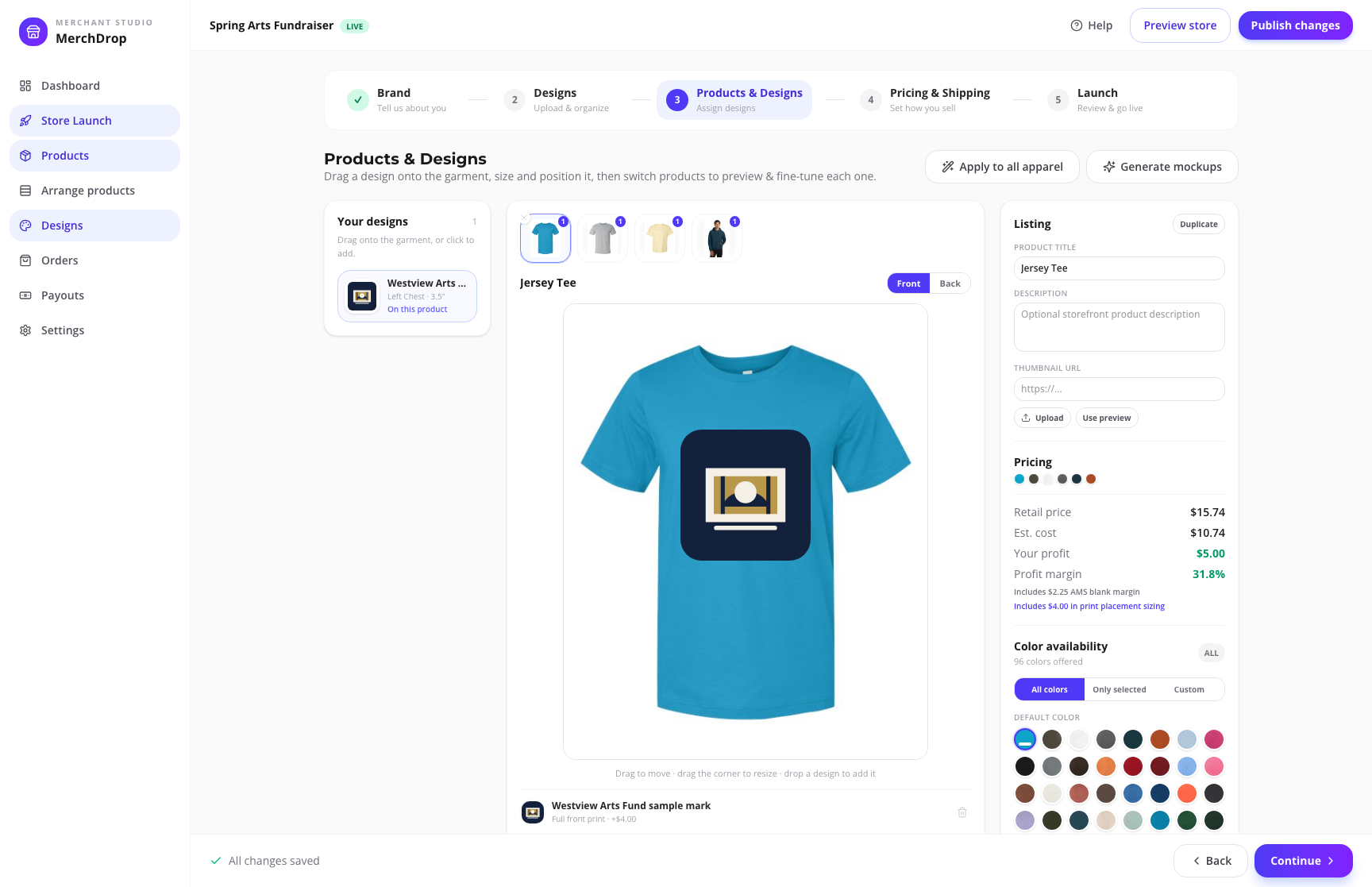
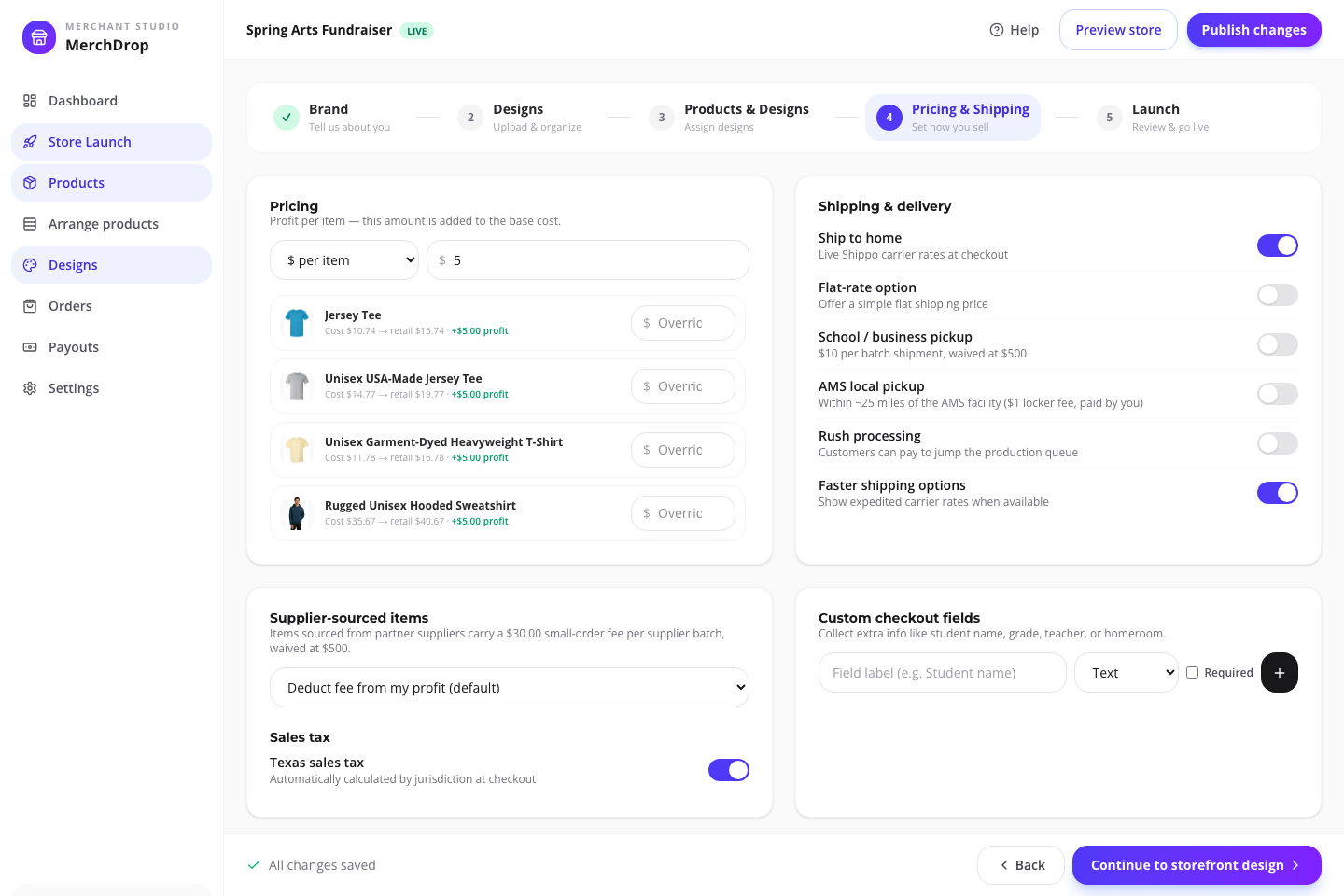
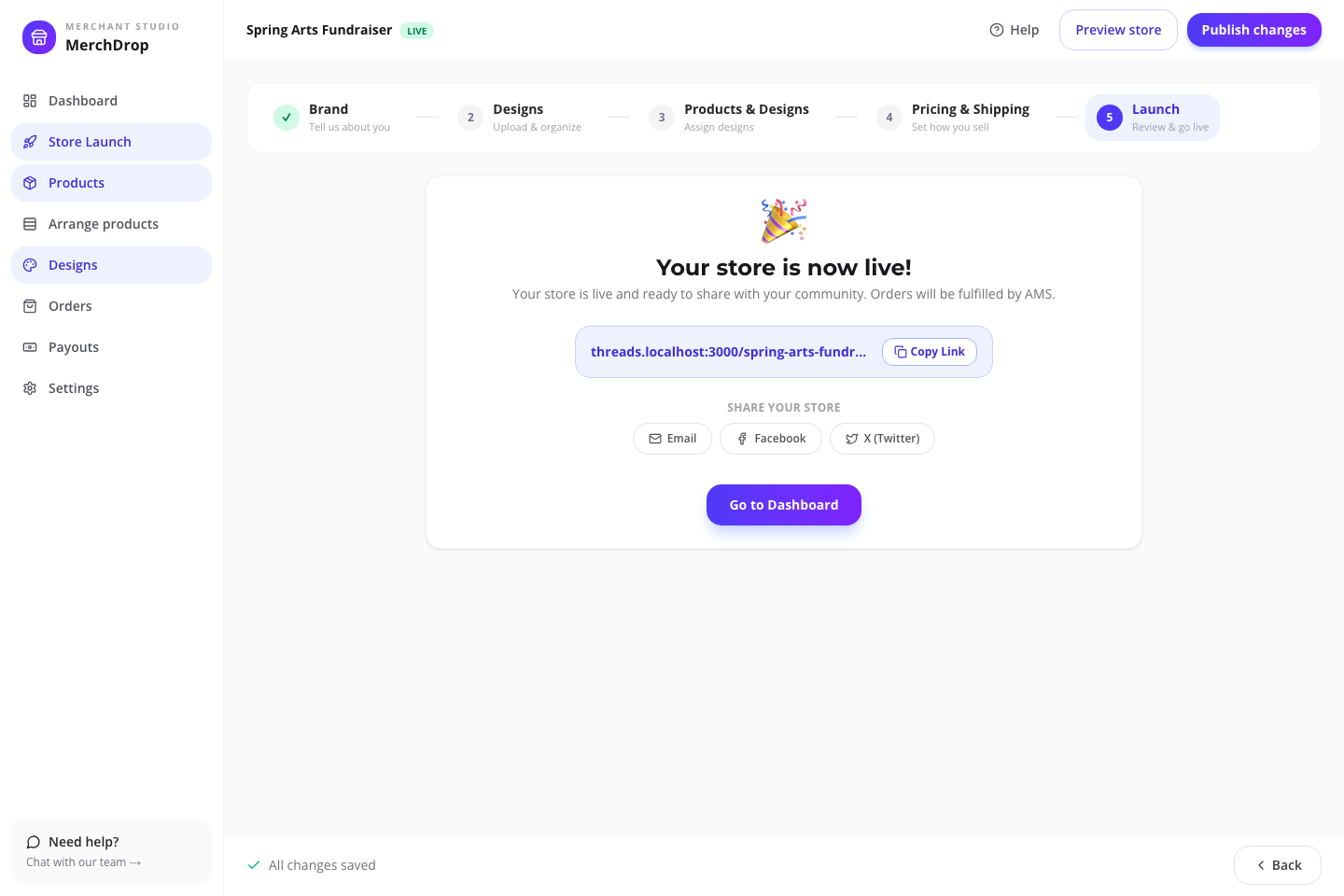
Four decisions in one readable frame: organize approved artwork, place it, set retail against the current estimate, and publish only when you are ready. The fixture is fictional; the decisions are the real ones you will make.
Organize approved artwork and see where it is already in use.Actual browser capture · fictional Westview Arts Fund sample · July 2026
01
Organize
Give every mark a job.
Keep primary, supporting, and placement-specific artwork together so the product plan is understandable before mockups begin.
Organize approved artwork and see where it is already in use.Actual browser capture · fictional Westview Arts Fund sample · July 2026
02
Design
Place the art where it belongs.
Assign artwork by product and placement—front, back, left chest, or sleeve—then review the actual setup instead of describing it in a group text.
Assign the real catalog products and decoration placements shoppers will see.Actual browser capture · fictional Westview Arts Fund sample · July 2026
03
Price
Review the economics before shoppers do.
Compare the current estimated cost, the retail price you choose, and the estimated organizer profit. Starting catalog price is not the same thing as campaign profit.
Review current estimates, organizer-set pricing, and fulfillment before launch.Actual browser capture · fictional Westview Arts Fund sample · July 2026
04
Publish
Draft until the details are ready.
Arrange the storefront, check fulfillment and policy details, then publish deliberately. A saved draft is not a live store.
Publish deliberately, then share one store link with the group.Actual browser capture · fictional Westview Arts Fund sample · July 2026
What your people see
Build for the person buying, too.
The organizer experience only matters if the public store remains clear on a phone. Product options, real totals, delivery choices, and the final-sale acknowledgement all belong in the proof.
One link for the whole group.Actual public sample storefront · fictional brand · checkout disabledProducts arrive ready to choose.Actual mobile product page · fictional sample campaignEvery shopper handles their order.Actual mobile sample checkout · payment disabled server-side
Who does what
Clear ownership prevents launch-day surprises.
Three jobs, no overlap: you decide what is sold and when it goes live; each shopper handles their own size, payment, and delivery choice; AMS produces and fulfills paid orders.
Organizer
Chooses the audience, products, approved artwork, placements, retail prices, promotion, and publishing state.
Shopper
Selects from available products and options, chooses an available delivery path, acknowledges policy, and pays the checkout total.
AMS
Provides the current catalog and workflows, then moves paid configured orders through production and the campaign’s available fulfillment path.
See the estimate. Own the price. Publish deliberately.
A catalog starting price, your retail price, the current estimate, and estimated organizer profit are four different numbers. The editor shows their relationship before anyone else sees the store.
01
Product cost changes with the actual setup
Product, size, color, decoration placement, sourcing, and timing can change the estimate. The live catalog rail shows a current decorated-from starting point—not a fixed campaign quote.
02
You choose the retail price
The campaign editor shows the relationship between estimated cost, your retail price, and estimated organizer profit before the store is published.
03
The shopper chooses an available delivery path
Shipping and configured pickup options are shown in the live store. Available methods and totals depend on the campaign setup and the shopper’s selections.
04
AMS moves paid orders into production
Orders follow sourcing, production, quality check, packing, and delivery. Made-to-order items require a clear final-sale acknowledgement during checkout.
Before you launch
Questions worth answering now.
Short answers now beat surprises after the store is live.
What is an AMS Campaign Store?
It is a branded campaign storefront backed by the AMS product catalog and campaign editor. Organizers choose products, designs, placements, retail pricing, store content, and publishing state; shoppers use the public store to select options and check out.
How is this different from one bulk order?
A campaign store is designed for individual shopper ordering. A bulk order is often a better fit when one organizer already knows the exact products, sizes, quantities, payment source, and delivery plan.
What does the organizer control?
The organizer chooses the campaign type, store name, artwork, products, placements, retail pricing, duration or goal where relevant, storefront arrangement, fulfillment settings, and when the draft is published.
What does “decorated from” mean in the product rail?
It is the current public catalog starting-price field for a decorated product. It is not your campaign retail price, guaranteed cost, organizer margin, or a promise for every size, color, placement, or deadline.
Can I get help after I start?
Yes. The Campaign Store help path covers setup and editor tasks, and the assisted-launch form on this page creates a merchant store help request with your audience and launch need.
When does the store become public?
Campaigns begin as drafts. You review products, artwork, pricing, fulfillment, content, and listing arrangement before publishing the live storefront.
Start with a private draft
Give your group one link instead of a spreadsheet.
Start a private draft with your audience preset carried in—products, artwork, pricing, and publishing stay your call. Or put your plan in front of an AMS person before you commit to a product list.
 Campaign Stores
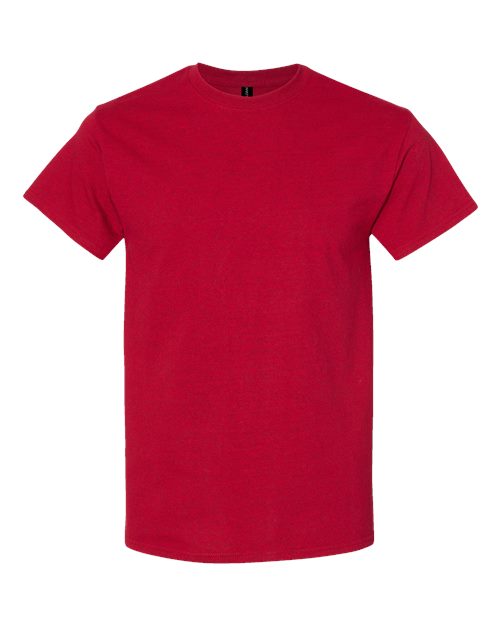 Gildan 5000 Unisex Heavy Cotton™ T-Shirt
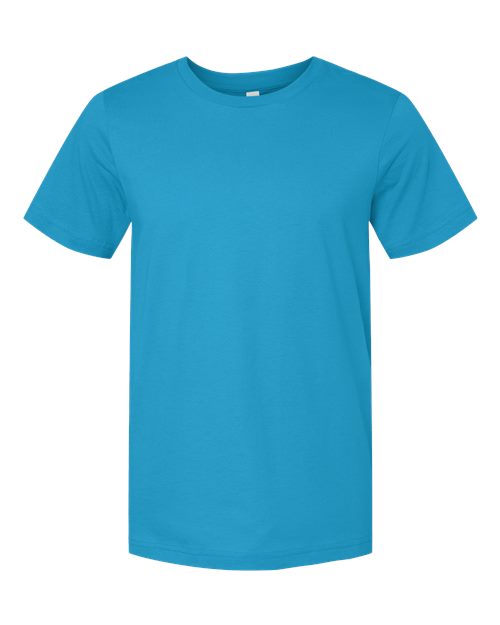 3001 Bella + Canvas Jersey Tee
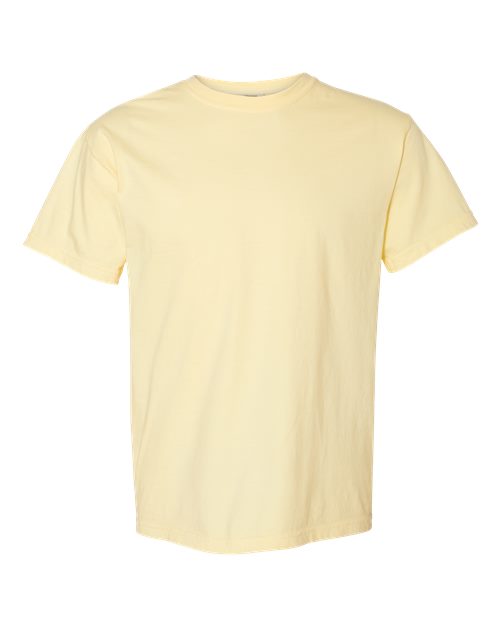 Comfort Colors 1717 Unisex Garment-Dyed Heavyweight T-Shirt