Fast Product Verdict
Product verdict
Are dry blend t-shirts right for this order?
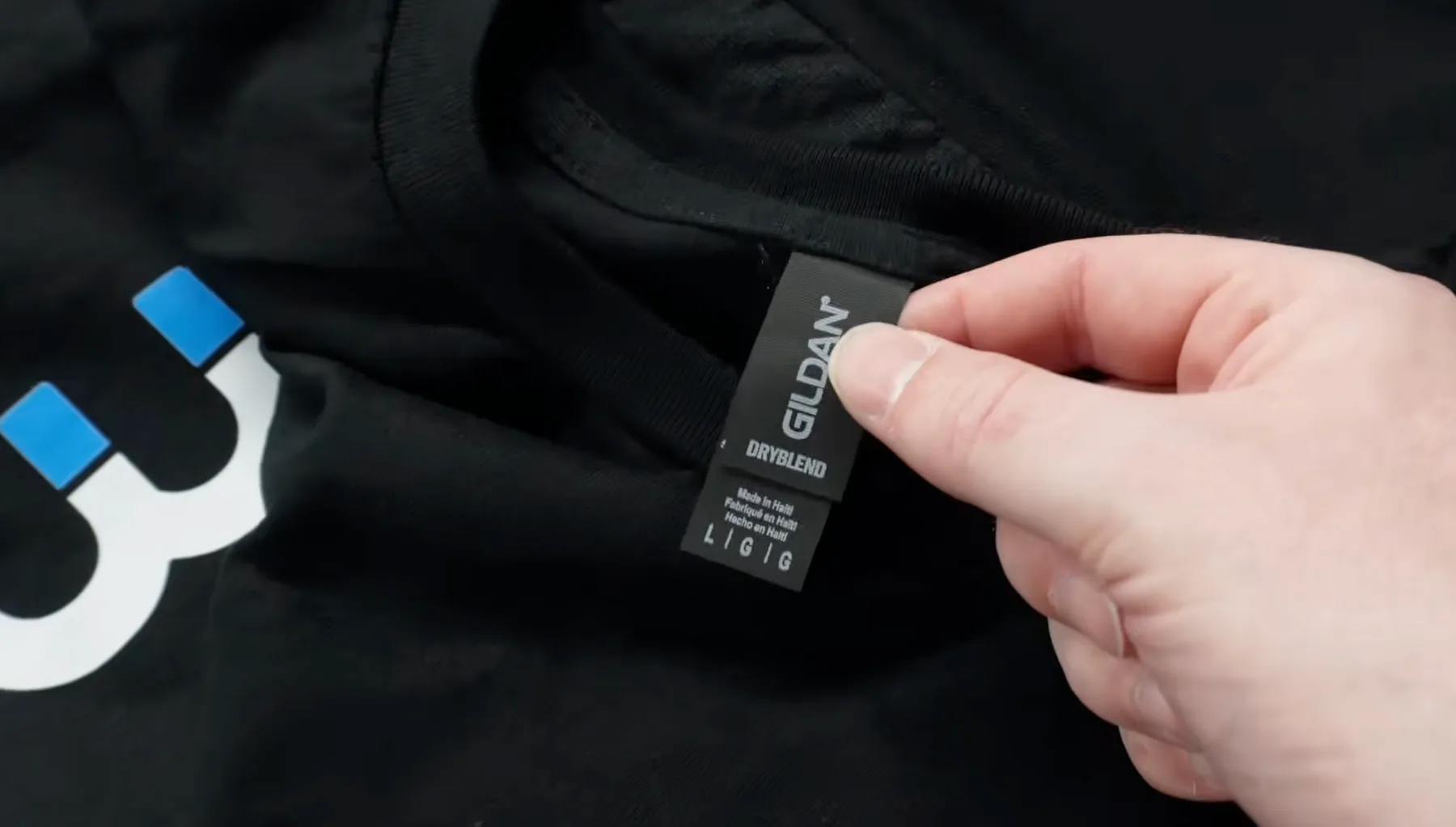
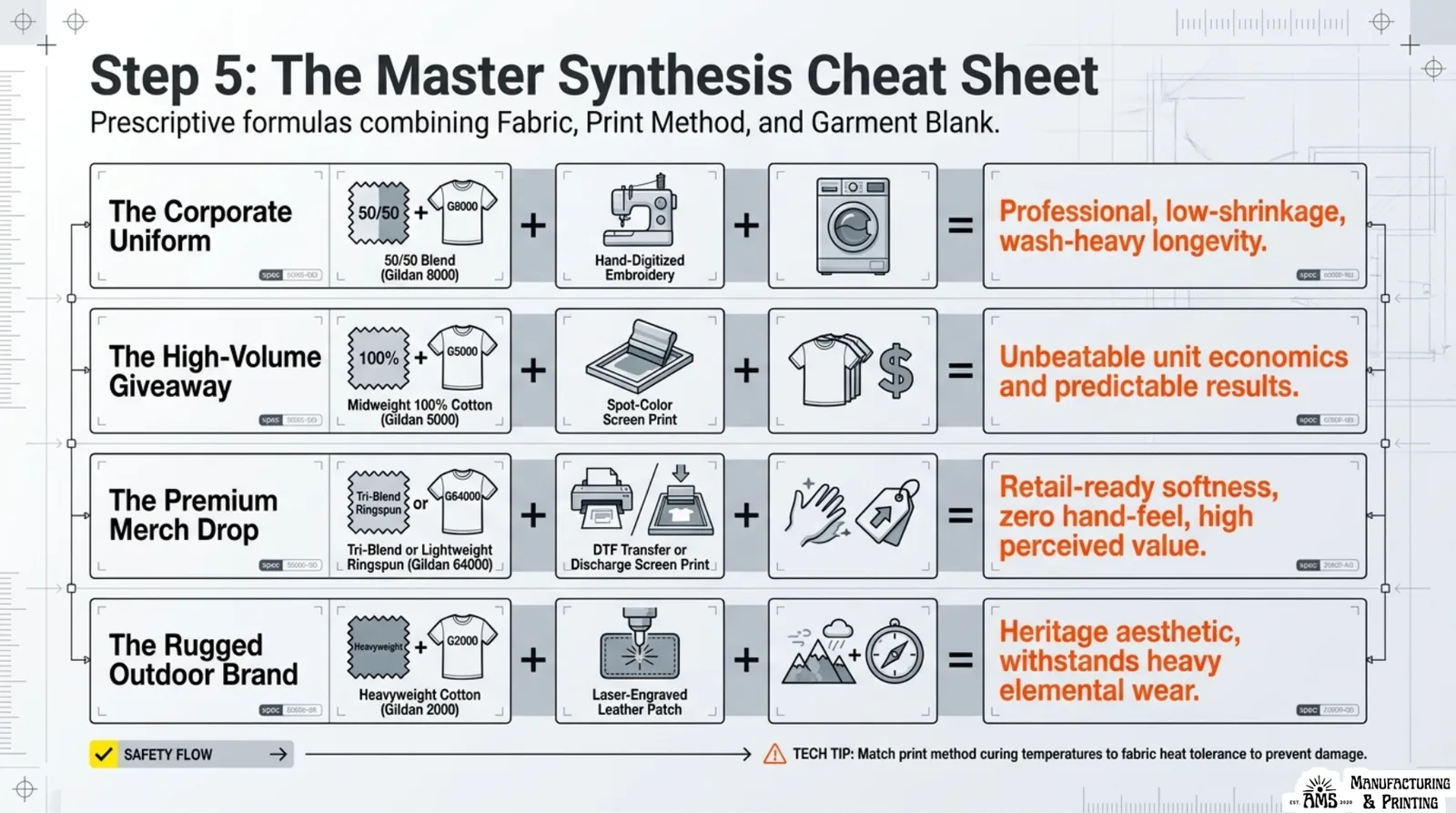
For this kind of fast-turnaround Houston DTF order, Gildan DryBlend is a practical blank, not a fancy one. It is a 50/50 cotton-poly tee with enough cotton to feel familiar and enough polyester to feel lighter, hold shape, and make more sense in warm weather than a standard heavy cotton shirt. Choose it when you want affordable, wearable, reorderable shirts that can still look sharp with a simple left-chest print and a large back print. Skip it when the buyer wants heavyweight cotton, garment-dyed lifestyle merch, or the softest premium retail blank.
| Choose dry blend t-shirts if | Skip dry blend t-shirts if |
|---|---|
| You need affordable staff shirts, crew shirts, field-day shirts, or repeat company apparel. | You are building premium retail merch where the softest hand feel matters most. |
| The shirts will be worn by Houston crews, restaurant staff, school teams, or event volunteers. | You want a heavier garment-dyed look or a vintage lifestyle blank. |
| You want a 50/50 cotton-poly tee that is easier to reorder than a specialty blank. | You need a fashion-fit blank with a more retail silhouette. |
| You want DTF, screen print, embroidery, heat transfer, DTG, or discharge compatibility. | You need a specialized polo, workwear shirt, or athletic team performance shirt. |
| You care about budget, consistent sizing, and practical daily wear. | Your brand promise depends on a premium blank like Bella + Canvas or Comfort Colors. |
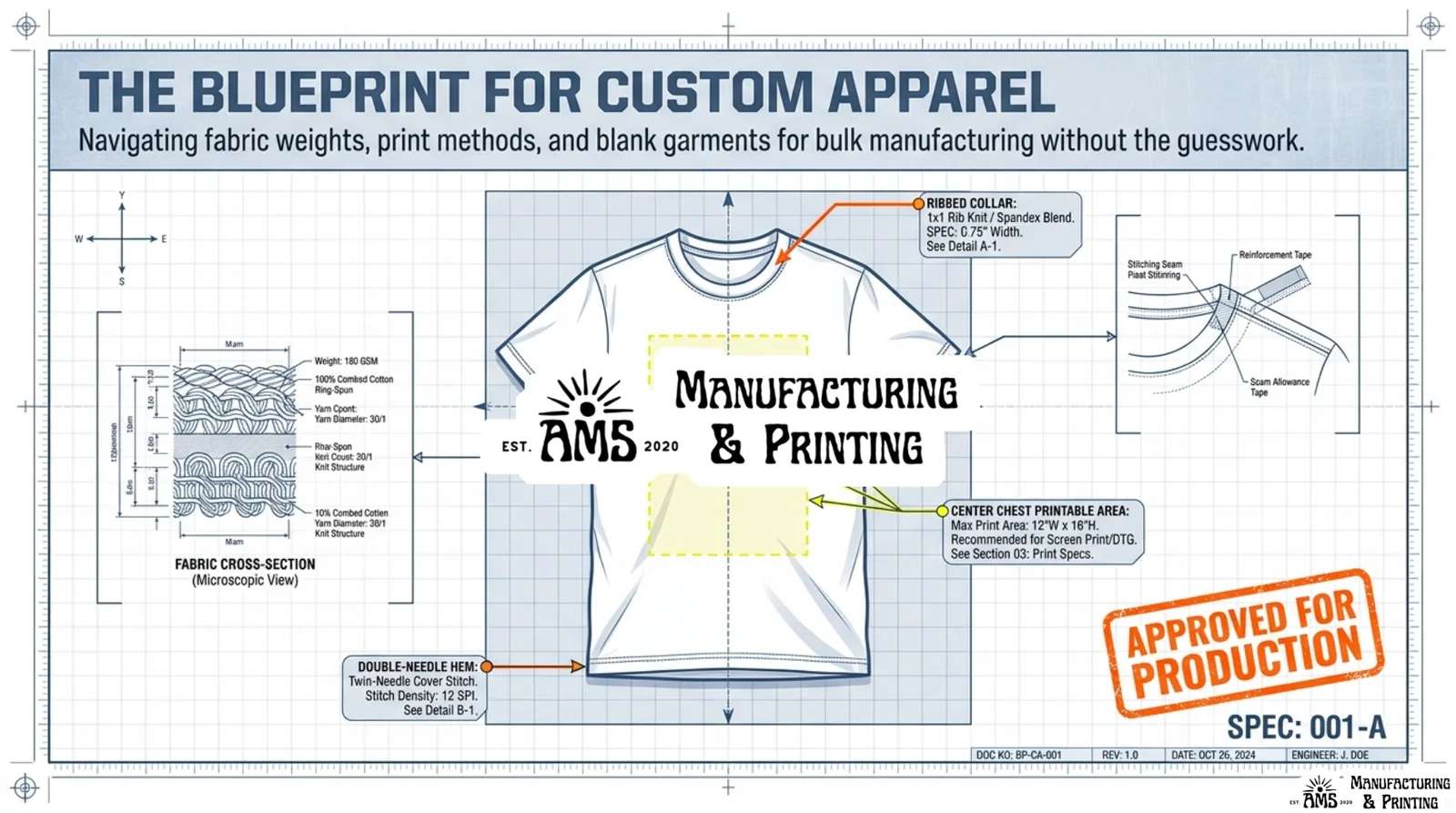
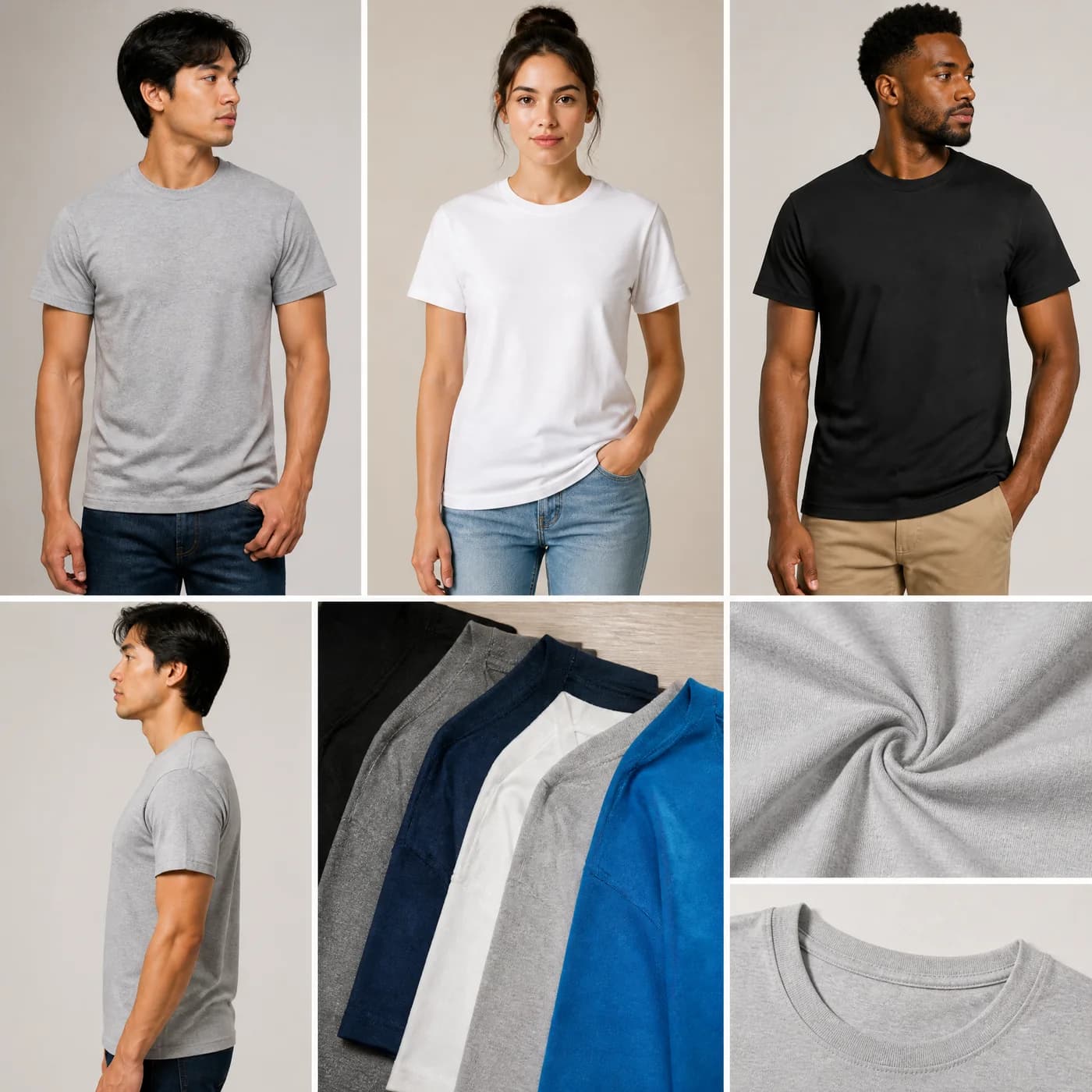
Product field guide
- What it is
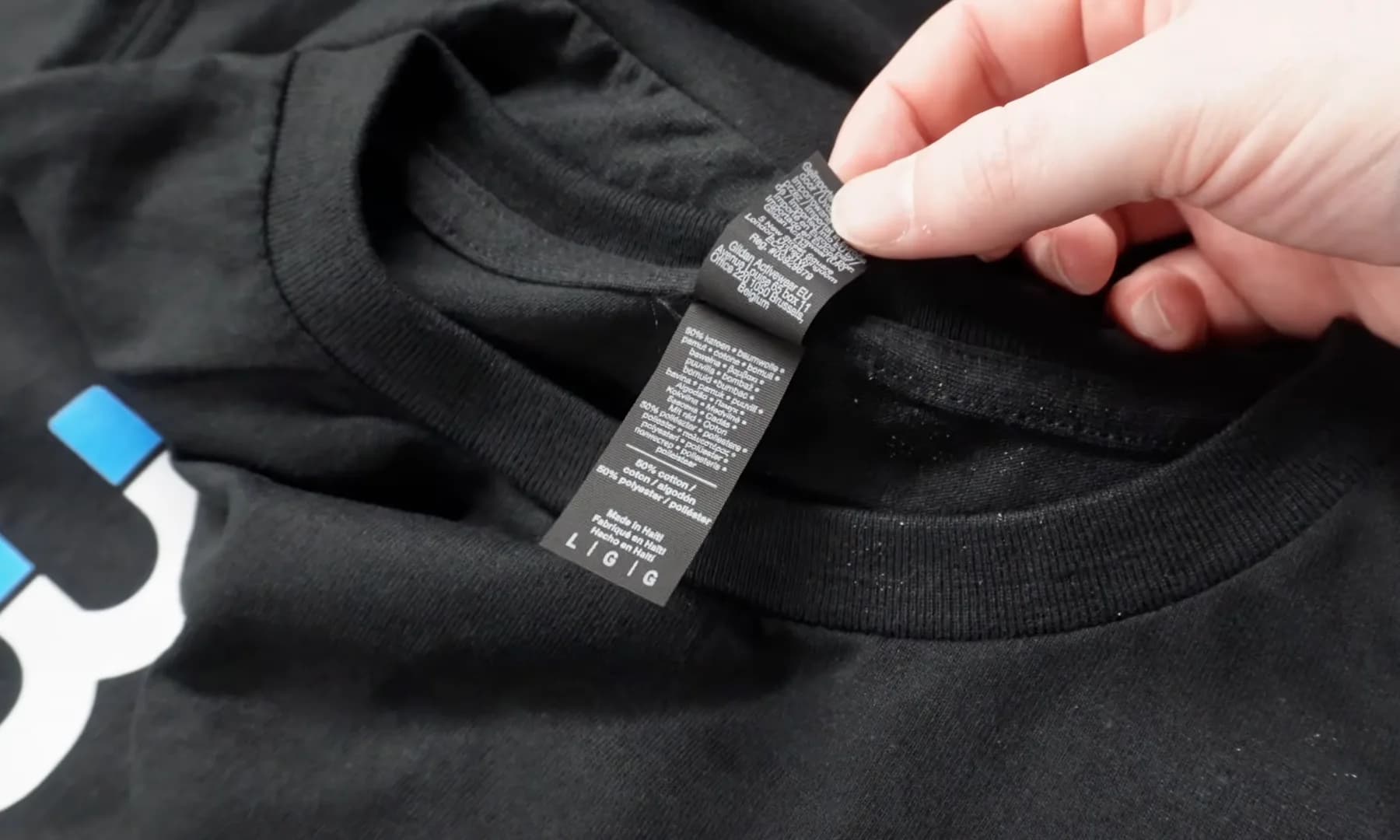
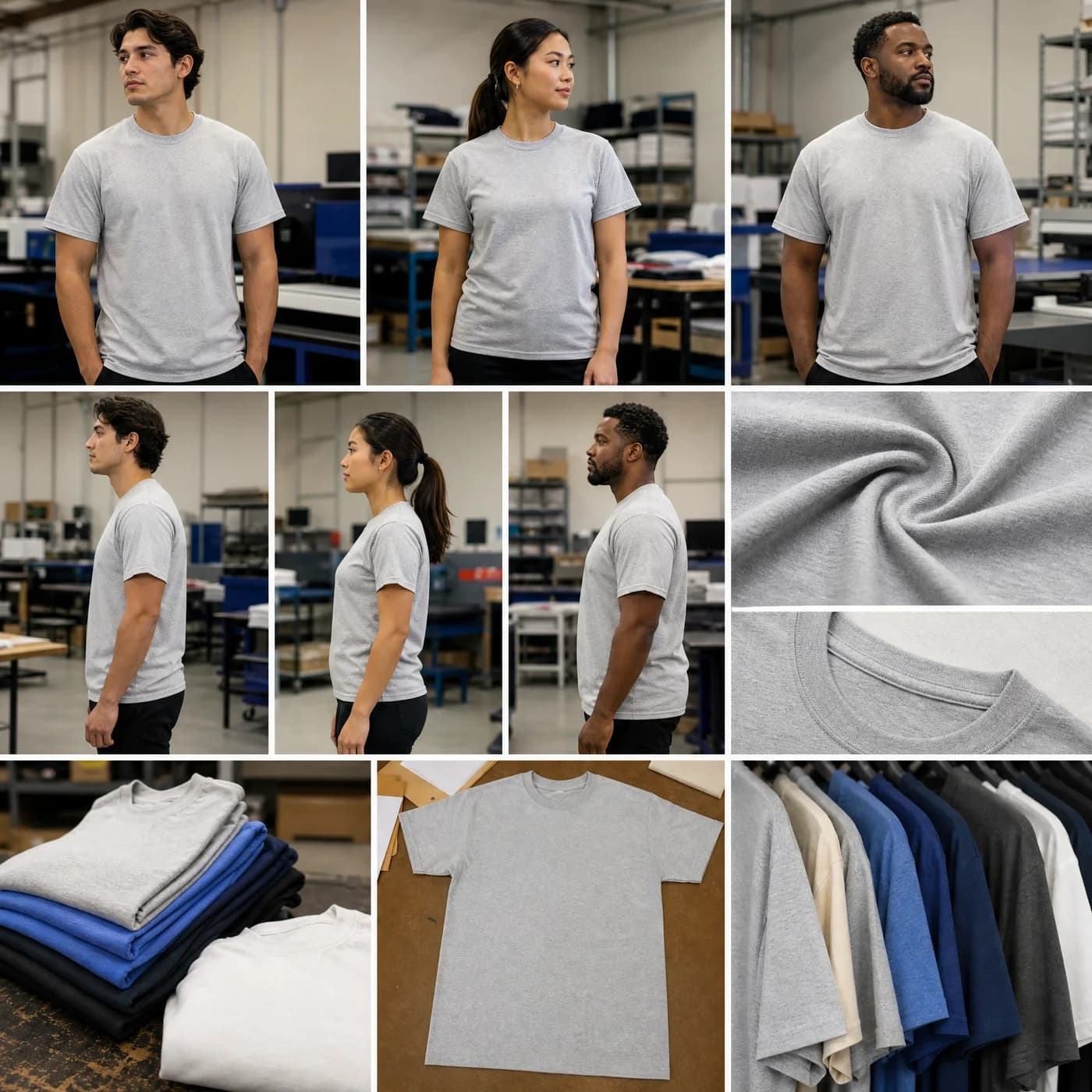
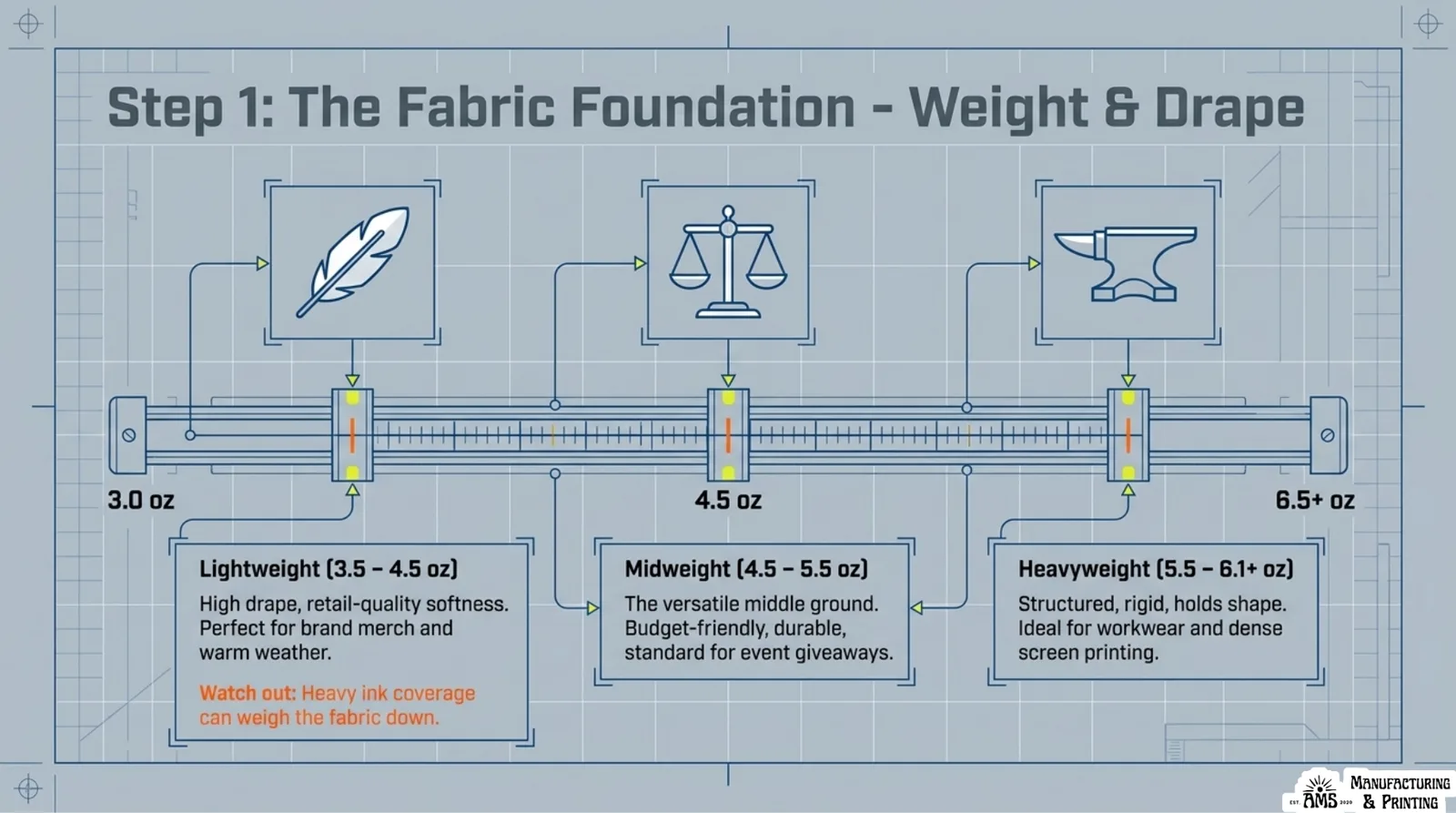
- Gildan DryBlend G8000 is a 50/50 cotton-poly, 5.5 oz classic-fit tee. It is built for practical daily wear, fast-turnaround group orders, staff shirts, event shirts, and repeat apparel programs, not for premium fashion positioning.
- Fabric
- 50% U.S. cotton / 50% polyester
- Weight
- 5.5 oz/SqYd
- Fit
- Classic fit
- Feel
- Middle-ground and practical: lighter than a standard heavy cotton tee, less slick than a full polyester performance shirt, and not as soft or fashion-fitted as Bella + Canvas or premium ringspun blanks.
- DTF notes
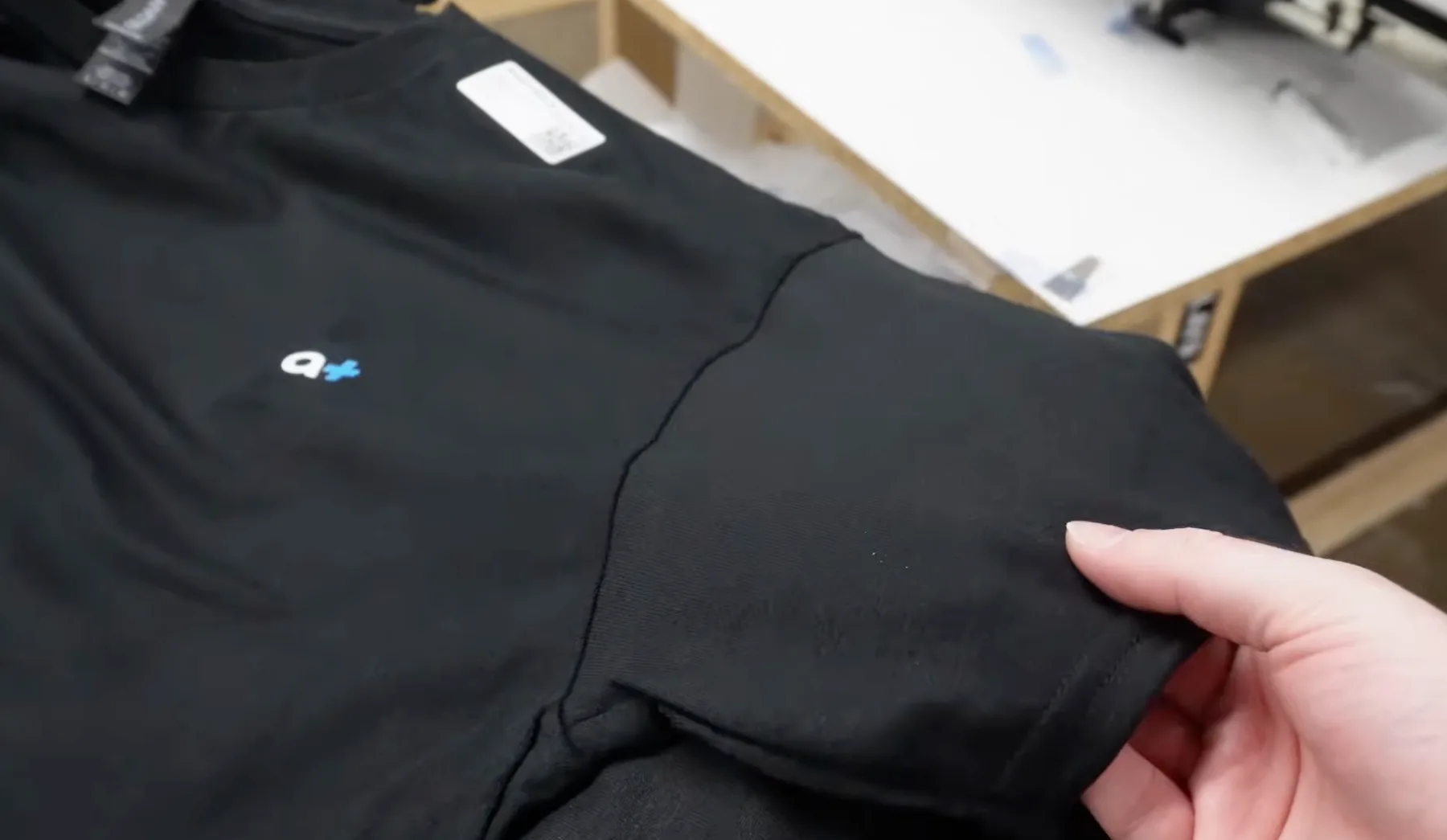
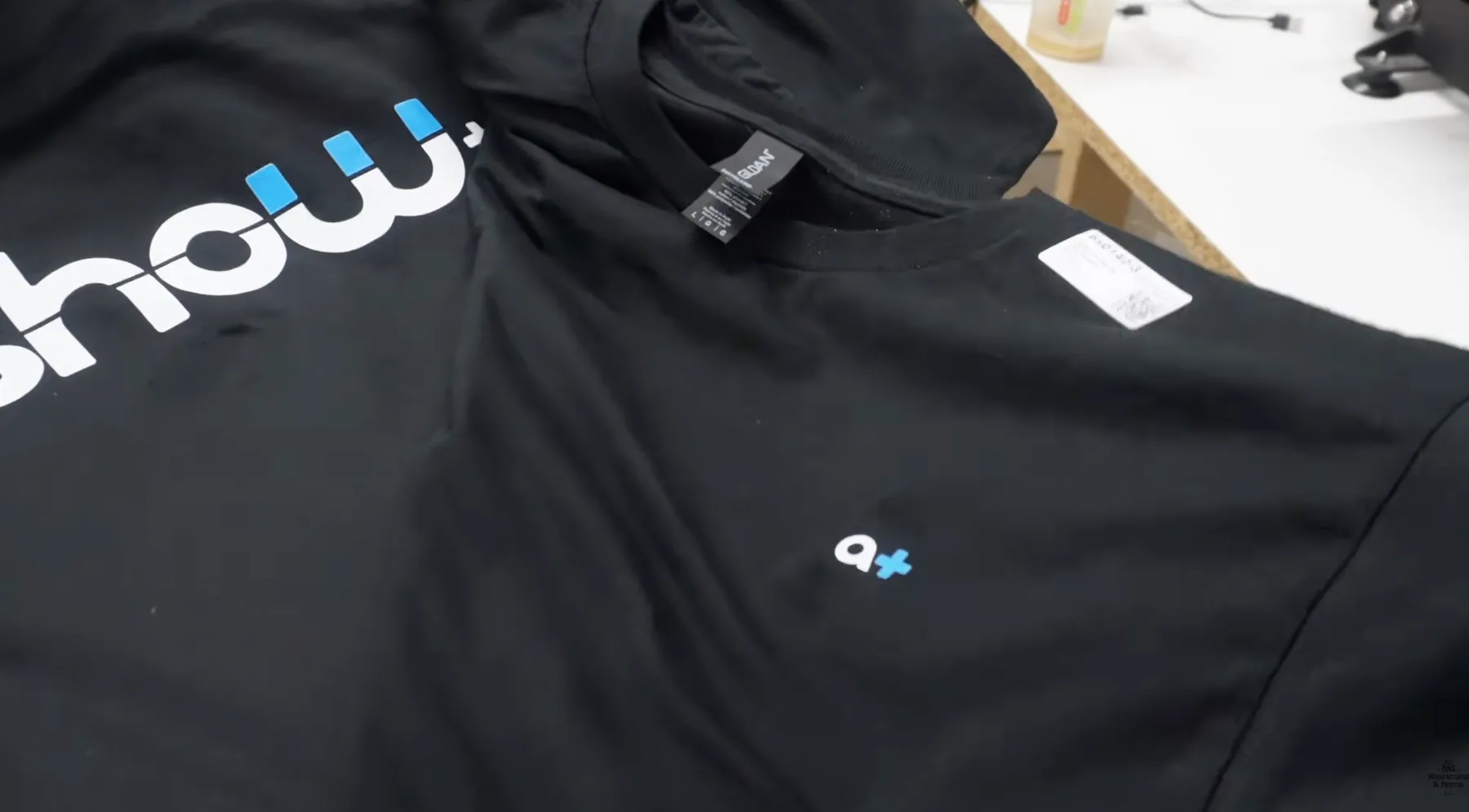
- DryBlend can pair well with DTF, especially for clean logo work, left-chest marks, and large back prints. The transfer is not the hard part by itself; the final result depends on art quality, placement, pressure, peel behavior, and checking the first shirt before running the full stack.
- Finished apparel notes
- DryBlend is a practical finished-apparel option when AMS should press, QC, sort, pack, and hand off the shirts ready for a Houston pickup or Texas shipment.
Best Houston uses
- summer-friendly shop shirts, staff shirts, and event shirts where the buyer wants something lighter than basic heavy cotton
- contractor and crew shirts that need repeatability, replacement sizes, and dependable everyday wear
- restaurant, school, church, and volunteer shirts where comfort matters but premium blank pricing does not
- simple DTF layouts with a large back print, small left-chest print, or clean logo placement
- company apparel programs that need easy reorders without overcomplicating the blank selection
Usually skip it for
- premium lifestyle merch where blank feel and fashion fit sell the product
- heavyweight vintage or garment-dyed shirt programs where Comfort Colors is the better expectation match
- customers who strongly dislike any polyester feel in casual T-shirts
- true athletic uniform needs that call for a specialty full-performance blank
Houston use cases
| Houston buyer | Recommendation | Why |
|---|---|---|
| Houston contractor crew | Strong fit for repeat crew shirts | DryBlend gives a budget-friendly 50/50 option for sweaty daily wear, repeat crew orders, and easy replacement shirts. |
| Restaurant staff | Usually strong fit | It is affordable enough for staff changes and lighter than basic heavy cotton during long Houston shifts. |
| School field day | Strong fit for group handouts | It works for adult and youth programs when sizes are collected early and the handout date is fixed. |
| Church volunteer event | Strong fit for volunteer shirts | DryBlend is practical for comfortable, affordable group shirts that do not need premium retail branding. |
| Outdoor summer crew | Maybe after a wear test | It can beat heavy cotton for many Houston orders, but test against true performance blanks if the shirts will be outside all day. |
| Premium lifestyle brand | Usually skip | Bella + Canvas, Softstyle, or Comfort Colors may match the brand feel better than a budget-friendly 50/50 crew shirt. |
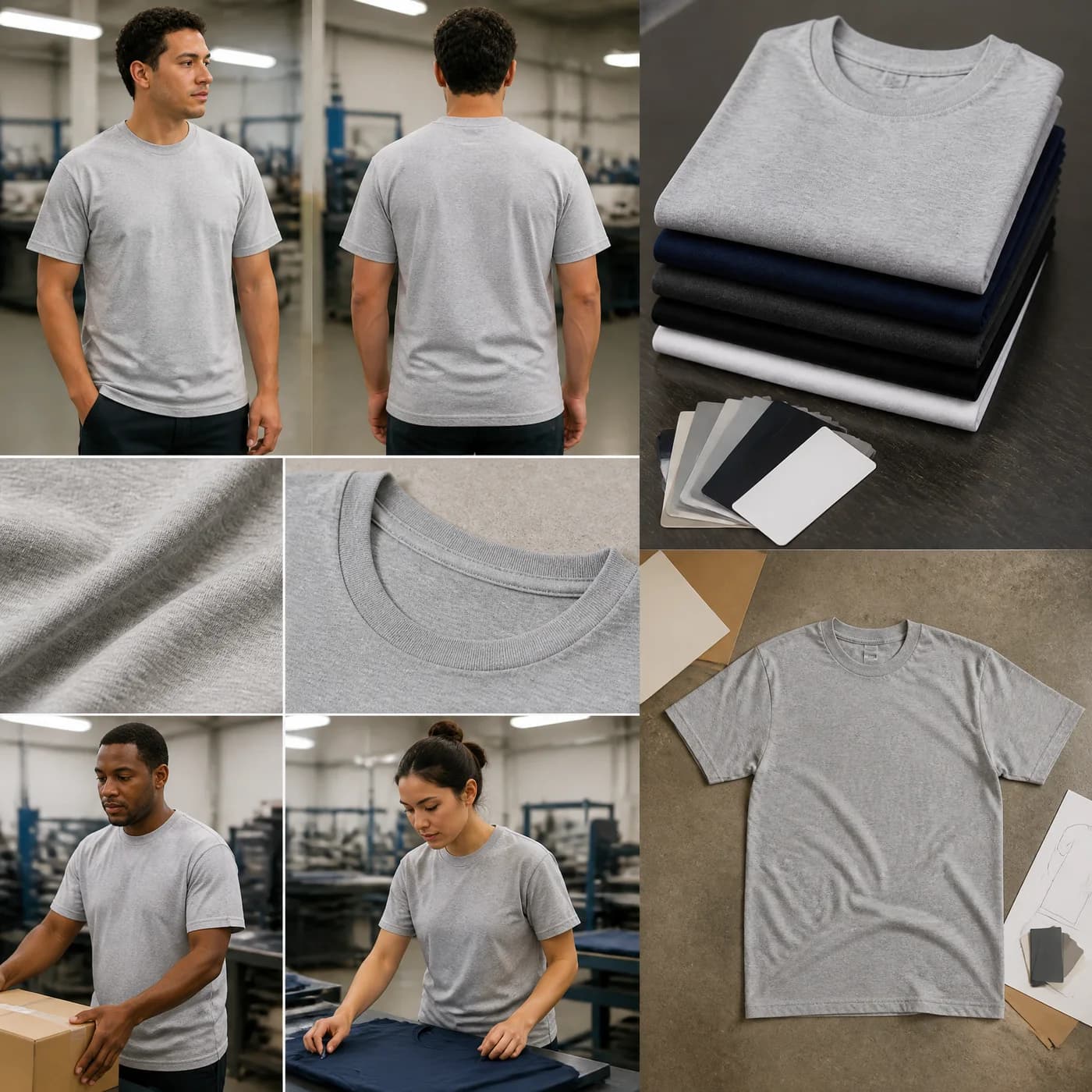
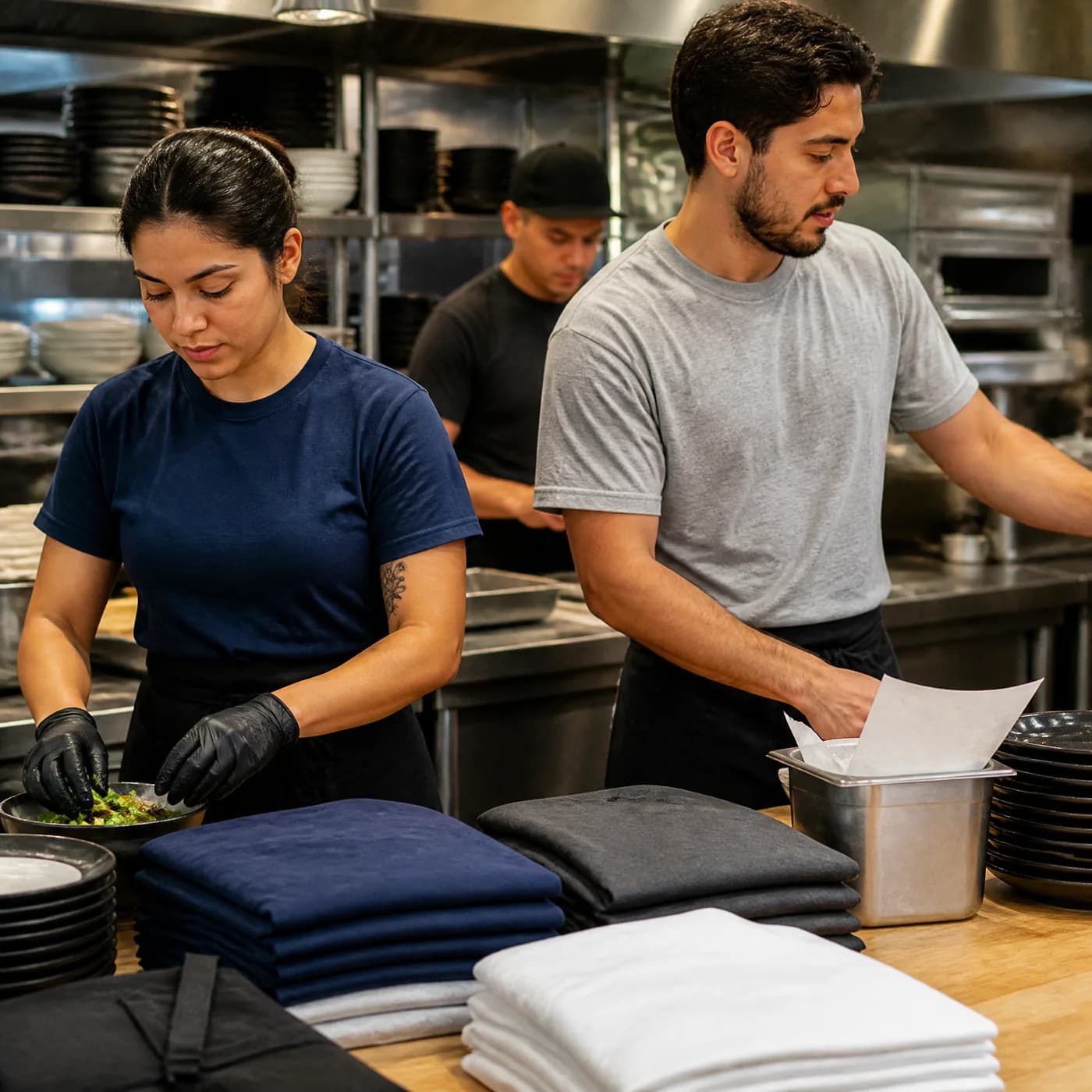
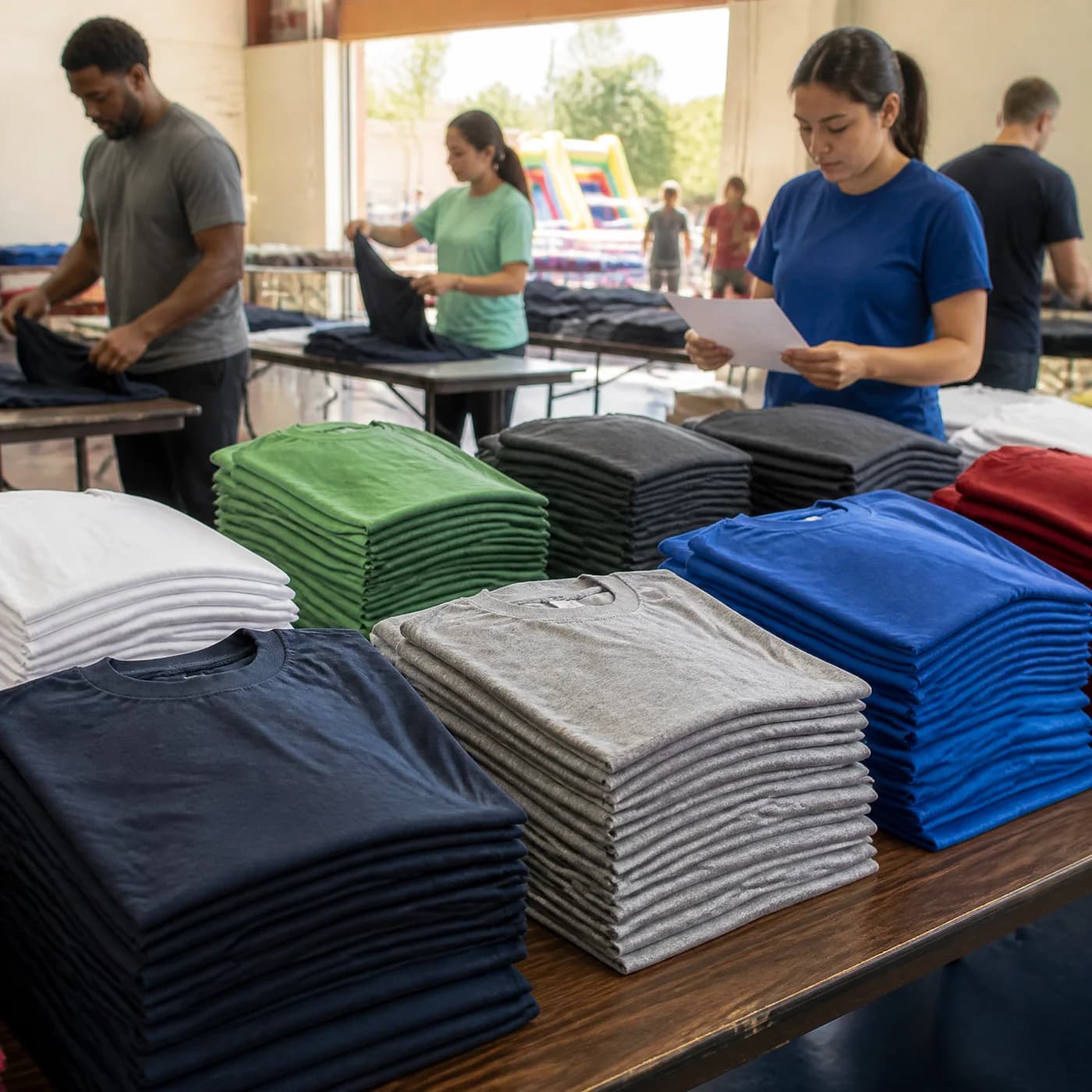
Shirt comparison
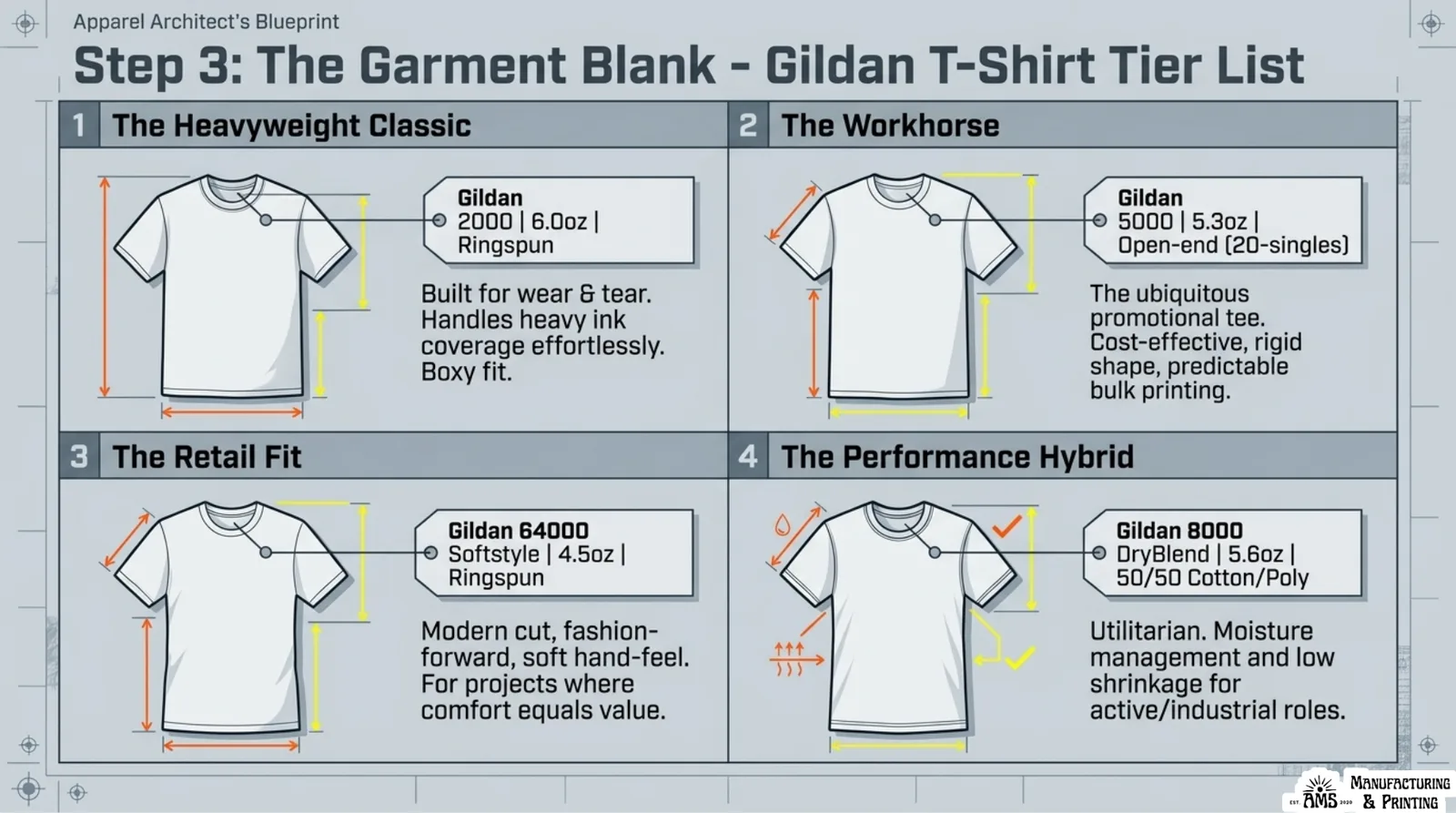
| Shirt | Best for | Why choose it instead |
|---|---|---|
| Gildan 5000 Heavy Cotton | Cheapest basic cotton tee orders | Choose it when lowest-cost cotton matters more than a lighter 50/50 performance angle. |
| Gildan G800 DryBlend | Houston crews, staff, schools, and events | This is the dry blend option when budget, comfort, and repeatability all matter. |
| Gildan 64000 Softstyle | Softer everyday shirts | Choose Softstyle when hand feel matters more than the DryBlend 50/50 utility. |
| Bella + Canvas 3001 | Retail merch and brand drops | Choose Bella + Canvas when fit, softness, and brand perception matter more than lowest cost. |
| Comfort Colors 1717 | Premium casual and vintage-style shirts | Choose Comfort Colors when the order needs a heavier garment-dyed look instead of a lighter crew shirt. |
Quick Answer
Quick answer
DryBlend is a good pick when the order needs a lightweight, budget-conscious 50/50 shirt for warm-weather Houston wear, staff shirts, crew shirts, school events, or promotional handouts.
It is not the shirt you choose to impress a premium merch buyer. It is the shirt you choose when the order needs to be wearable, repeatable, affordable, and clean once the print is applied.
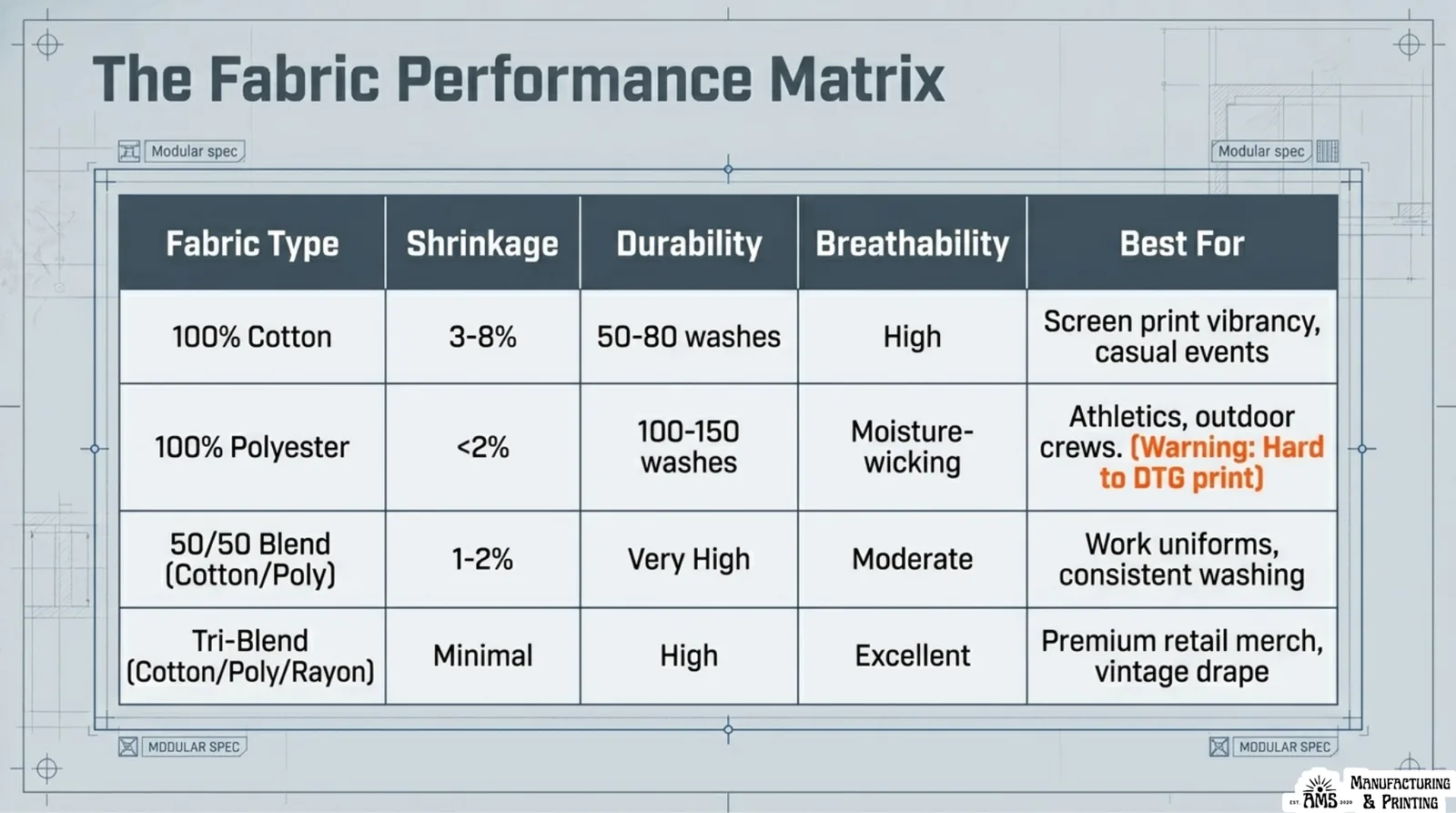
The 50/50 blend is the point: enough cotton to feel familiar, enough polyester to add structure and a lighter everyday feel, without going all the way into a slick full-poly performance shirt.
If the shirts need to be ready to hand out, let AMS press the finished apparel. If your team owns the heat press and testing process, DTF transfers or blanks plus transfers can make sense.
What dry blend t-shirts actually are
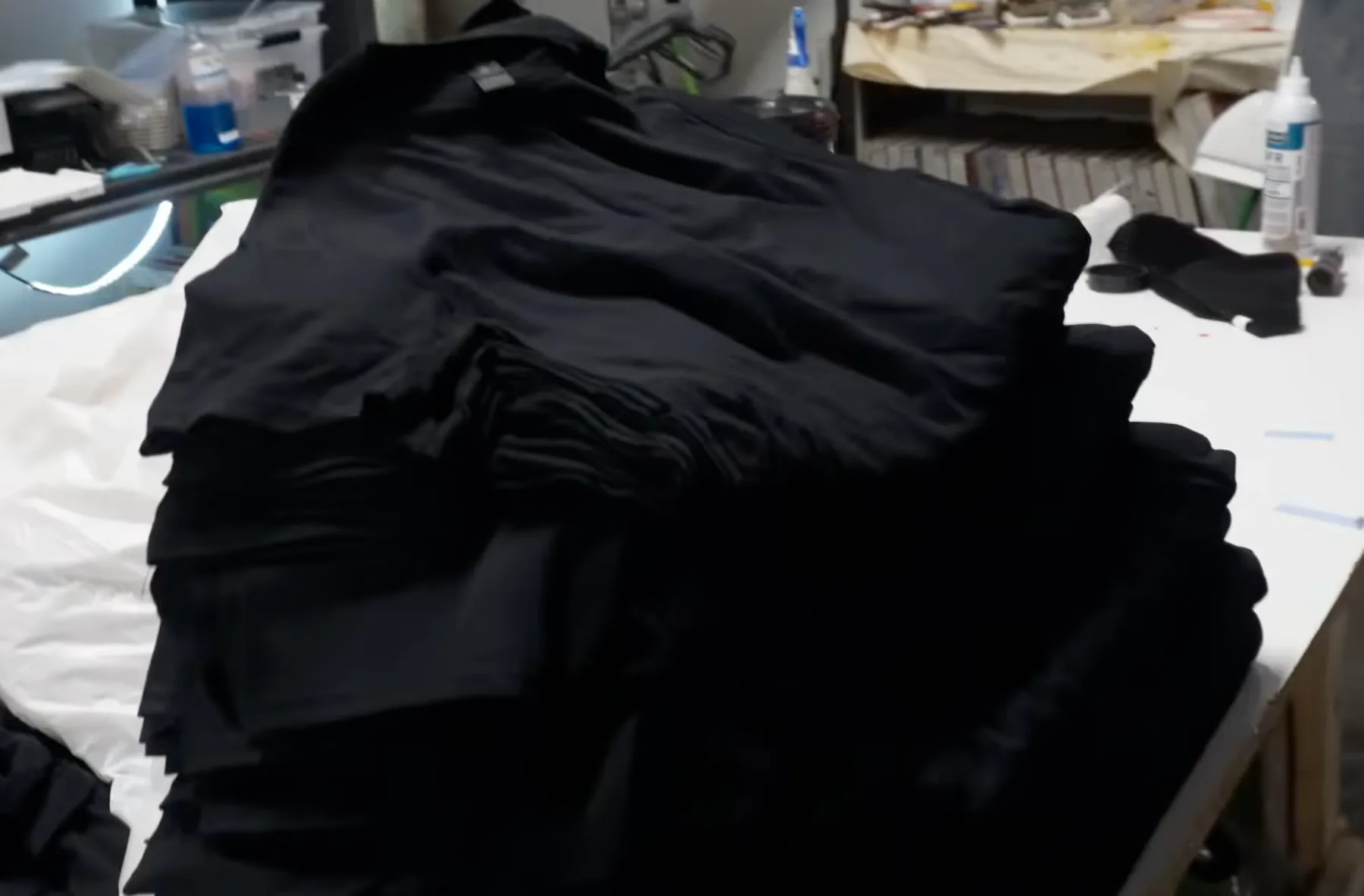
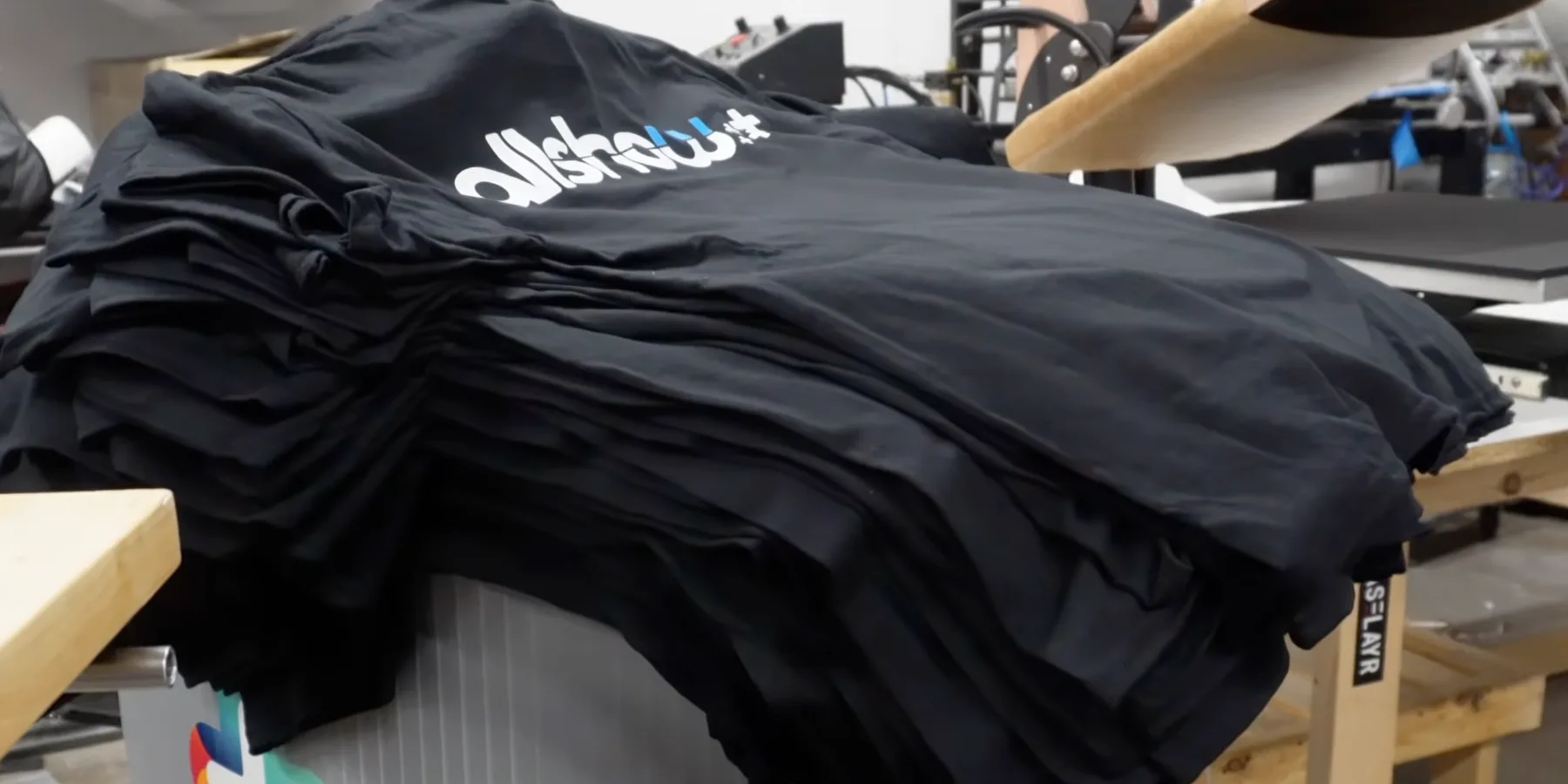
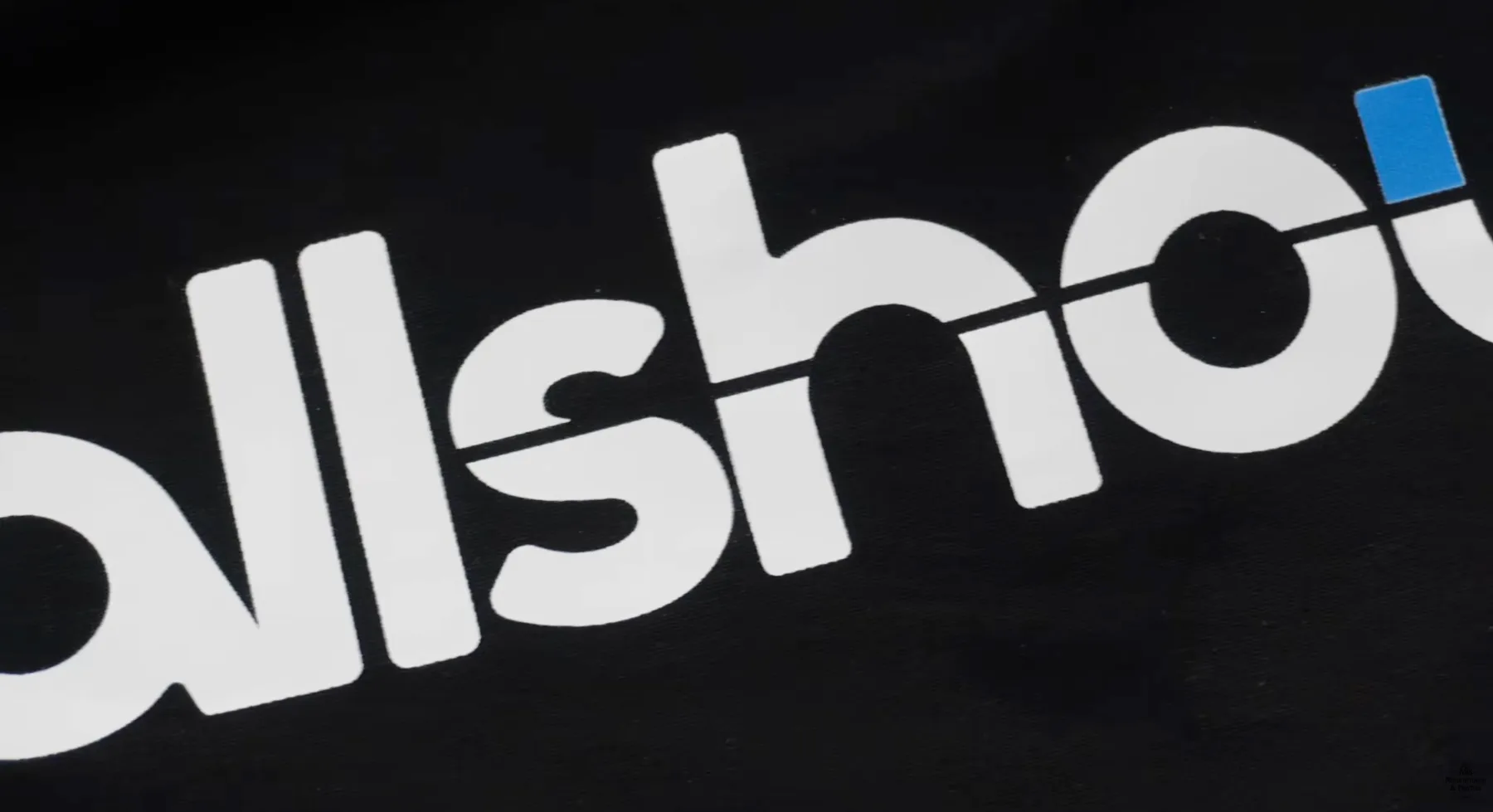
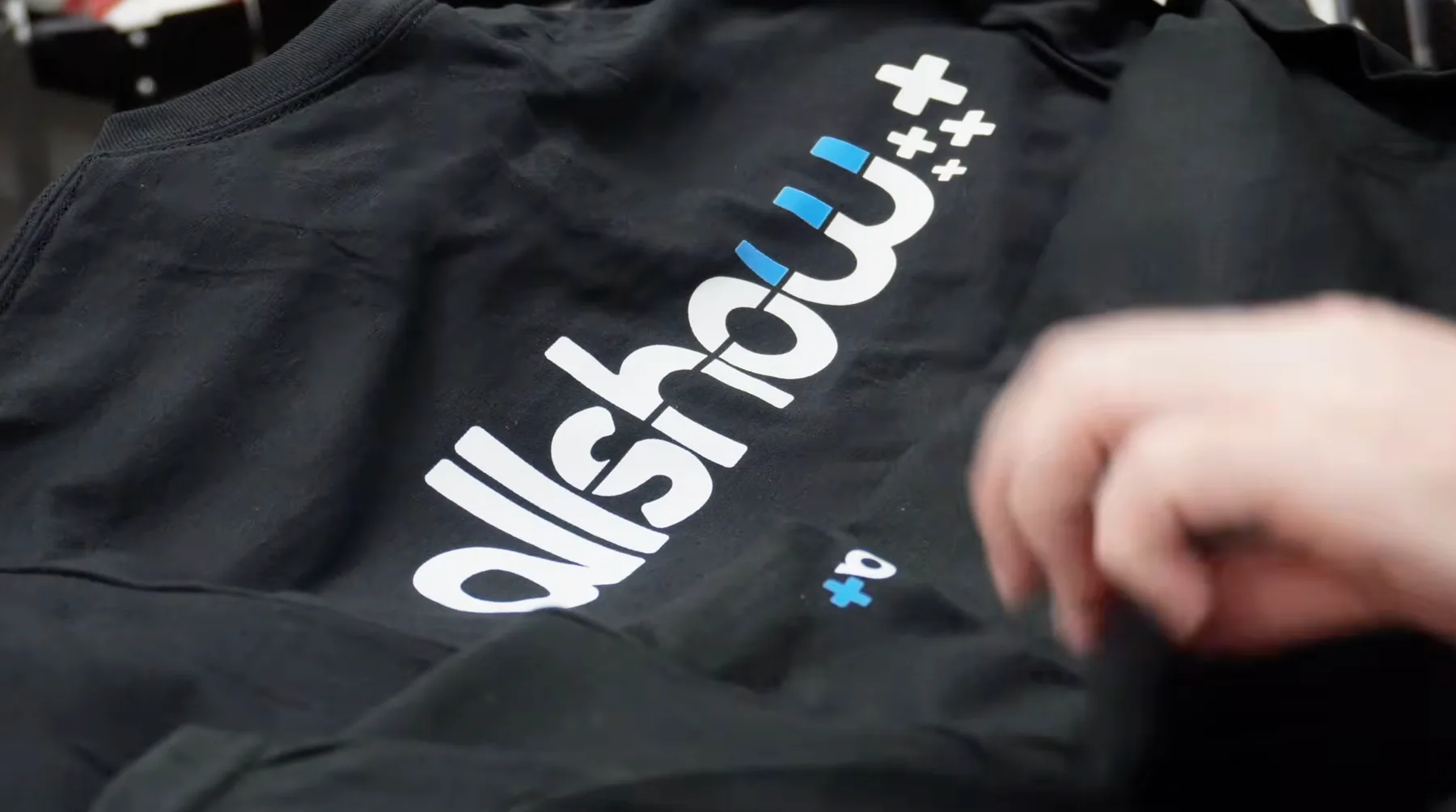
This DryBlend order is a good example of why the blank matters before the production path. The customer chose black Gildan DryBlend shirts for a fast-turnaround DTF job with a large back print and a small left-chest print. That choice made sense because the shirt stayed practical: lightweight, clean-looking, affordable, and easy to wear in Houston heat.
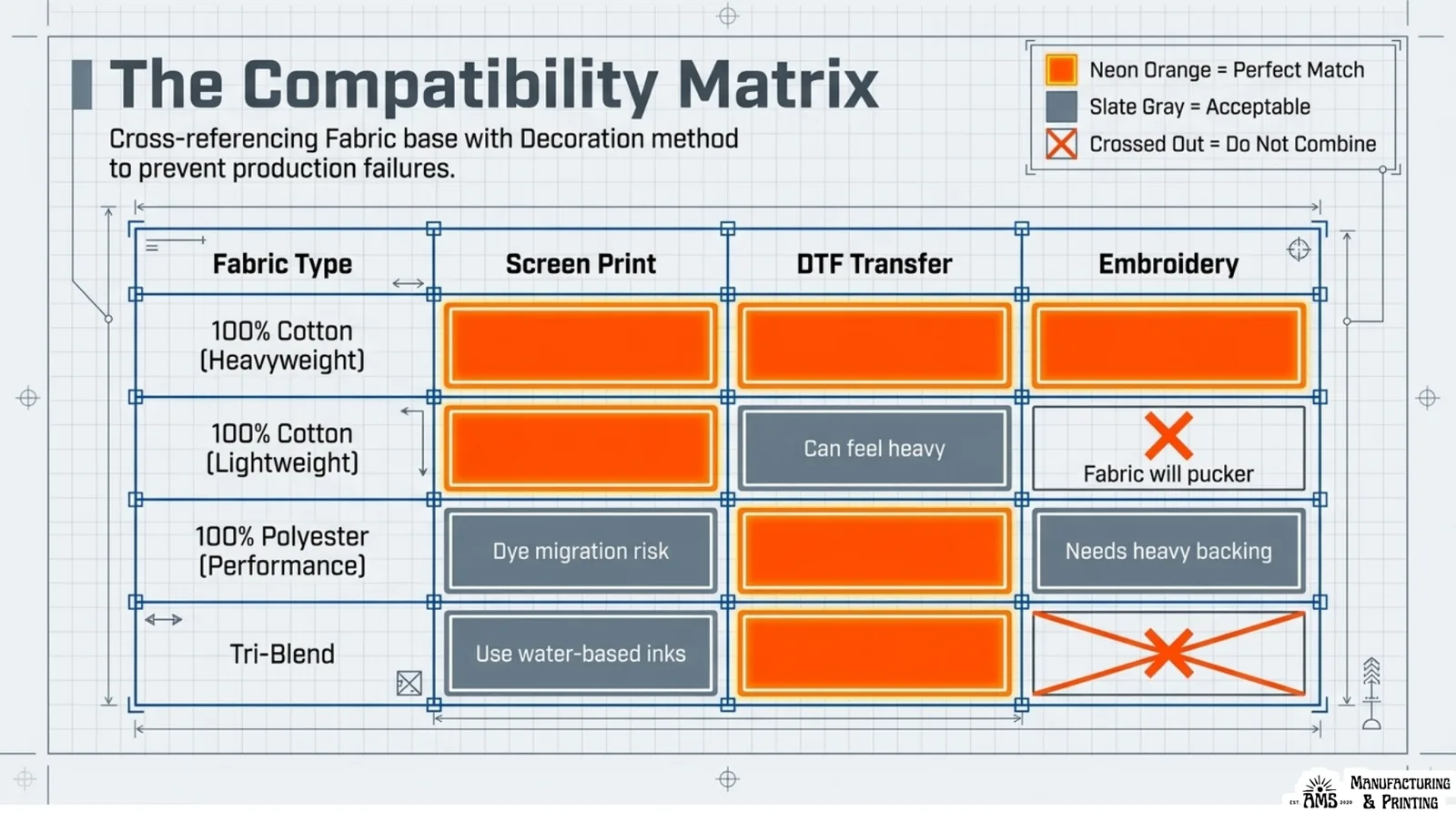
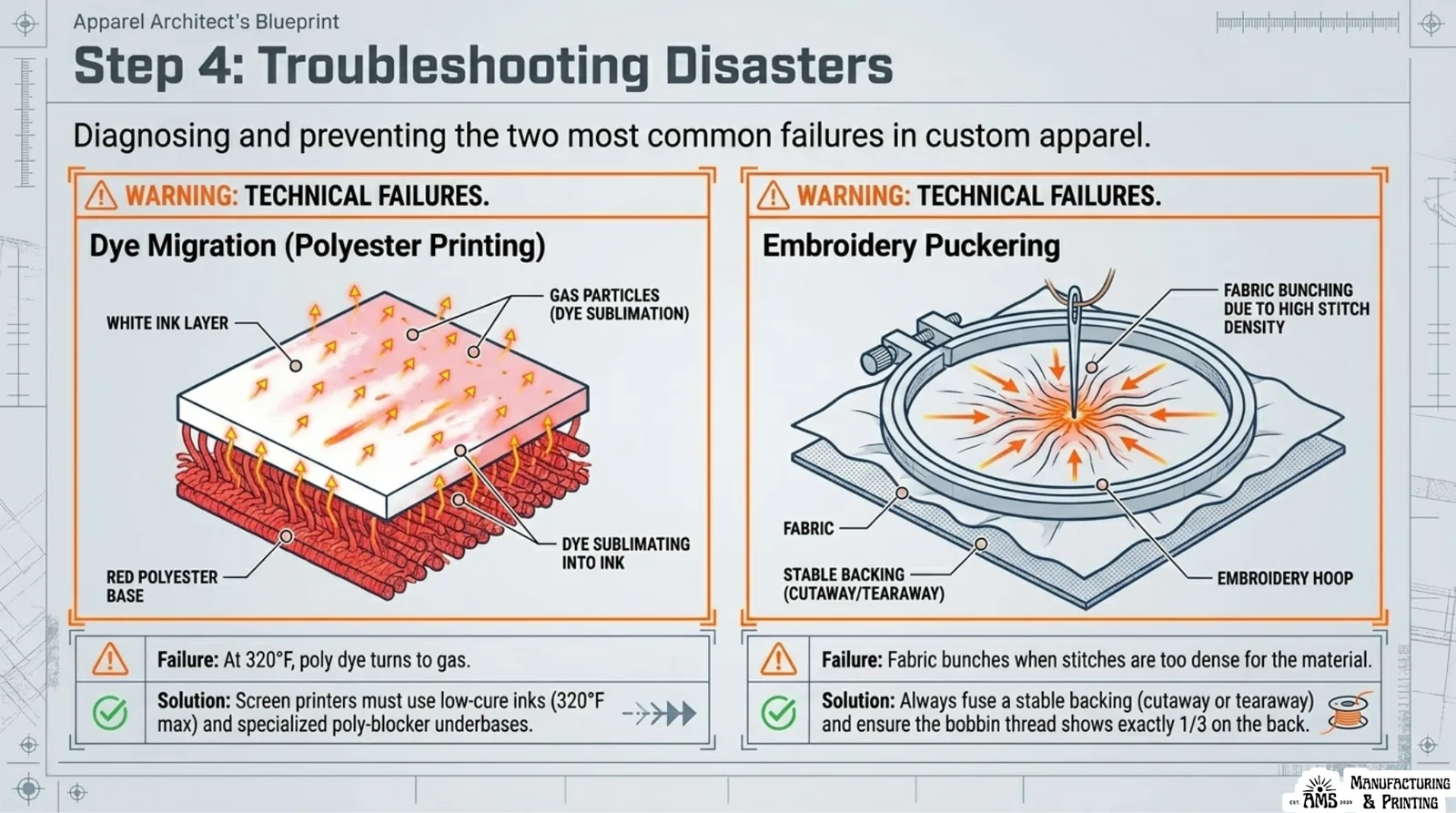
The 50/50 cotton-poly blend is the key point. A lot of people are picky about polyester in T-shirts, and they are not wrong. Full polyester can feel slick or synthetic for casual wear. DryBlend sits in the middle: enough cotton to feel familiar, enough polyester to feel lighter and hold structure better than a basic cotton tee.
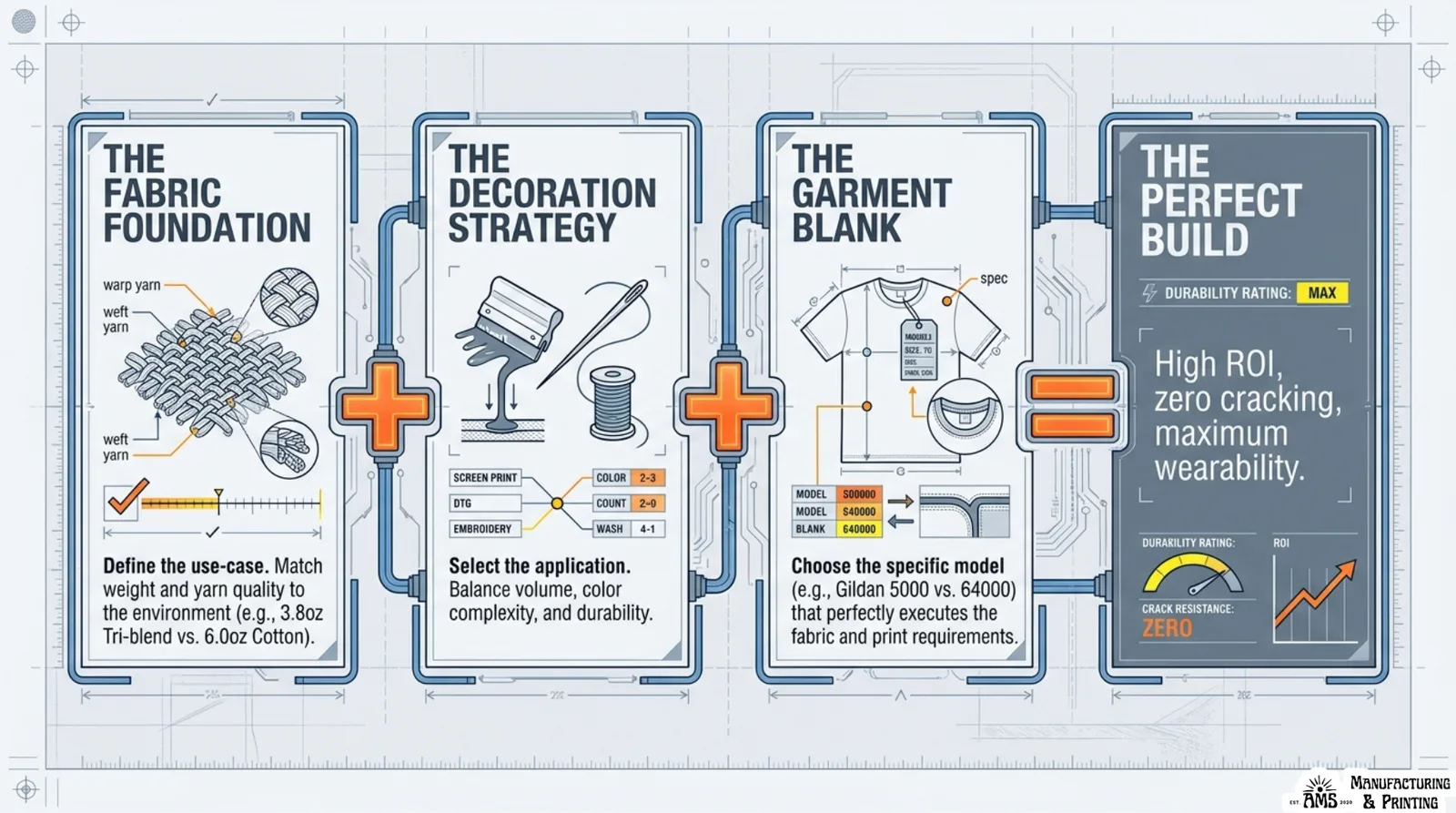
Think of it more like a summer-friendly shop shirt, crew shirt, restaurant shirt, staff shirt, event shirt, or promotional tee. It is not the fanciest blank in the Gildan lineup, and it is not trying to be. It is a dependable blank when the customer wants a clean finished product without turning the shirt selection into a premium merch project.
That is why this article starts with the shirt itself. Finished apparel, DTF transfers, and blanks plus transfers matter, but only after the blank is actually right for the wearer, the season, the design, and the deadline.
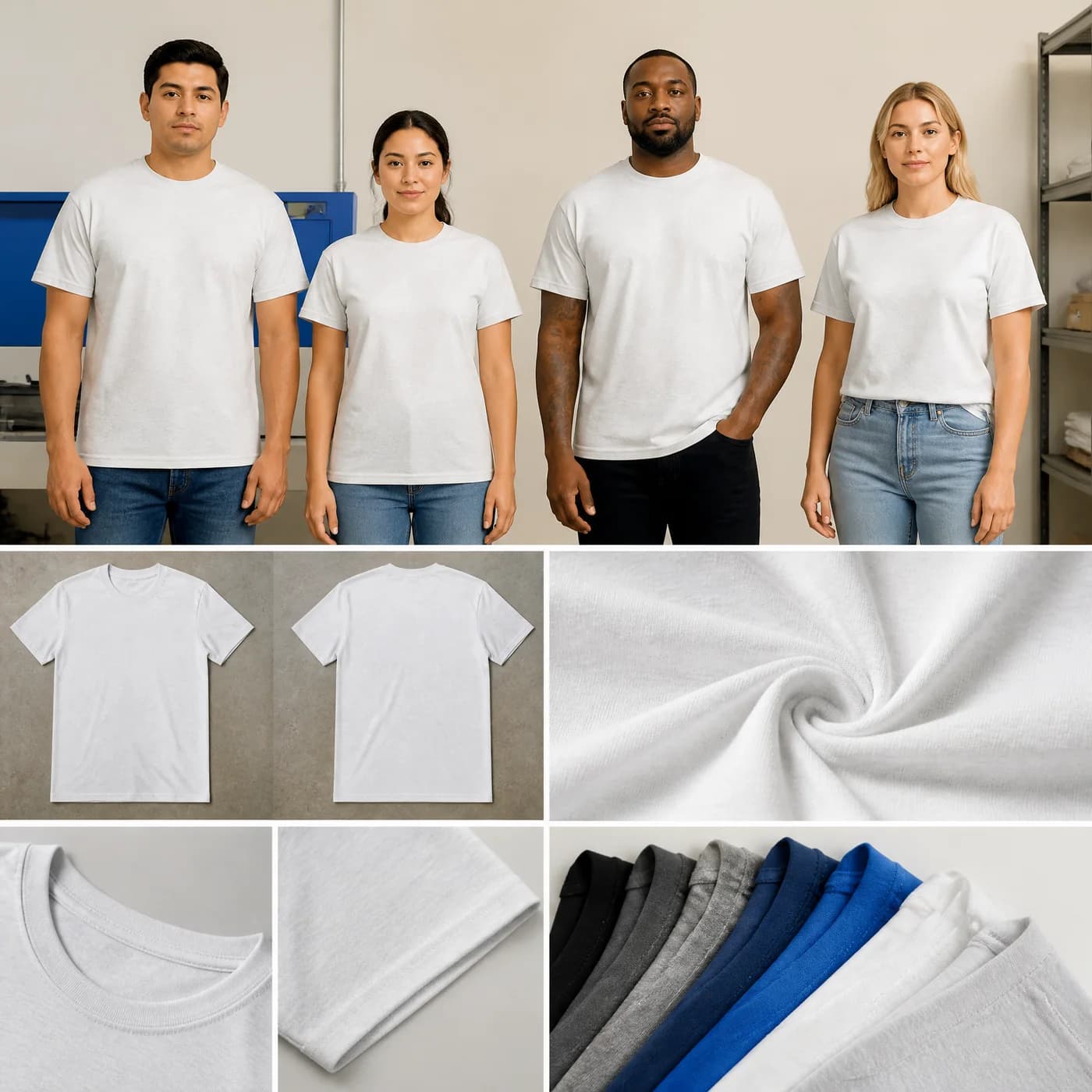
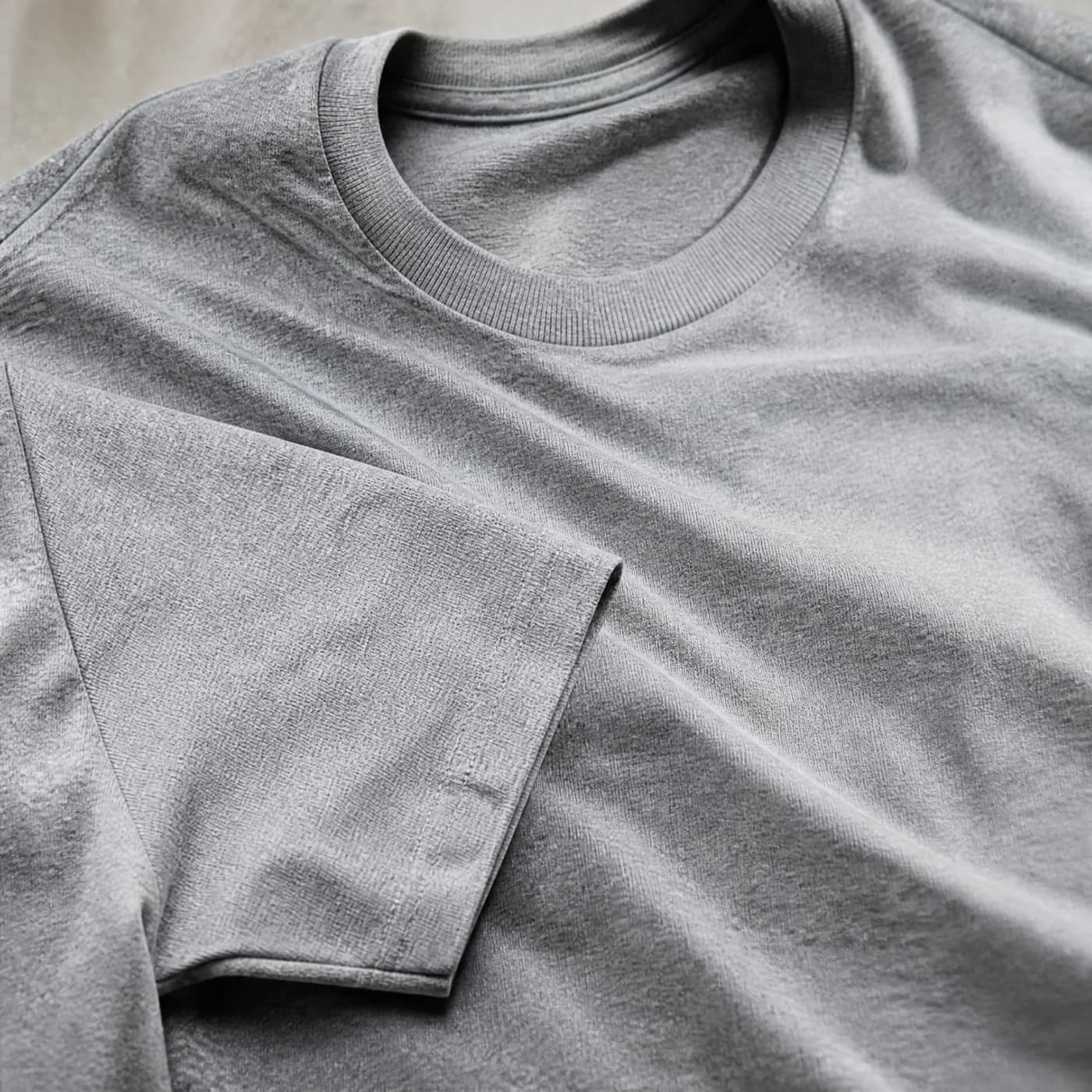
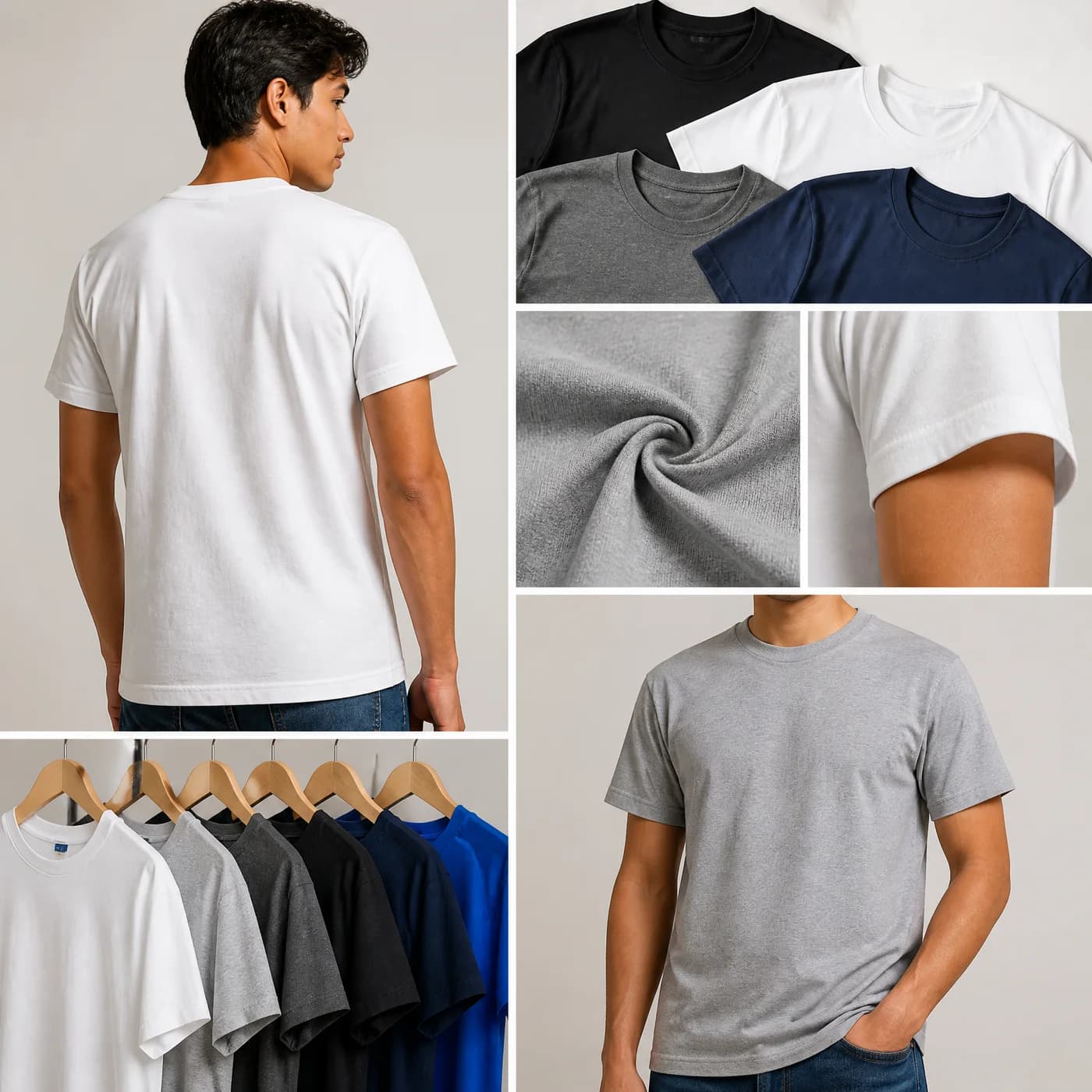
DryBlend works best when the buyer needs a practical 50/50 shirt that feels lighter than heavy cotton but still familiar enough for everyday staff, crew, school, restaurant, or event use.
Why dry blend matters in Houston
Houston changes the blank decision because heat and humidity are not small details. A shirt for a jobsite, school field day, food truck shift, church setup, or outdoor vendor booth has to feel good after more than five minutes outside.
DryBlend is useful here because it is more summer-friendly than a basic heavy cotton shirt for many group orders, while still avoiding the slick feel that makes some people reject full polyester tees.
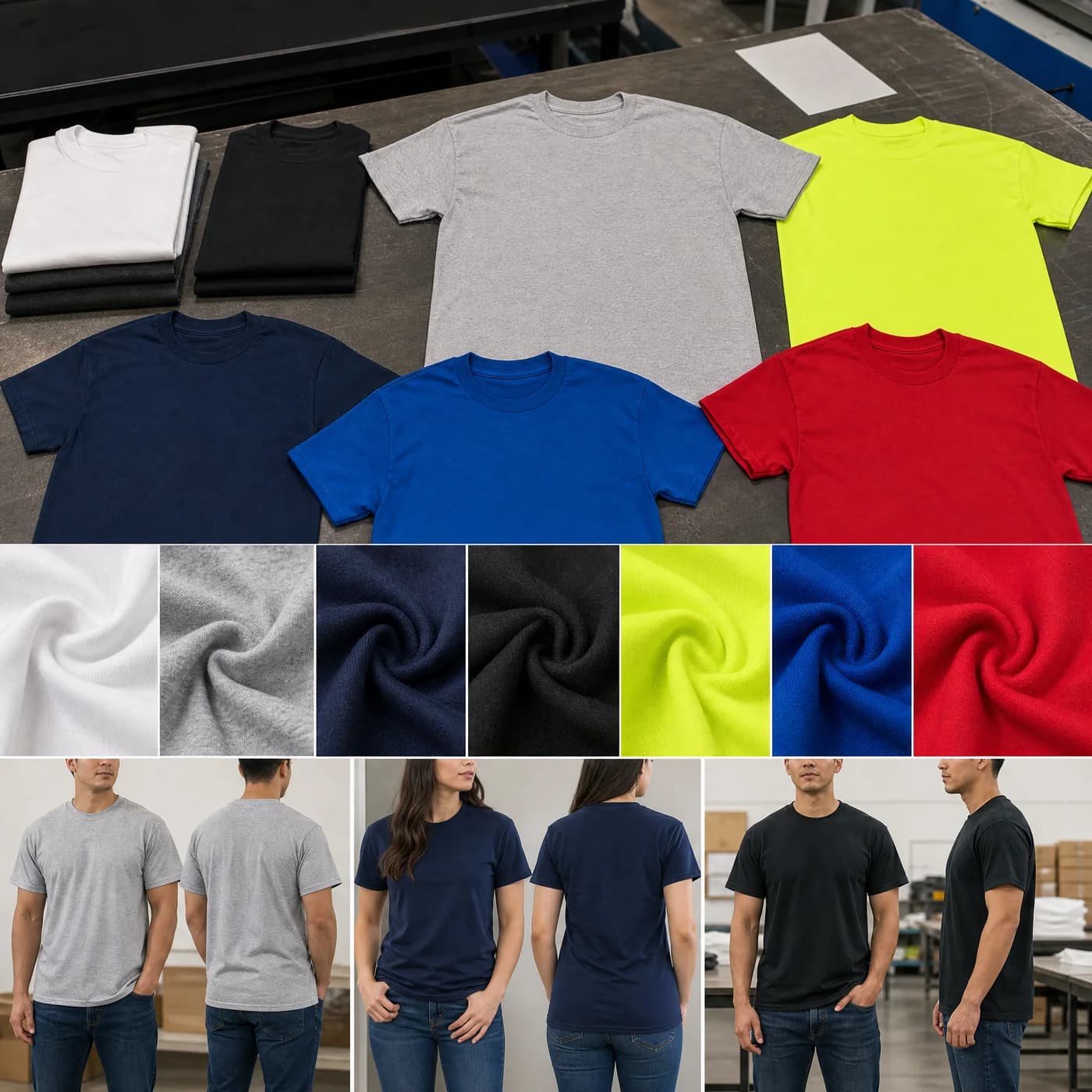
That does not mean every Houston order should use it. If the wearer wants a premium retail feel, choose Bella + Canvas or Softstyle. If the buyer wants a heavier vintage casual look, choose Comfort Colors. If the order is for daily staff, crews, events, and clean promotional wear, DryBlend is often the practical middle.
In Houston, DryBlend is valuable because it gives buyers a practical middle between heavy cotton and full performance polyester.
Who should use dry blend shirts
Use DryBlend when the buyer needs shirts people will actually wear at work, at an event, or during a warm-weather handout. That includes contractor crews, warehouse teams, restaurant staff, school staff, church volunteers, field-day groups, event staff, and repeat company apparel.
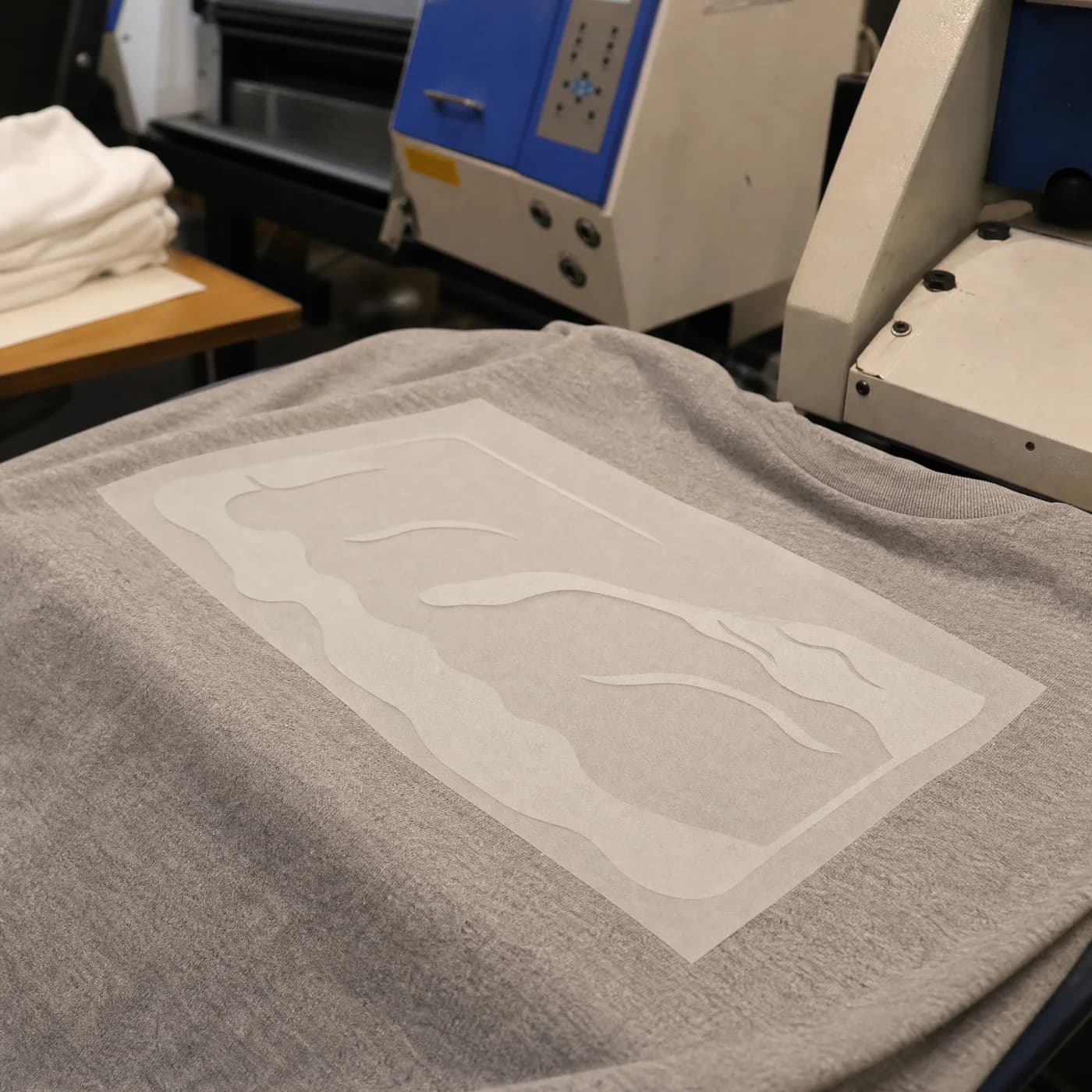
The best fit is a buyer who cares about budget, reorderability, and a clean finished look more than premium softness. If the shirt needs a large back logo and a small left-chest mark, DryBlend can keep the overall feel simple and wearable instead of heavy.
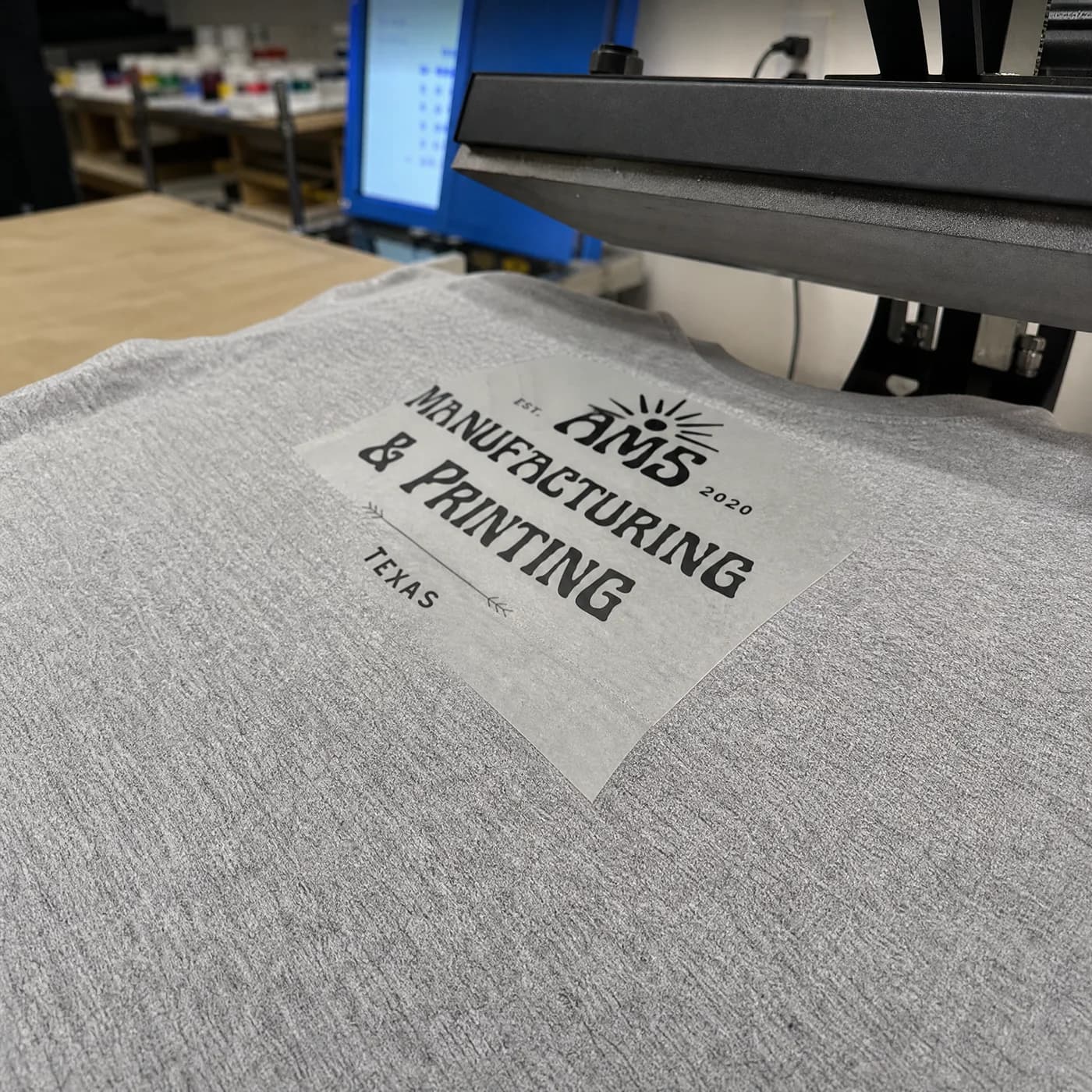
AMS would rather set that expectation upfront than pretend every blank is the best blank. DryBlend is a utility pick. Used in the right order, that is a good thing.
DryBlend is strongest for practical group orders where comfort, cost, repeatability, and a clean DTF or print result matter more than premium blank status.
Who should skip dry blend shirts
Skip DryBlend if the customer already knows they hate polyester in T-shirts. The 50/50 blend softens that issue, but it does not make the shirt feel like a 100% cotton heavyweight tee or a premium ringspun blank.
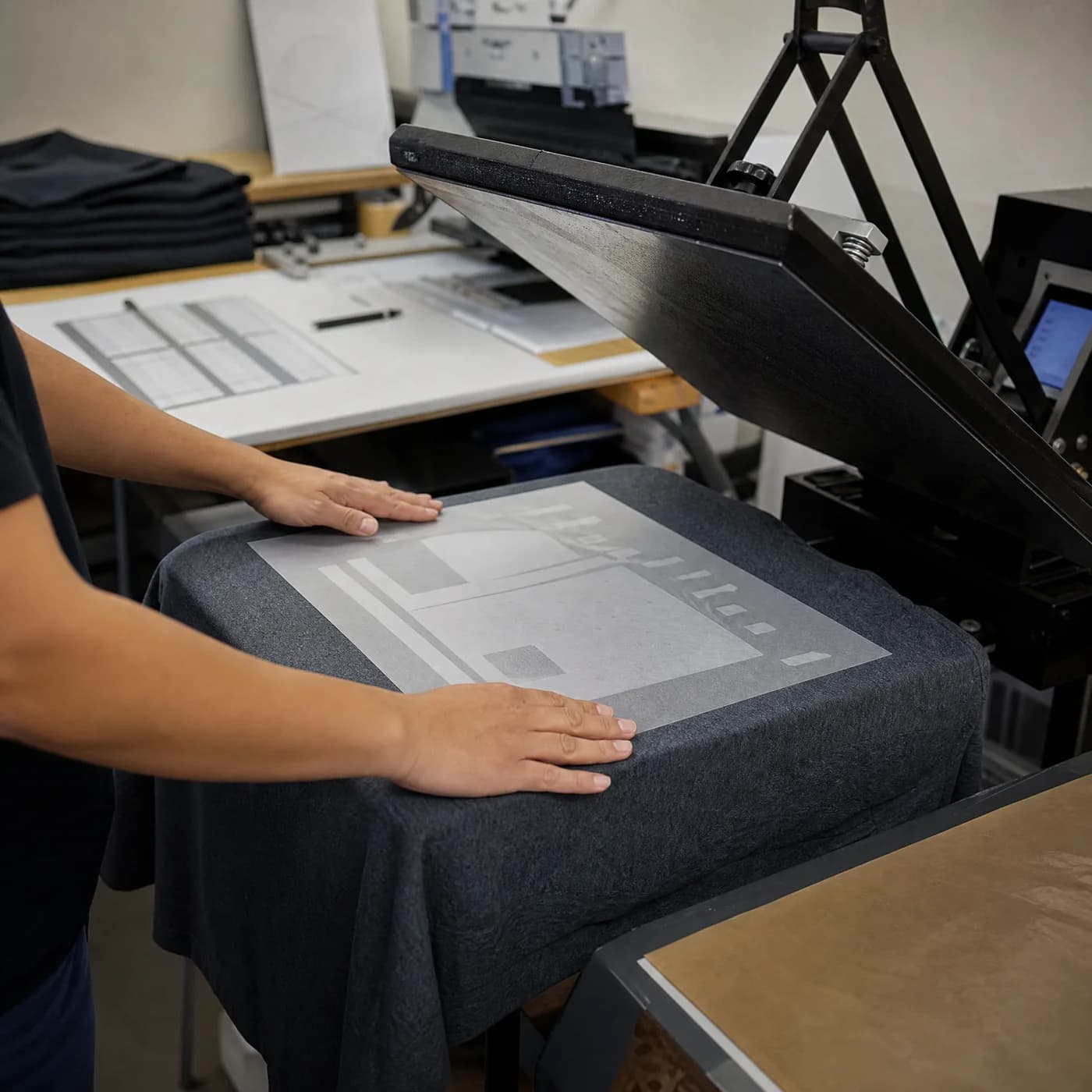
Skip it when the shirt is supposed to be the product, not just the uniform or event piece. Retail merch buyers often care about softness, drape, fit, and brand feel first. In that case, Bella + Canvas 3001, Gildan Softstyle, or Comfort Colors may match the expectation better.
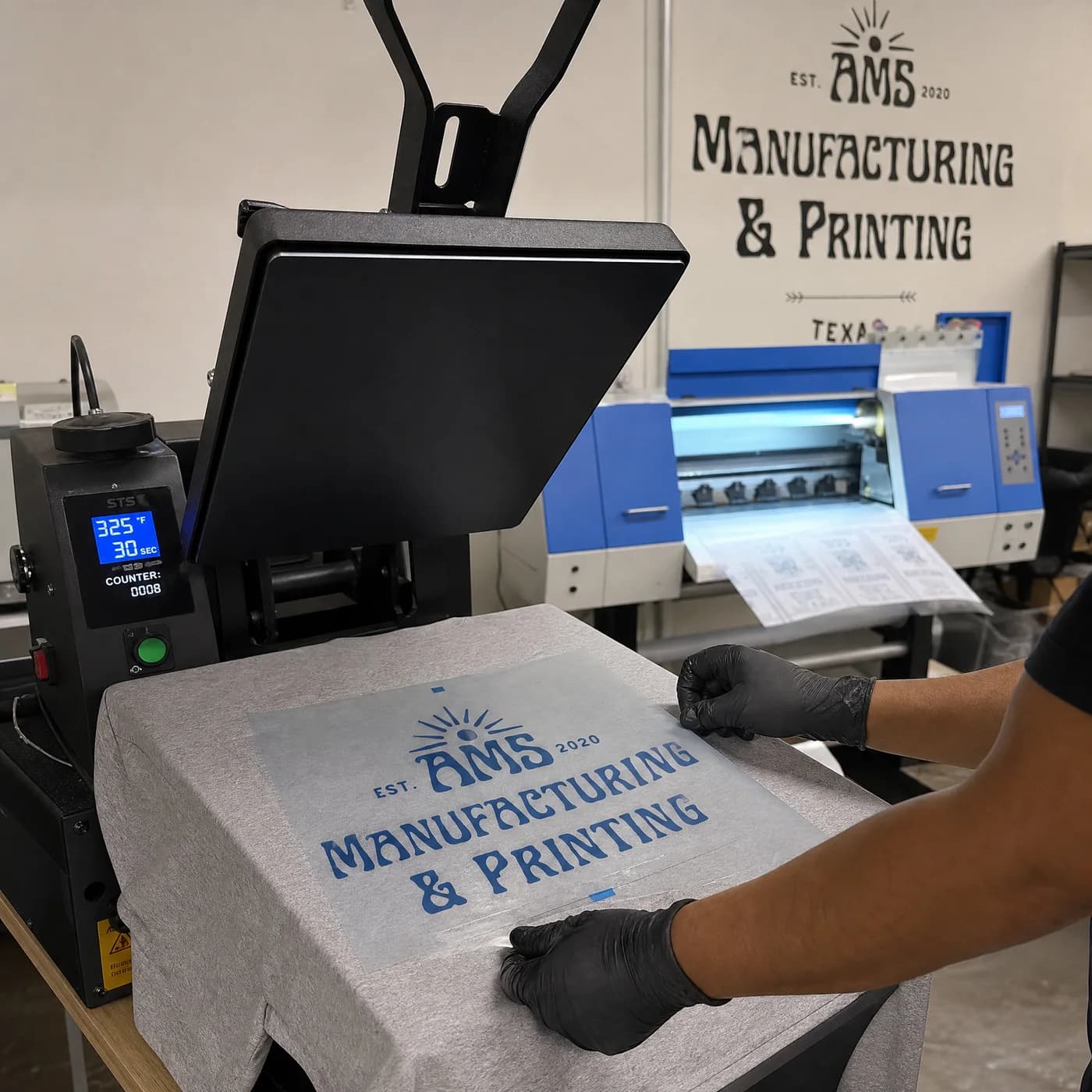
Also skip it if the buyer wants a heavyweight vintage look. DryBlend is lighter and more practical. That is its value, but it is also the reason it is not the right answer for every shirt order.
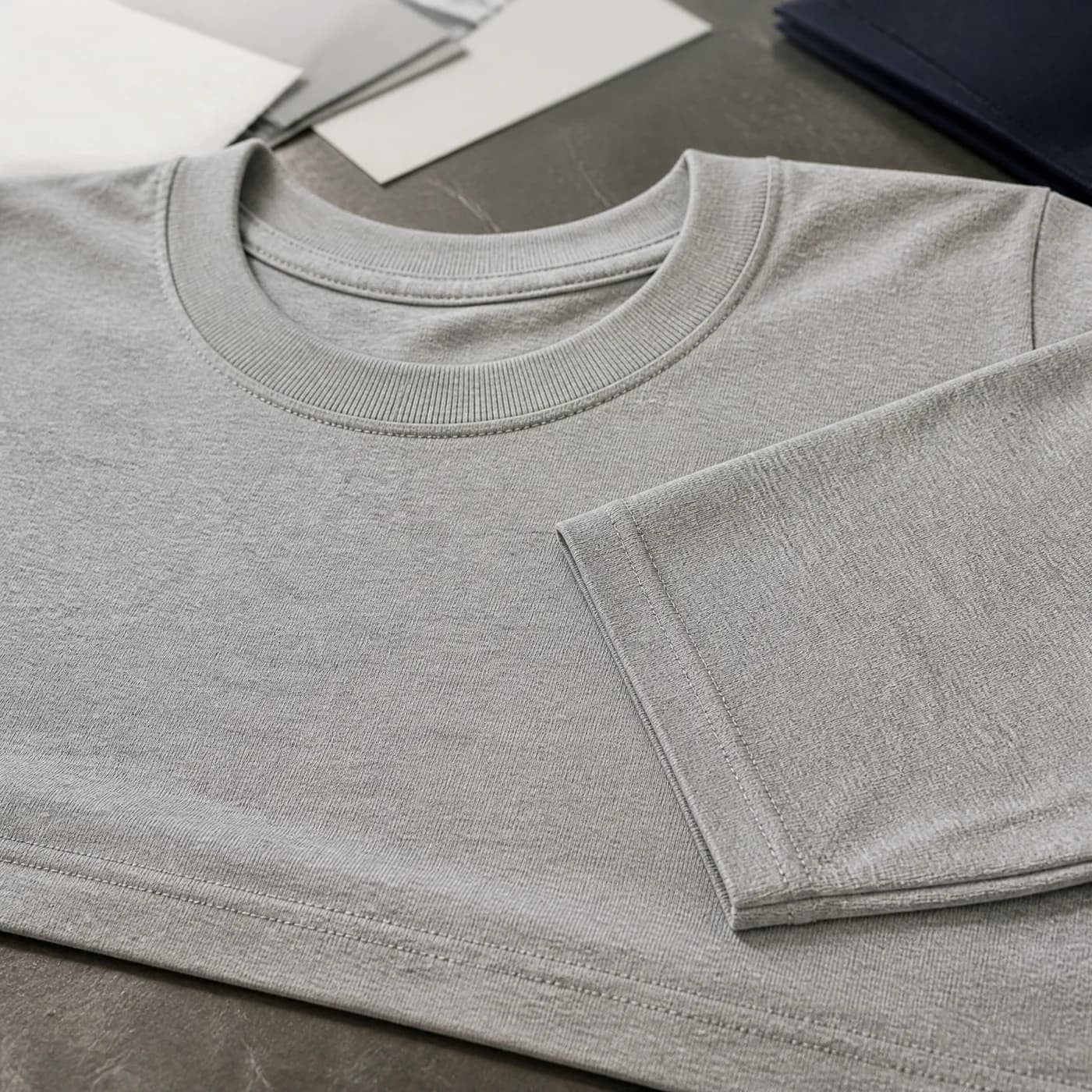
Do not oversell DryBlend: it is a practical 50/50 warm-weather blank, not the premium-soft or heavyweight-vintage option.
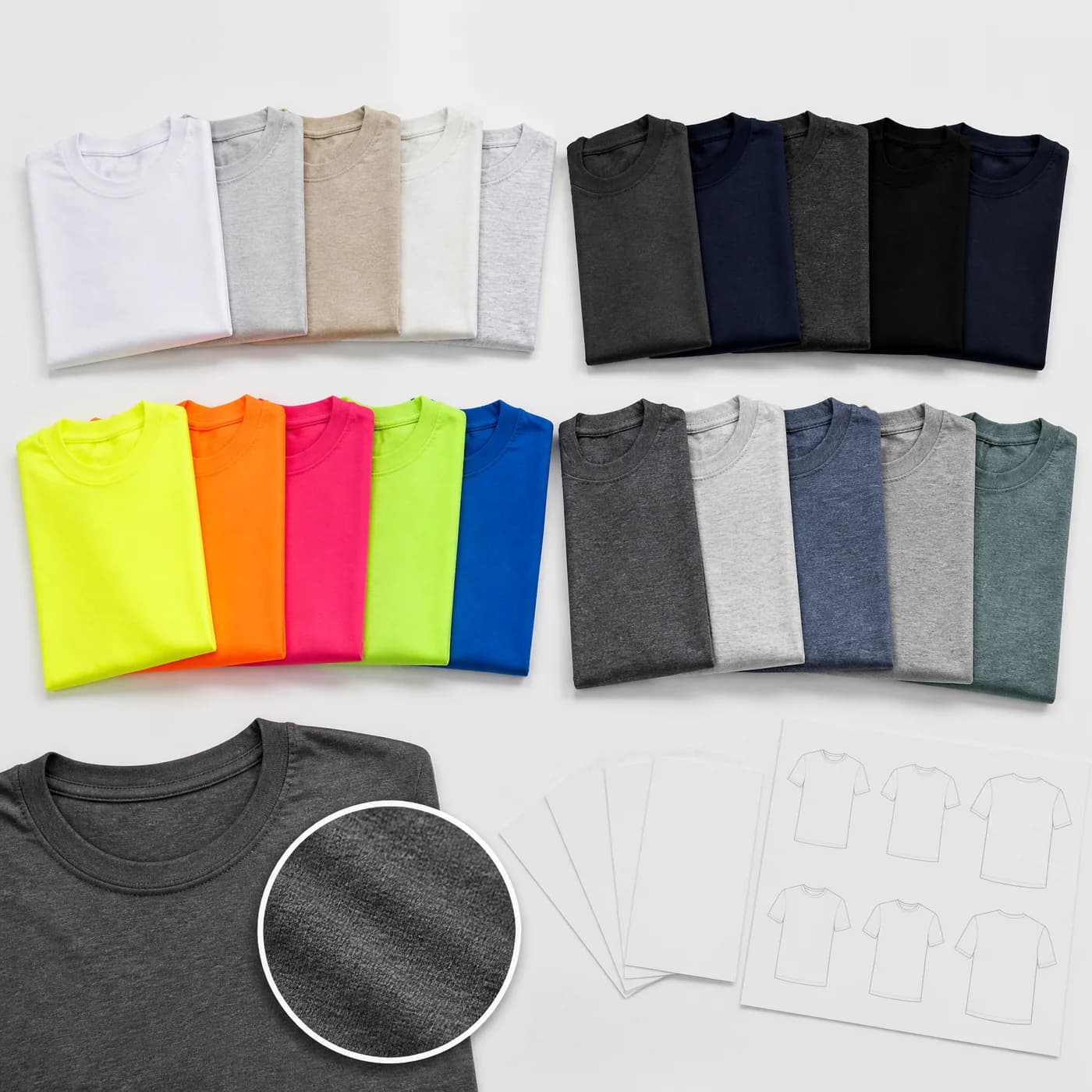
When DTF transfers make sense
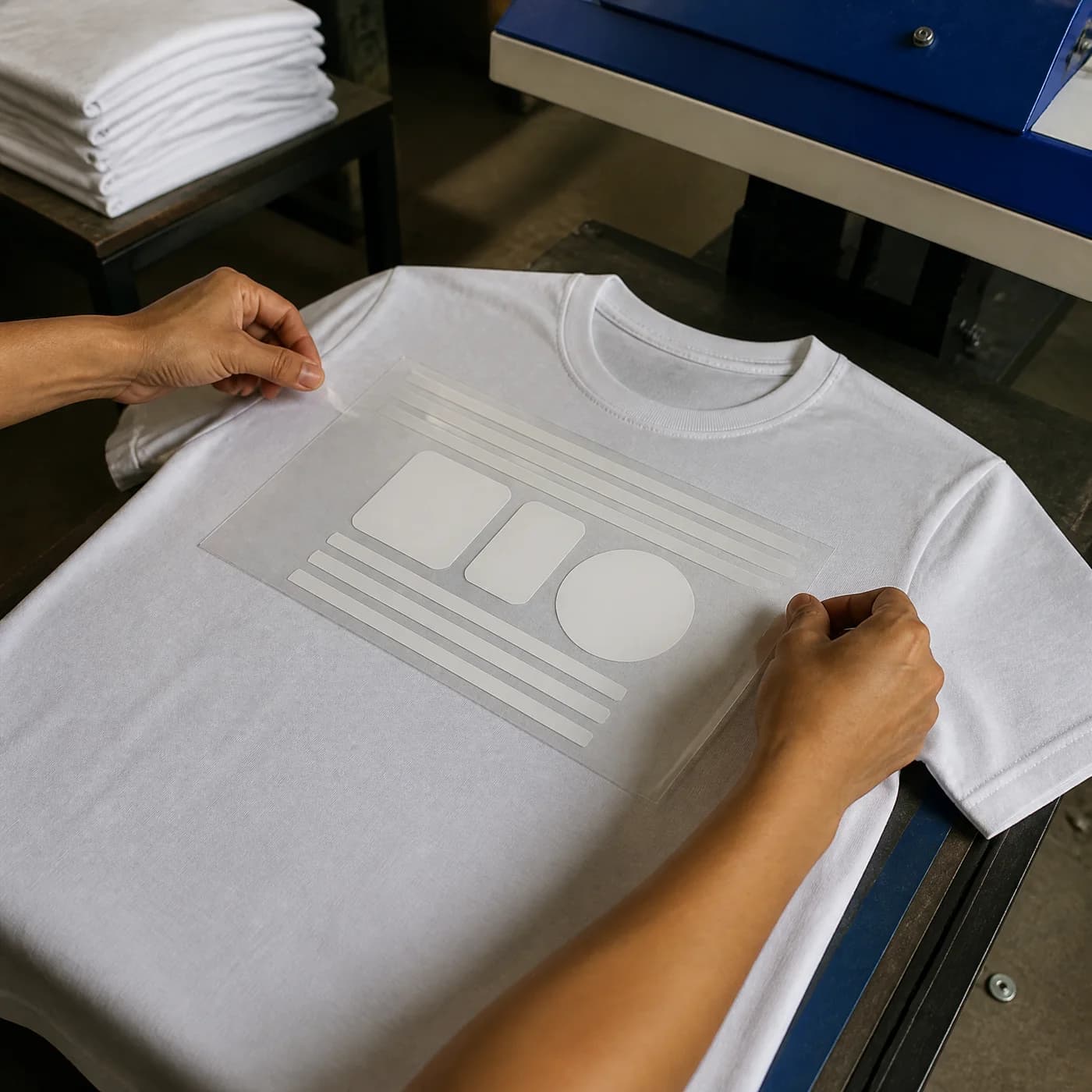
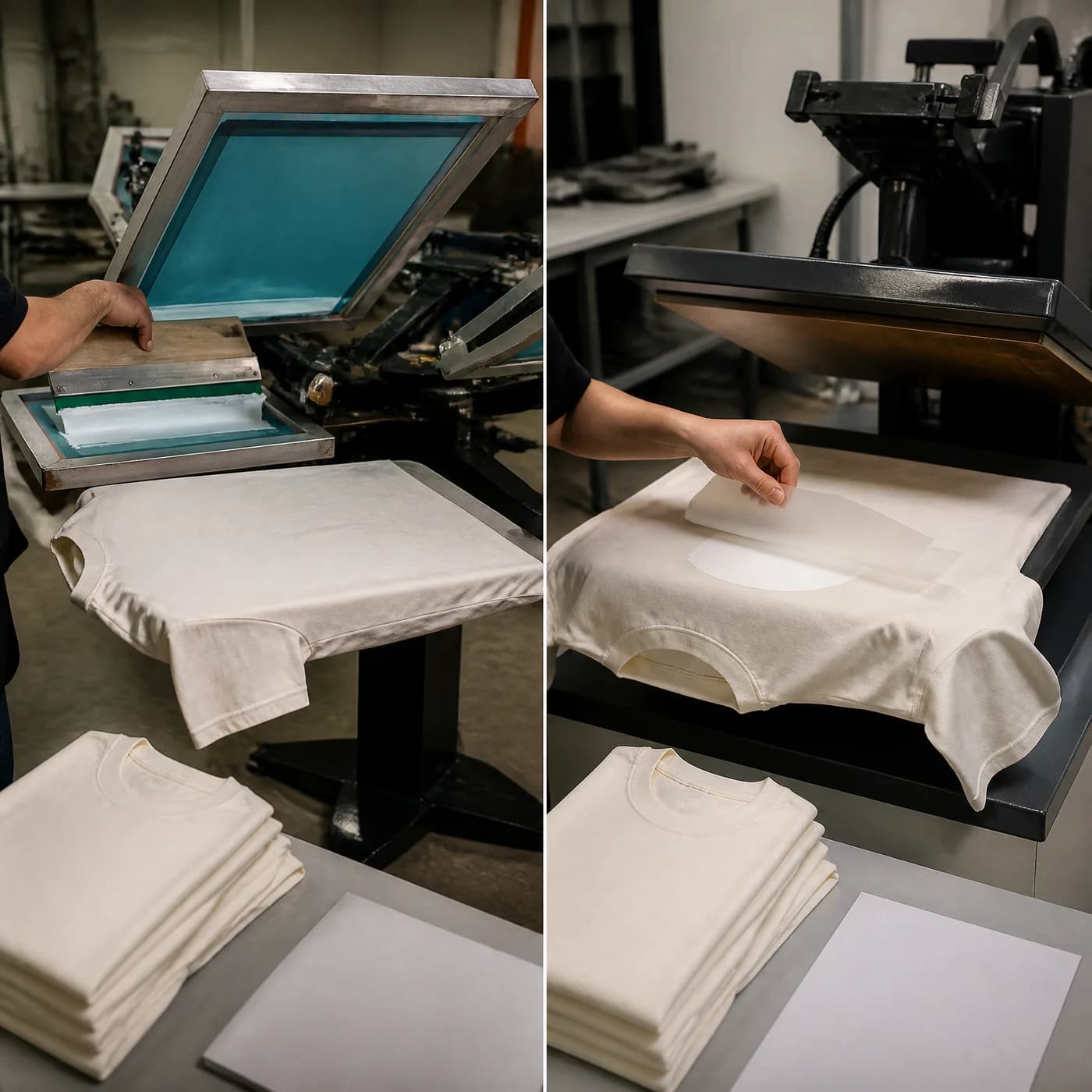
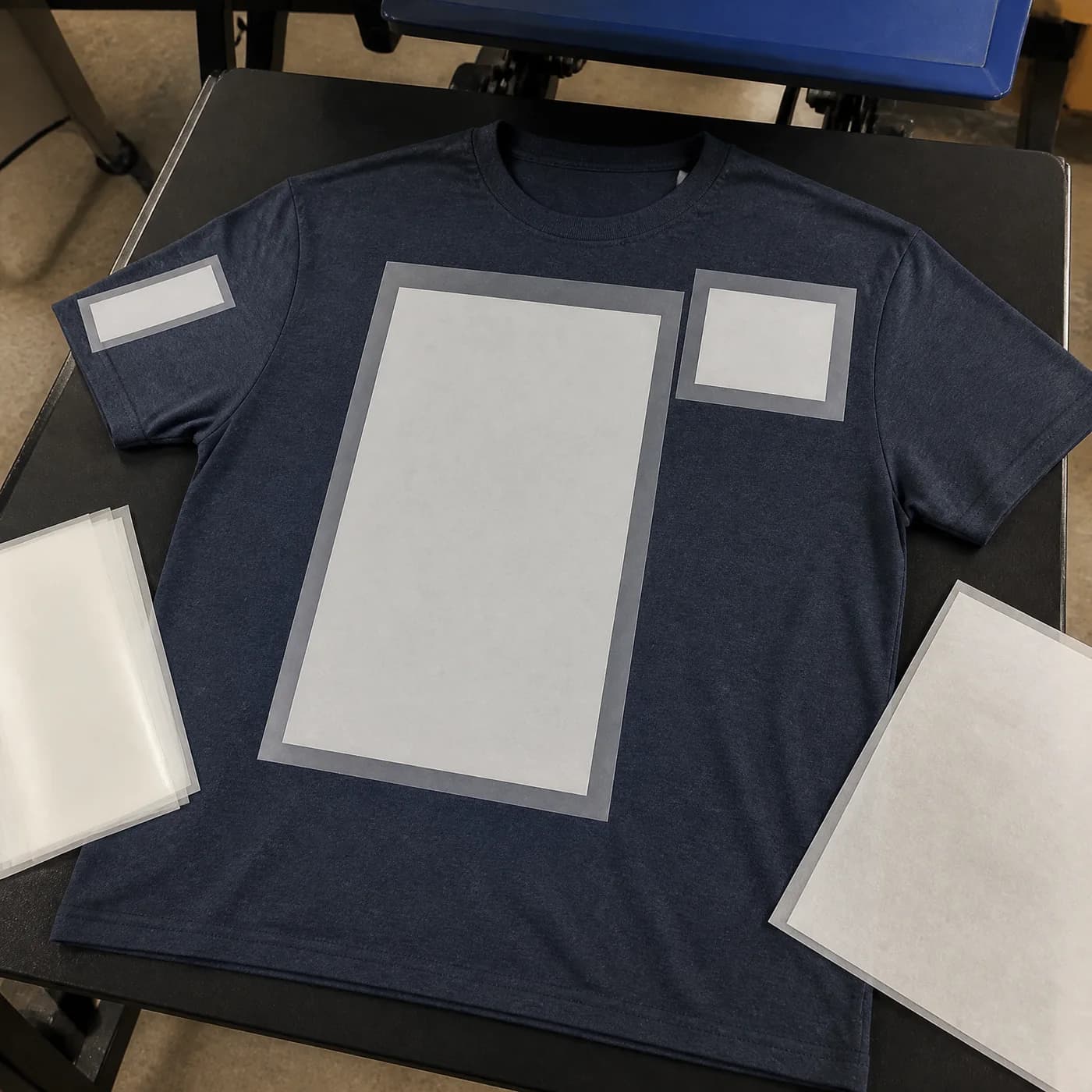
Use DTF transfers when you already have blanks, own a reliable heat press, and want to press on demand. This is strong for testing designs, running gang sheets, and keeping inventory flexible.
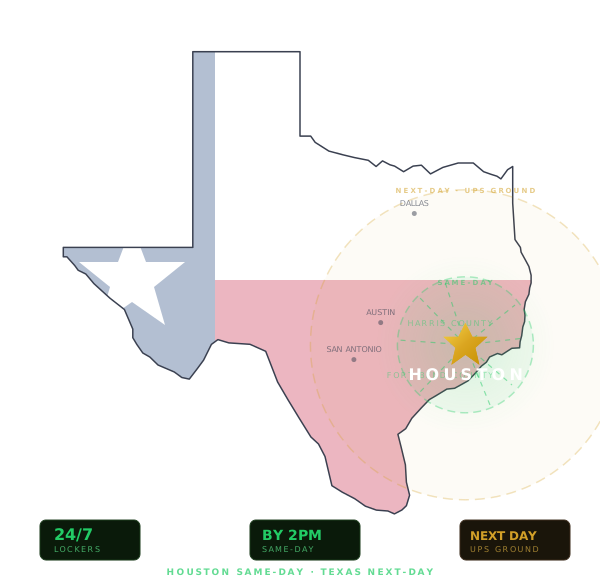
For standard Instant Peel DTF, AMS points customers to a baseline of 296-315°F, 10-12 seconds, high pressure, and instant hot peel. Pre-press the shirt, press one test piece, confirm pressure, check peel behavior, and then decide whether to run the stack.
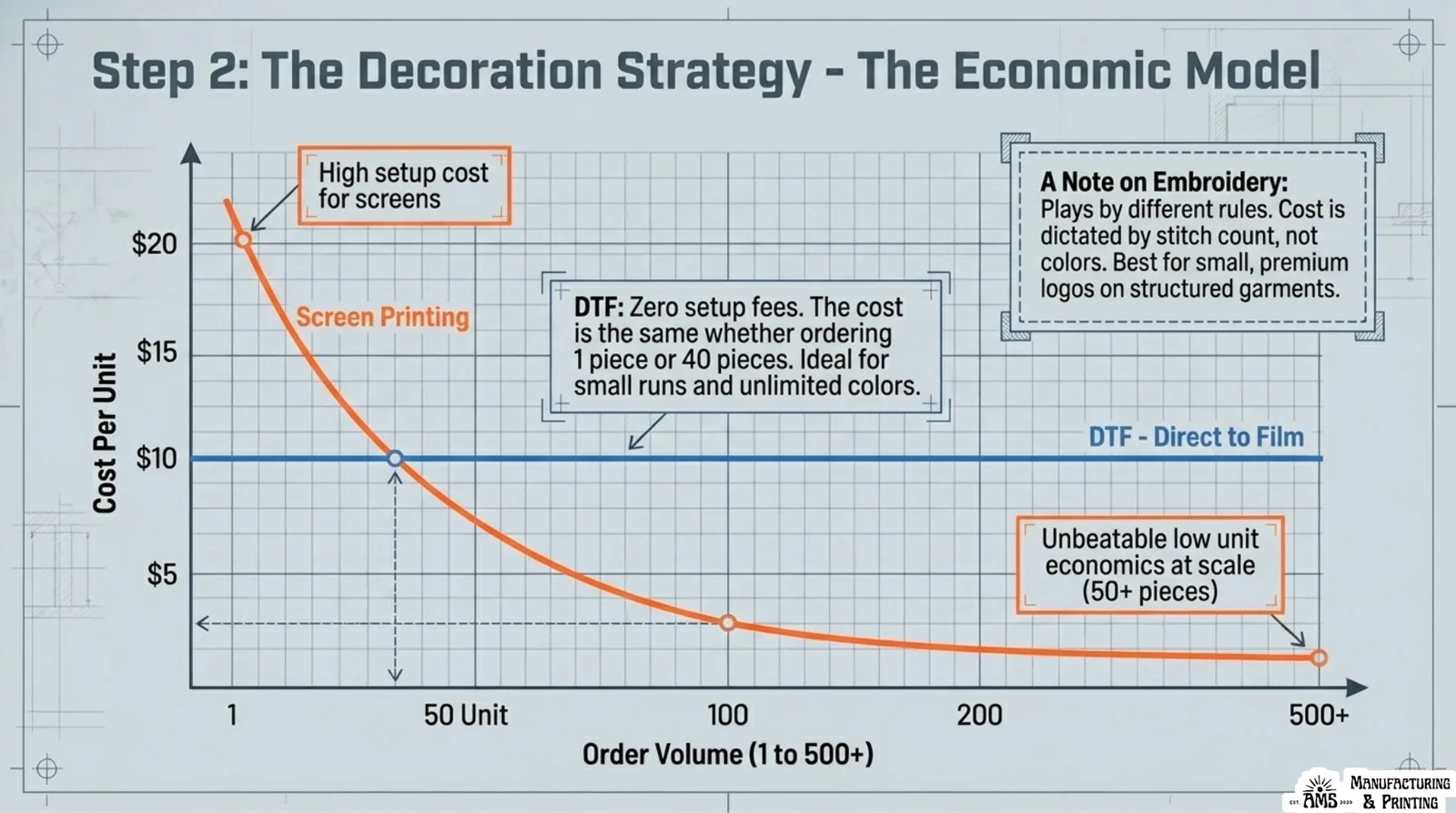
Artwork matters as much as the press. Send final-size art, target 300 to 600 DPI, use transparent PNG or vector files when possible, and keep fine DTF details at least 1 pt so small lines do not disappear.
DTF transfers give you flexibility when your press setup, artwork, and test process are dependable.
When finished apparel is the better move
Choose finished apparel when you do not want to press the shirts yourself, the deadline matters, or the order needs to arrive packed and ready.
This is the safer path for businesses, schools, churches, event teams, crews, and customer orders where size sorting, consistent placement, QC, and packing matter.
AMS Press It For Me lets customers upload designs, pick garments and placements, then have AMS press, QC, pack, and ship the finished pieces from Houston at $3 per press placement.
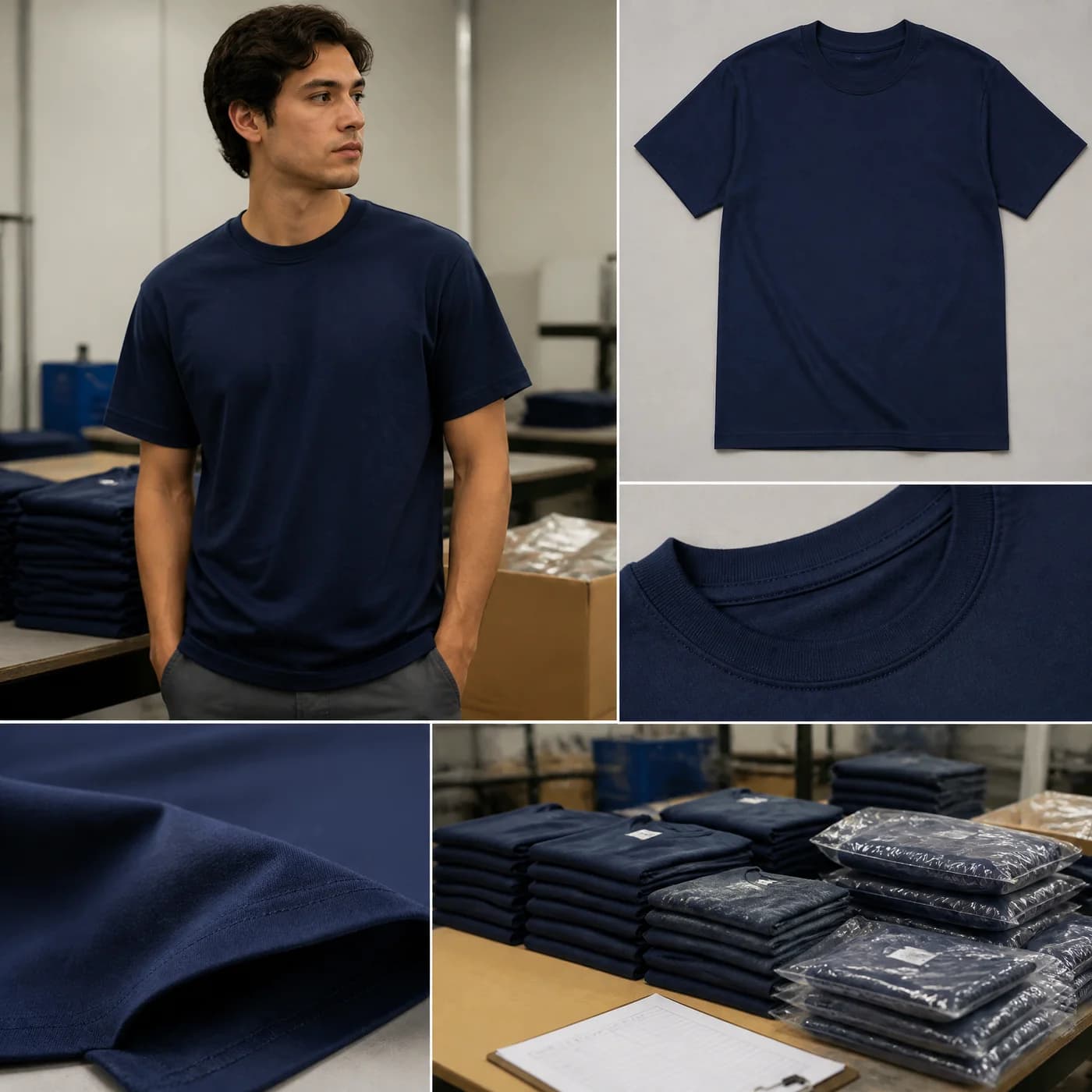
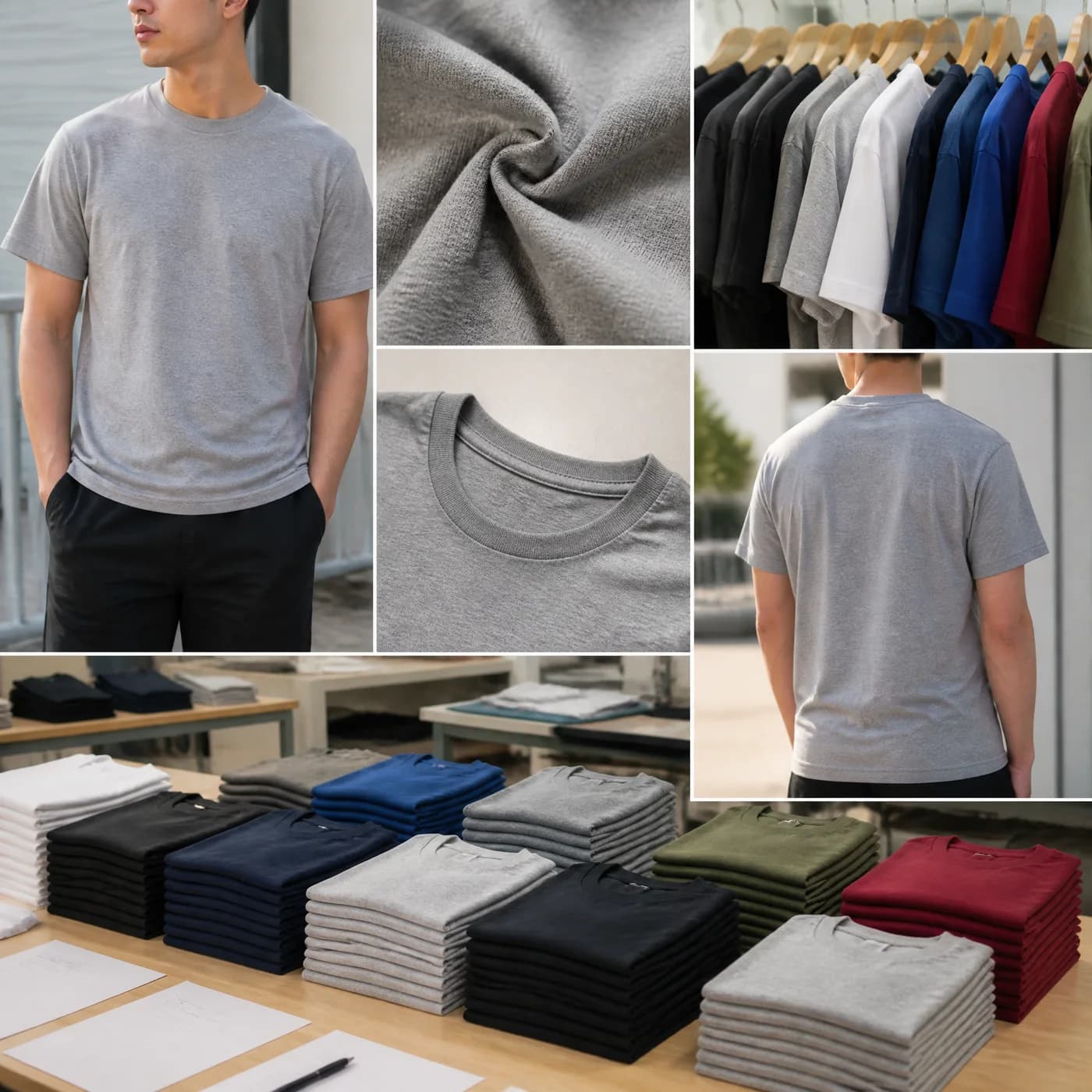
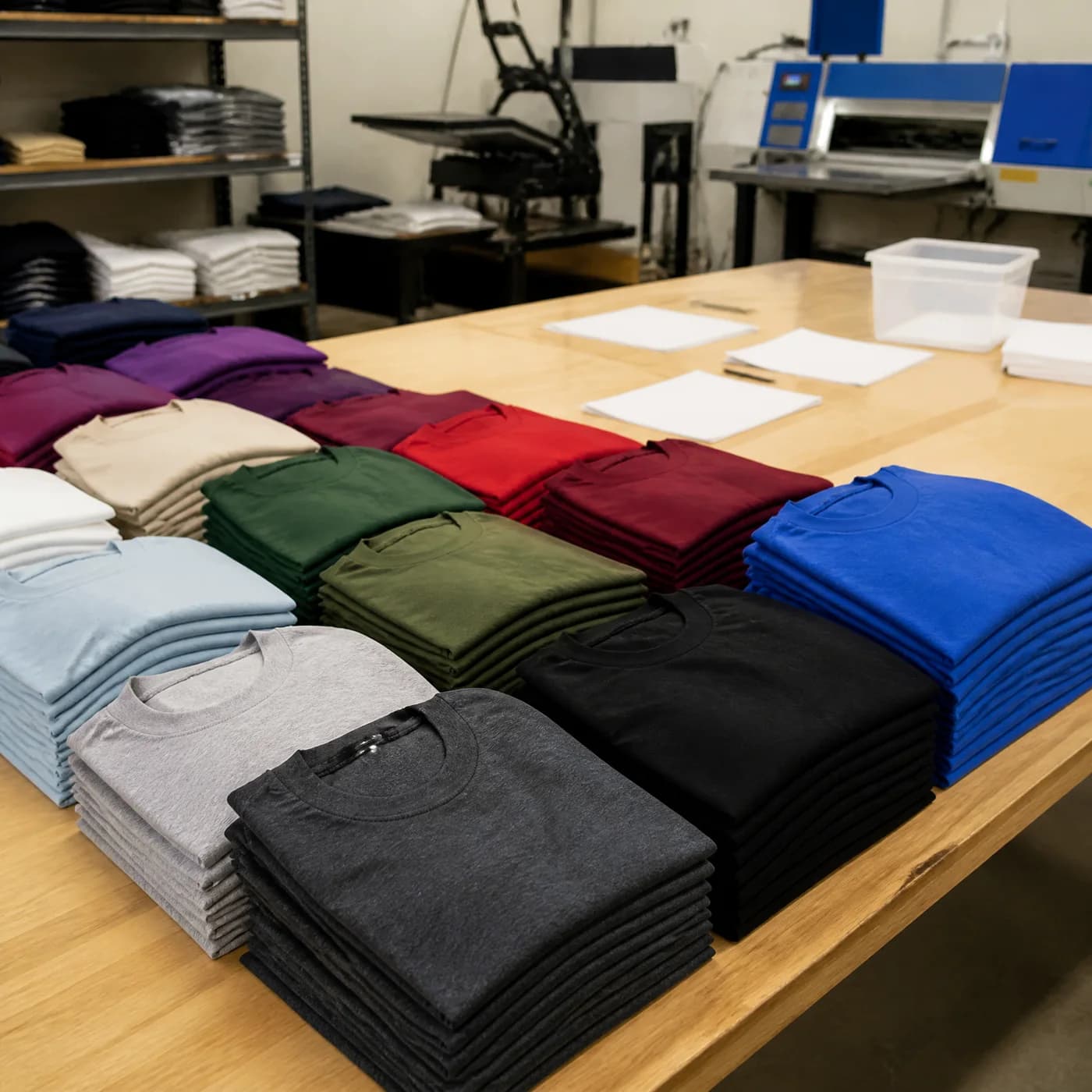
Finished apparel gives you fewer moving parts when the order has a real handout date.
When blanks plus transfers are the middle path
Blanks plus transfers make sense when you want AMS to help with the garments and prints, but your team still wants to control pressing.
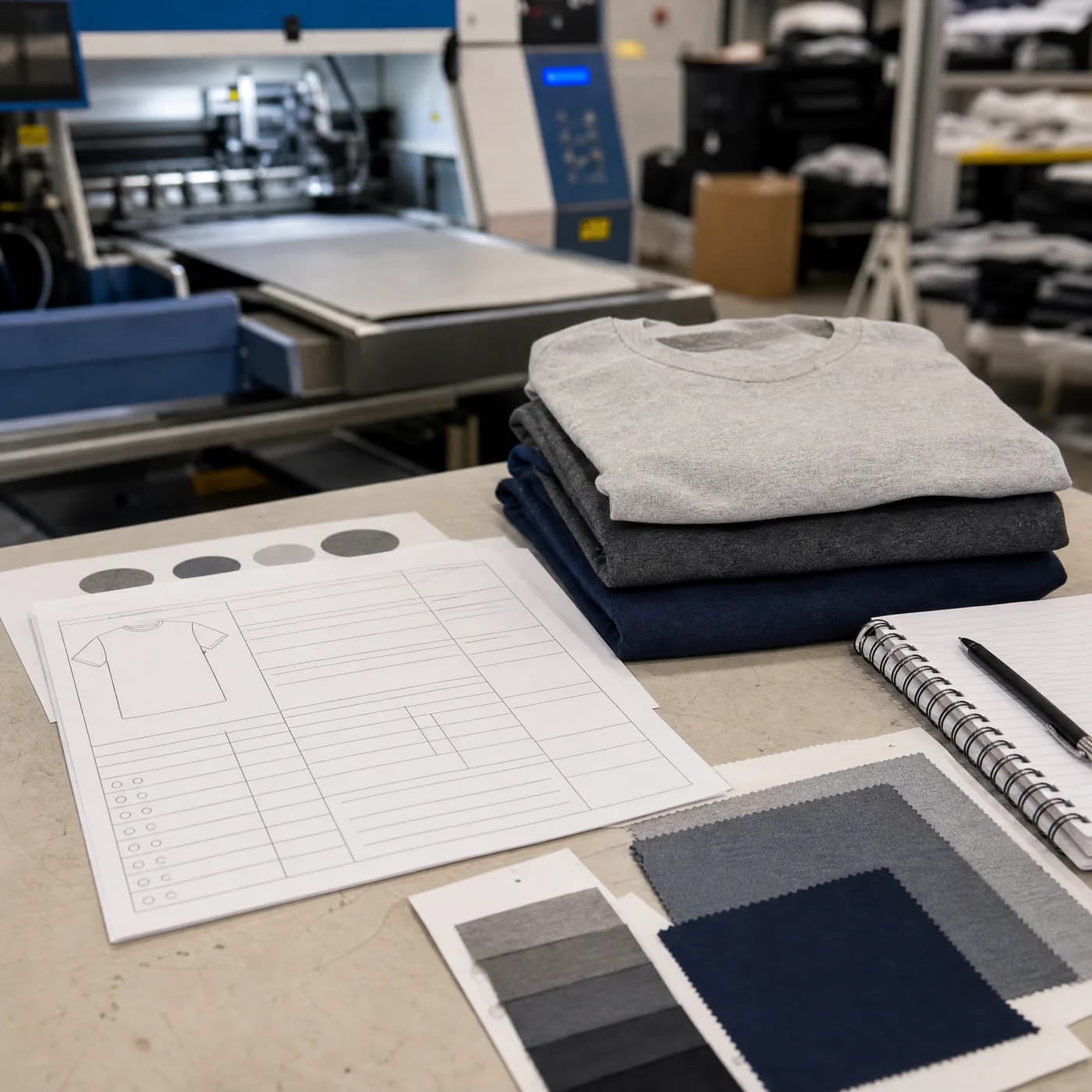
This can work well for shops, pop-up brands, and repeat sellers that know their heat press setup but do not want to source every G800, Bella + Canvas 3001, Softstyle, or Comfort Colors blank separately.
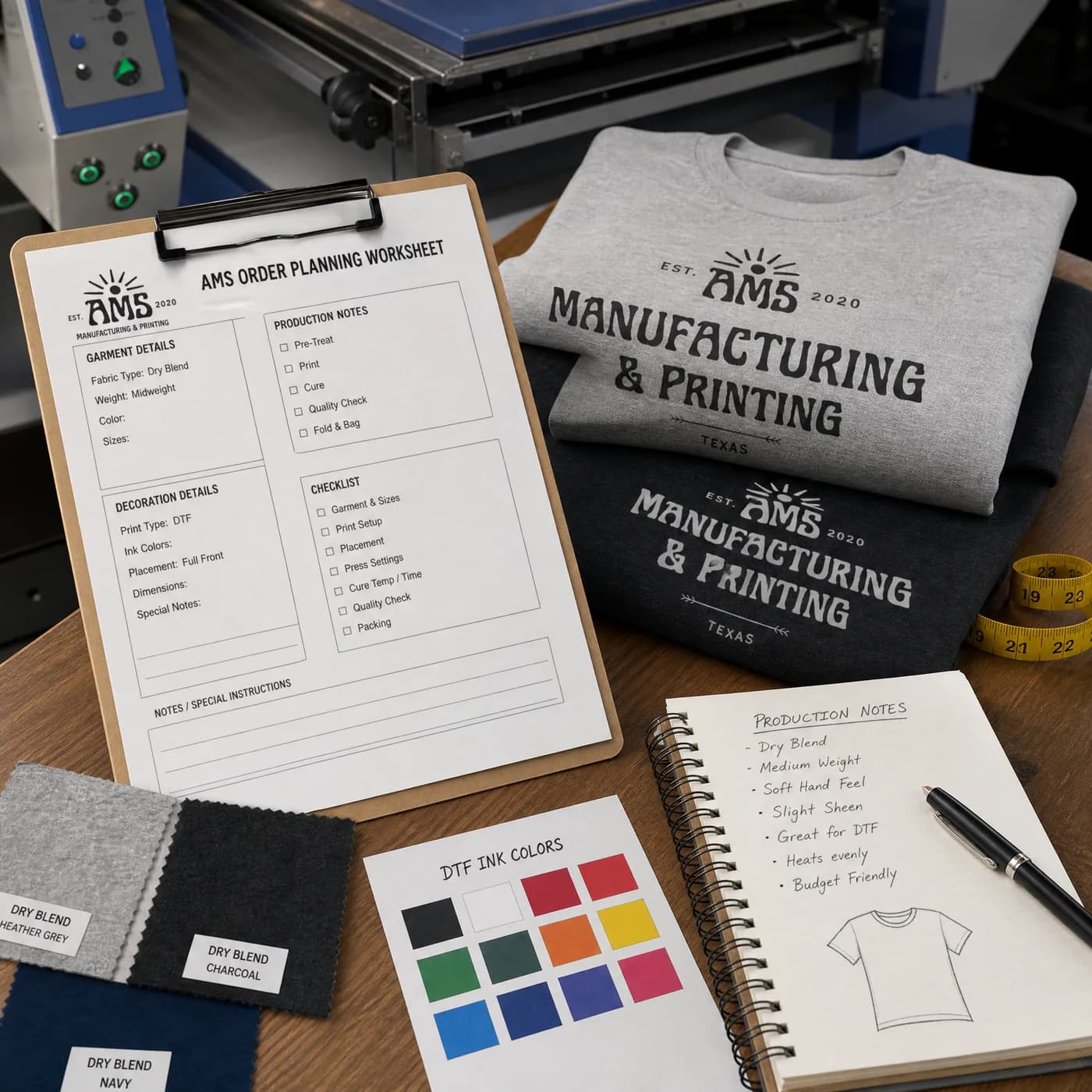
It also keeps the recommendation practical because AMS can review garment style, fabric, color, artwork, final print size, quantity, and due date before the order gets locked in.
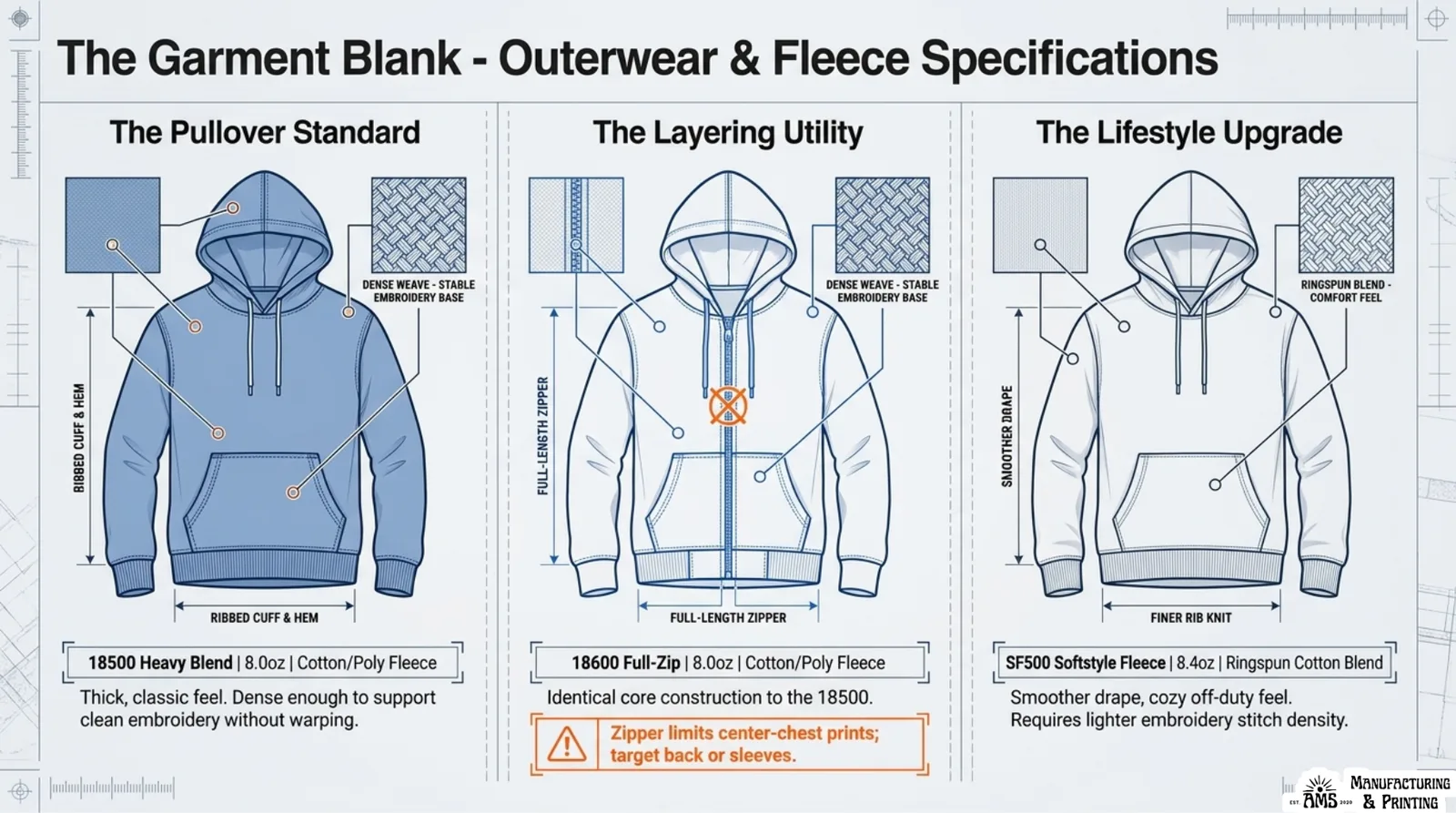
Blanks plus transfers keep sourcing and printing together while leaving pressing in your hands.
What to Send AMS
Send the artwork file, final print size, garment style or SKU, shirt color, quantity, size breakdown, print locations, due date, and pickup or shipping preference.
Also tell AMS whether you want finished apparel, DTF transfers, or blanks plus transfers. If you are not sure, send the details anyway and we can point you to the safer path.
That is the fastest way to avoid buying the wrong blank, approving low-resolution art, missing the 2:00 PM CT DTF cutoff, or discovering too late that nobody has time to press and pack the order.
The best AMS recommendation starts with the order details, not only the shirt name.
DTF file check before you upload
- Build the design at final print size.
- Target 300 to 600 DPI at that final size.
- Use transparent PNG, SVG, or PDF artwork when clean edges matter.
- Keep small lines and tiny text at least 1 pt for DTF.
- Remove extra blank padding around the design.
- Check the proof before checkout.
- Confirm whether this is DTF, plastisol, UV, or finished apparel before the deadline gets tight.
DTF pressing readiness check
- Confirm you have a reliable heat press, not only a handheld iron.
- Pre-press the garment to remove moisture.
- Start with 296-315°F, 10-12 seconds, and high pressure.
- Press one test shirt before the full stack.
- Peel hot for Instant Peel DTF and watch the edge behavior.
- Use a covered 10-15 second post-press when the finish or edge lock needs it.
- Inspect placement, stretch, and wash behavior before repeating the order.
Decoration Fit
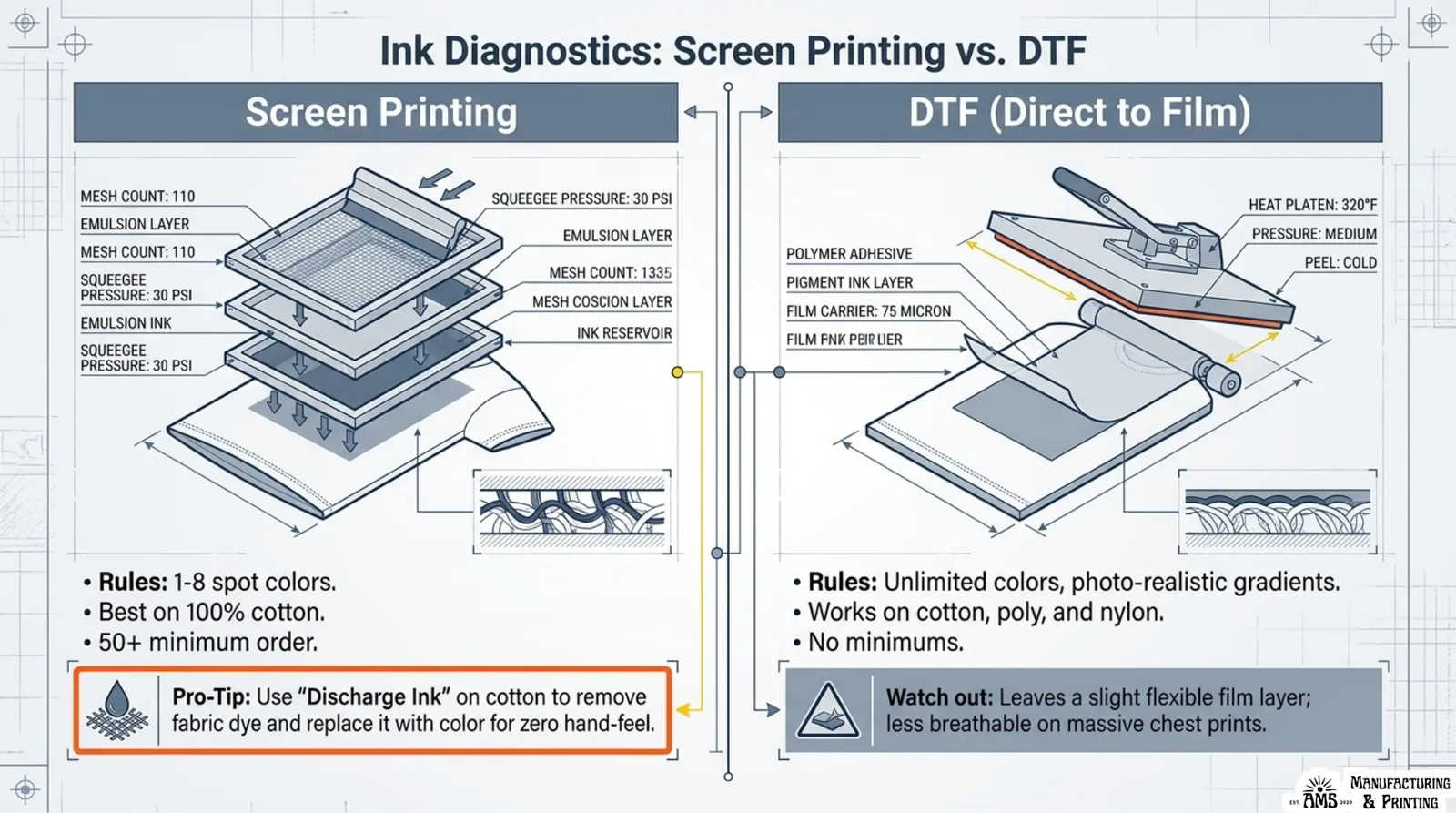
DTF
Good for full-color logos, gradients, mixed designs, and flexible production.
Your team still needs clean files, pressure control, a test press, and time to inspect the first shirt.
Screen print
Good for repeat programs and bulk orders with simpler color needs.
Compare setup and quantity before assuming DTF is always the best method.
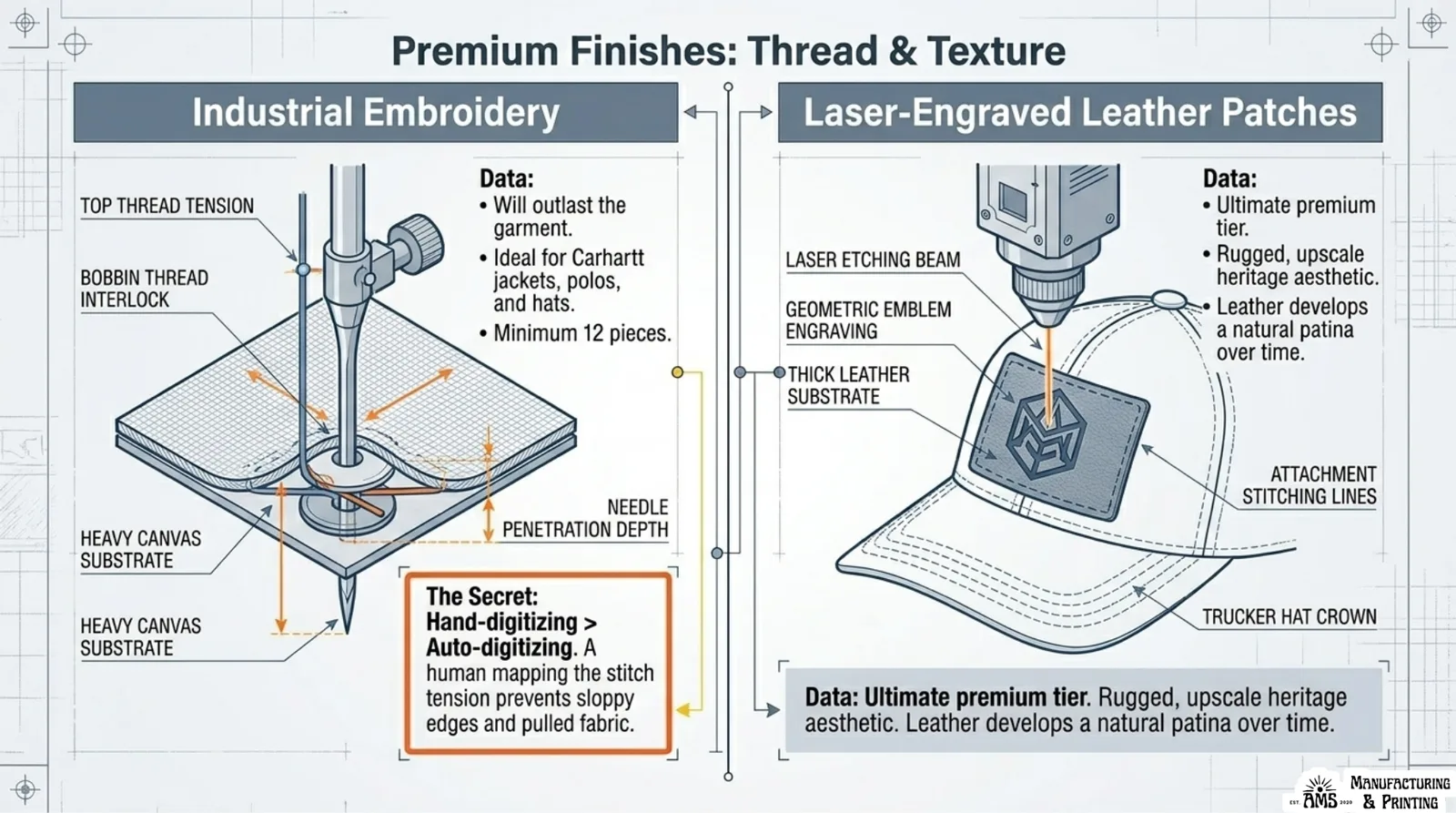
Embroidery
Possible when the design, size, and placement make sense for the garment.
Small text, stitch count, and shirt weight can change the final look and price.
Finished apparel
Best when AMS should deliver shirts pressed, checked, sorted, packed, and ready to hand out.
Give AMS the size breakdown, due date, artwork, and placements early enough to own the final handoff.
Once DryBlend is the right blank, choose the AMS path around the deadline. Order finished apparel when the shirts need to arrive pressed, checked, sorted, and ready to hand out. Order DTF transfers when your team has the press, settings, and time to test. Choose blanks plus transfers when AMS should supply the G800 and the prints while your team keeps pressing in-house.
Choose the order path
Choose the AMS order path
For most Houston crew, school, restaurant, and event orders, G800 Gildan DryBlend works when you need a budget-friendly shirt that is easy to reorder; choose finished apparel when the shirts need to be ready to hand out, DTF transfers when your team can press and test, and blanks plus transfers when you want AMS to supply both pieces while you press in-house.
| Your situation | Best next step | Why | Watch out for |
|---|---|---|---|
| The order has a real handout date, multiple sizes, or customer-facing shirts. | Finished Apparel | AMS can press, check placement, sort sizes, pack the order, and prep it for pickup or shipping. | Do not choose transfer-only if nobody has time to press, inspect, fold, sort, and pack the shirts. |
| You already have blanks, a reliable heat press, clean artwork, and time to test. | DTF Transfers | DTF transfers keep production flexible and work well for full-color designs, mixed designs, and smaller tests. | Run one test shirt before the full stack so pressure, peel behavior, and placement are right. |
| You want AMS to supply the garments and transfers, but your team wants to keep pressing. | Blanks Plus Transfers | This keeps sourcing and printing with one Houston shop while leaving final production control in-house. | Confirm the blank, artwork size, transfer count, and pressing plan before the deadline gets tight. |
60-second order check
- Who will wear the shirts?
- Where will they wear them in Houston or Texas?
- How many pieces and sizes are needed?
- What is the real pickup, shipping, or handout deadline?
- Who is pressing the shirts?
- Is the artwork final-size, transparent, and high enough resolution?
- Is pickup or Texas shipping needed?
AMS shortcut
If the shirts must be ready to hand out, use finished apparel. If your team has a dependable press setup and time to test, use DTF transfers. If you want garments and prints from AMS but pressing in-house, choose blanks plus transfers.
Quick Math
Quick calculator: transfer-only vs finished apparel
Use this before choosing transfers only. The transfer price is not the whole job when your team still owns pressing, QC, folding, sorting, and packing.
Front-only finished apparel pressing
100 shirts x $3 = $300 pressing labor
For a 100-shirt front-only order, compare the $300 pressing labor against your team sourcing blanks, pressing, checking, sorting, and packing.
Front and back finished apparel pressing
100 shirts x $6 = $600 pressing labor
Front plus back means two placements per shirt. That is the math to compare against running 200 presses yourself.
Front, back, and sleeve pressing
100 shirts x $9 = $900 pressing labor
Three placements per shirt means 300 presses, plus alignment and QC, before the order is ready to hand out.
If your team can press cleanly and the deadline has room, DTF transfers can save money. If the date is fixed and mistakes are expensive, finished apparel may be the better AMS path.
Houston order examples
Houston contractor needs 75 crew shirts by Friday
Choose finished apparel because size sorting, consistent placement, quality checks, packing, and pickup timing matter more than saving a few dollars on a transfer-only order.
Buyer: Houston contractor
Qty: 75 shirts
Deadline: Friday pickup
Path: Finished Apparel
Texas apparel brand is testing 8 designs
Choose DTF transfers because gang sheets let the brand test mixed designs, press on demand, and learn which graphics deserve a finished apparel run.
Buyer: Texas apparel brand
Qty: 8 designs on one or more gang sheets
Deadline: test drop before a larger run
Path: DTF Transfers
School spirit order with parent volunteers
Choose finished apparel unless the volunteers already have a reliable heat press process; pressing, QC, size sorting, and packing are where school orders usually get stressful.
Buyer: Houston school group
Qty: 150 shirts
Deadline: field-day handout
Path: Finished Apparel
DTF and finished apparel mistake diagnosis
| Problem | Likely cause | Prevent it | When to ask AMS |
|---|---|---|---|
| The logo prints blurry. | The file was too low-res or enlarged from a screenshot. | Build the artwork at final print size and target 300 to 600 DPI, or send vector art. | Ask AMS before checkout if the only file available is a small PNG, JPG, or screenshot. |
| A box prints around the design. | The artwork was exported with a non-transparent background. | Use transparent PNG, SVG, or PDF artwork when the design needs clean edges. | Ask AMS to review the file if the proof shows a background you did not expect. |
| Tiny text or thin lines disappear. | Fine detail was below the DTF minimum or too small for the shirt size. | Keep DTF fine detail at least 1 pt and proof the design at actual print size. | Ask AMS before production when small sponsor names, taglines, or thin outlines matter. |
| Edges lift or the transfer does not feel locked in. | Pressure, temperature, time, peel behavior, or moisture was not dialed in before production. | Pre-press, test one shirt, use 296-315°F for 10-12 seconds with high pressure, then inspect before running the stack. | Ask AMS when your heat press is inconsistent or the first test does not peel cleanly. |
| The order misses the same-day window. | The DTF order came in after the 2:00 PM CT cutoff or file issues slowed review. | Submit DTF orders before 2:00 PM CT Monday-Saturday and clear artwork issues early. | Ask AMS before promising a Houston pickup if art, quantity, or garment details are not final. |
| Finished shirts are not ready to hand out. | The buyer ordered transfers only and did not count pressing, QC, folding, size sorting, or packing. | Choose finished apparel when the deadline, size sorting, and presentation matter. | Ask AMS when nobody on your team owns the press schedule or final packing. |
Interactive Tool
Build Your Dry Blend Shirt Request
Answer a few quick questions and we will turn your dry-blend shirt details into a clean AMS request. No guessing. No messy back-and-forth. The builder turns your answers into a customer-facing request, an internal AMS production summary, and smart warnings before you send it.
Order type
Finished apparel / DTF transfers / blanks plus transfers / not sure
Artwork
Print-ready art / needs cleanup / only have a screenshot
Garment
Style or SKU, fabric, and color
Adult sizes
S, M, L, XL, 2XL, 3XL counts
Youth sizes
Youth size counts if needed
Quantity
Total pieces
Print locations
Front, back, sleeve, or other placements
Deadline
Pickup, shipping, or handout date
Pickup or shipping
Houston pickup, locker pickup, or Texas shipping
Use case
Crew shirts, school order, restaurant staff, merch drop, customer order
Frequently Asked Questions
Are dry-blend tees right for a Houston business order?
They can be, especially when G800 Gildan DryBlend fits the budget, size range, and comfort need. The final answer still depends on wearer, artwork, quantity, deadline, and who will press and pack the shirts.
What should I send AMS before quoting dry-blend tees?
Send your logo or artwork, final print size, garment SKU or style, quantity, size breakdown, garment colors, print locations, due date, and pickup or shipping preference.
When should I choose finished apparel instead of transfers only?
Choose finished apparel when you want AMS to handle more of the final order: blanks, decoration, quality control, size sorting, packing, and deadline management.
When do DTF transfers make more sense?
DTF transfers make sense when you already have garments, heat press capacity, and a repeatable process for 296-315°F, 10-12 seconds, high pressure, instant hot peel, alignment, pressure, peel timing, and quality checks.
Does Houston weather matter for custom apparel?
Yes. For outdoor work, schools, events, and field crews, summer mean temperatures around 83.0°F to 85.2°F make fabric weight, breathability, and wash durability part of the recommendation.
Can AMS help if my artwork is not production ready?
Yes. Share the file early so AMS can identify resolution, transparency, final print size, 300 to 600 DPI targets, and 1 pt detail issues before the order timeline gets tight.
Sources
- AMS DTF application guide - AMS Transfers
- AMS transfer file requirements - AMS Transfers
- AMS Houston DTF Transfers - AMS Transfers
- AMS Press It For Me - AMS Transfers
- AMS products catalog - AMS Transfers
- Gildan G8000 product specs - Gildan Retail
- NWS Houston IAH climate normals - National Weather Service
- Screenprinting.com dye migration - Screenprinting.com
- Anatol dye migration tips - Anatol Equipment